Abu Dhabi Peace Talks Put Ukraine’s Startup Outlook Back in Focus
US-mediated talks on November 10-11 will address security, de-escalation, humanitarian measures and the foundations for reconstruction.
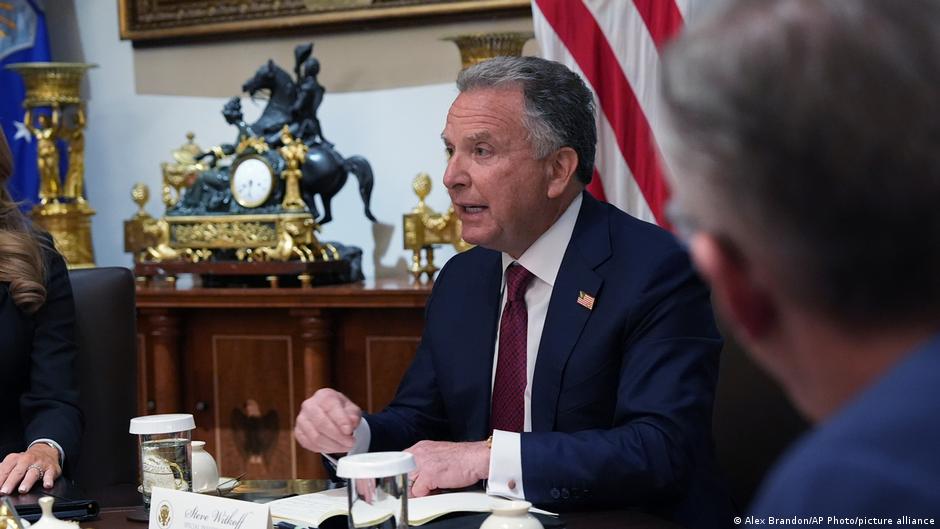
Russia and Ukraine will hold a new round of US-mediated negotiations in Abu Dhabi on November 10 and 11, bringing renewed attention to the security and economic conditions that will shape Ukraine’s technology sector, venture capital market and postwar reconstruction.
Steve Witkoff, US President Donald Trump’s special envoy, announced the talks on Tuesday, November 3. The negotiations will take place in working groups in the capital of the United Arab Emirates as part of Trump’s efforts to end Russia’s war against Ukraine.
“The discussions will focus on postwar security, de-escalation, humanitarian initiatives and next steps toward peace,” Witkoff wrote on X.
For founders and investors, those four areas are closely connected to the future operating environment. Security arrangements and de-escalation would affect whether technology companies can retain employees, attract international capital and plan across longer investment horizons. Humanitarian measures could also influence workforce mobility and the ability of displaced specialists to reconnect with Ukraine’s innovation economy.
The talks do not themselves constitute a financing commitment or peace agreement. However, negotiations over long-term security and reconstruction may help determine when venture investors, strategic buyers and multinational technology companies can assess Ukrainian opportunities with greater confidence. Until the parties establish clearer terms, any effect on startup valuations, fundraising or mergers and acquisitions remains conditional.
Security guarantees could shape investment risk
Witkoff said US negotiators will also meet representatives of France, Germany, the United Kingdom, the European Union and NATO in Brussels this week. Their agenda will include security guarantees for Ukraine, Europe’s postwar security architecture and options for providing economic support for Ukraine’s reconstruction.
That Brussels track is particularly relevant to the venture ecosystem because reconstruction support could establish the broader framework within which private capital operates. Public economic assistance and credible security arrangements can affect the risks attached to company formation, infrastructure deployment and cross-border investment. They may also influence whether acquisitions involving Ukrainian assets and teams can proceed under more predictable conditions.
The technology sector could have a role across multiple areas of rebuilding, including digital infrastructure, enterprise systems and services supporting the restoration of economic activity. Yet Witkoff did not announce specific funding volumes, technology programs, investment vehicles or procurement plans. Investors and entrepreneurs will therefore be watching for concrete policy mechanisms rather than treating the diplomatic schedule alone as evidence of an immediate capital influx.
For international venture firms, the central issue is likely to be whether a potential settlement creates durable conditions for investment. A comprehensive agreement could reduce uncertainty around business continuity and future market access. Conversely, unresolved security questions would continue to complicate due diligence, fundraising and exit planning, even if diplomatic engagement advances.
Negotiators seek to build on earlier meetings
Witkoff said the United States hopes to consolidate progress made in Kyiv, Oslo and St. Petersburg on the way to a comprehensive and durable peace agreement that would provide long-term security for future generations.
“We hope to consolidate the progress achieved in Kyiv, Oslo and St. Petersburg,” Witkoff said, describing the objective as a comprehensive and lasting peace agreement.
In October, Trump’s special envoy met Ukrainian President Volodymyr Zelensky in Oslo. Witkoff then traveled to St. Petersburg, where he held talks with Russian President Vladimir Putin. The Abu Dhabi working groups will follow those meetings and move the discussions toward security, humanitarian and postwar questions.
The previous round of US-mediated negotiations between Russia and Ukraine took place in February 2026, shortly before the start of the US and Israeli war against Iran. The resumption of talks in November places the diplomatic process back on the agenda after that interval.
Abu Dhabi’s role as the venue also puts the UAE capital at the center of the next stage of the process. For the innovation ecosystem, the immediate significance lies less in the location than in whether the working groups produce sufficient progress for governments to define reconstruction support and for private investors to reassess risk.
Startup founders are unlikely to see the November meetings as an instant change in financing conditions. Venture rounds, acquisitions and expansion decisions depend on enforceable arrangements and operational stability. Still, discussions covering postwar security, European architecture and economic support bring several of the variables most important to capital formation into the same diplomatic process.
The next signals for the market will be whether the Abu Dhabi and Brussels discussions generate specific commitments, a timetable for further negotiations or clearer mechanisms for rebuilding Ukraine. Those outcomes would offer investors a firmer basis for evaluating opportunities in Ukrainian technology and the wider reconstruction economy.



