Berlin Ukraine Summit Puts Defense-Tech Investment Climate in Focus
European leaders will coordinate military aid and security guarantees as defense startups and investors track long-term procurement signals.
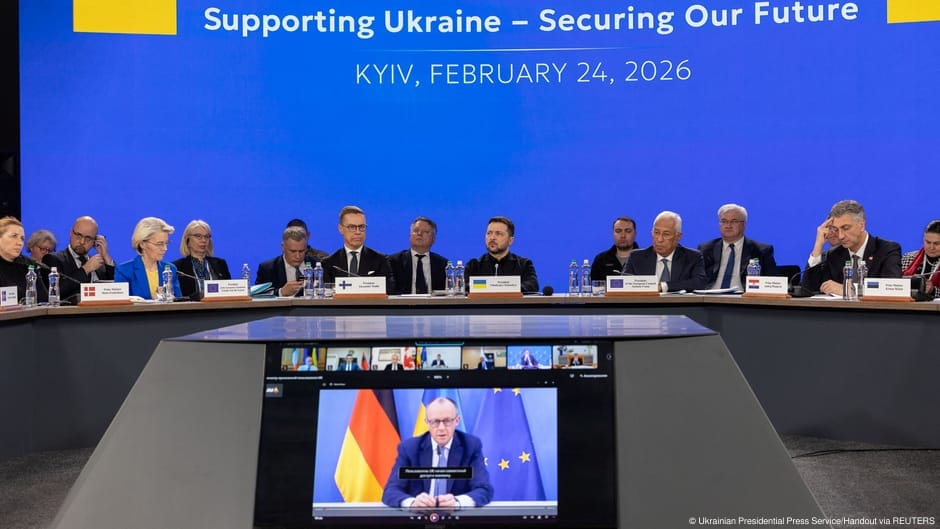
European political leaders gathering in Berlin on November 19 are expected to focus on strengthening Ukraine’s negotiating position, coordinating military assistance and setting out security commitments that could also shape the investment environment for defense technology and dual-use startups.
The meeting of the “coalition of the willing” comes at a time when European governments are attempting to coordinate further direct negotiations between Russia and Ukraine, with active participation from the United States and European countries. The agenda follows a recent meeting between negotiators in Abu Dhabi and will cover the next steps in that process.
Thomas Röwekamp, chairman of the German Bundestag’s defense committee, said ahead of the summit that Ukraine must not be pressured into territorial concessions while Russia achieves at least part of its military objectives. He argued that the decisive issue is ensuring Kyiv can negotiate from a position of strength.
“A peace that rewards Putin for his war of aggression would not be peace, but an invitation to the next aggression,” Röwekamp said.
He said Ukraine requires continued military support and reliable security guarantees, adding that Europe must act confidently and in unity. For venture capital firms and technology founders operating in the defense and security sectors, that political message reinforces the importance of government-backed demand, cross-border coordination and long procurement horizons.
Funding commitments create a strategic demand signal
Support for Ukrainian air defense will be among the subjects discussed in Berlin. The financial foundation includes NATO commitments to provide €140 billion in military assistance during 2026 and 2027, alongside a €90 billion European Union loan to support Ukraine over the same period.
Those commitments are primarily instruments of state policy rather than venture funding. Nevertheless, their scale may be relevant to startups developing technologies for air defense, sensing, communications, cybersecurity, logistics and other military or dual-use applications. Large public allocations can influence procurement priorities, encourage private co-investment and increase pressure on established contractors to acquire or partner with smaller technology companies.
The summit may therefore be watched not only for diplomatic outcomes but also for evidence of how European governments intend to translate headline commitments into deployable capabilities. Startups typically face barriers including lengthy procurement cycles, fragmented national requirements and the difficulty of moving from battlefield testing to repeatable contracts. Greater coordination among participating countries could improve the conditions for companies seeking to scale across several European markets, although no startup-specific measures have been announced for the meeting.
Marie-Agnes Strack-Zimmermann, chair of the European Parliament’s defense committee, welcomed the initiative to hold the talks in Berlin. She said the gathering, convened at the chancellery, would send an important signal to Russia and China that Germany and Europe would not remain passive while others claimed the right to make decisions concerning European territory.
European coordination matters for startups and M&A
The meeting is being held at the invitation of German Chancellor Friedrich Merz, President Emmanuel Macron and Prime Minister Andy Burnham under the slogan “United for Peace in Ukraine and European Security.” Representatives from 37 countries are expected, mostly at the level of heads of state or government, together with leaders of the EU and NATO.
Berlin police have announced unprecedented security measures in the German capital’s government district, indicating the senior level of the participants. The coalition has existed since spring 2025. Its last in-person meeting was held in Paris on July 13, followed by a hybrid session on August 24.
France, the United Kingdom and Germany serve as co-chairs. Participants also include European Council President António Costa, European Commission President Ursula von der Leyen, EU foreign policy chief Kaja Kallas and NATO Secretary General Mark Rutte.
For Europe’s innovation ecosystem, sustained cooperation among these institutions and national governments could affect where capital is deployed and how consolidation develops. Defense startups need credible routes to procurement, while investors need confidence that demand will persist beyond an immediate crisis. Established aerospace and defense groups may also seek partnerships or acquisitions when emerging companies possess technology that can be fielded more rapidly than internally developed alternatives.
The Berlin discussions are not framed as an investment conference, and their central purpose remains diplomacy, military support and European security. Even so, decisions on air defense funding, security guarantees and coordination will form part of the policy backdrop against which venture investors evaluate defense-tech companies. The strongest commercial signal would come from clear, durable procurement pathways that allow innovation to move from prototypes into contracted deployment across allied markets.



