Binance Hack Raises New Risks for Crypto Startups and Venture Investors
The alleged $6.3 billion North Korean attack highlights security, liquidity and regulatory risks across the crypto innovation ecosystem.
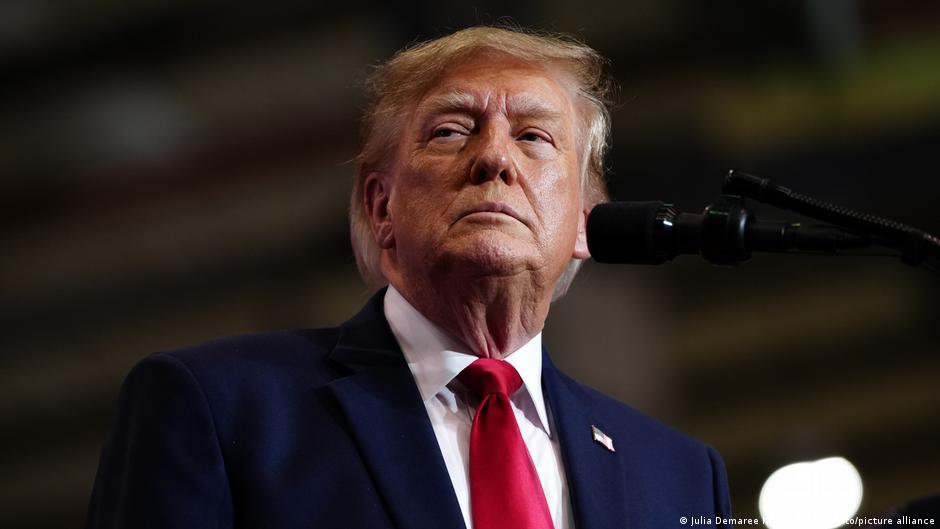
US President Donald Trump has questioned the Federal Bureau of Investigation’s assessment that hackers linked to North Korea carried out an attack on Binance, the world’s largest cryptocurrency exchange, and stole about $6.3 billion, or more than €5.6 billion, from its customers.
The disagreement introduces further uncertainty into an incident with potentially significant consequences for crypto startups, venture capital firms and investors evaluating digital-asset infrastructure. The scale of the theft could intensify scrutiny of cybersecurity standards across exchanges, wallet providers, instant-swap services and other companies that form the industry’s transaction layer.
“We are looking into it right now. We don’t know whether it is connected to North Korea, but if it is, we will discuss this issue with North Korea,” Trump told reporters on November 1 at his Mar-a-Lago estate in Florida.
The FBI had said on Saturday, October 31, that North Korea was responsible for the attack. According to the agency, hackers from the TraderTraitor group carried out the crypto industry’s largest asset theft on October 29.
Security exposure spreads across the startup ecosystem
The FBI said members of TraderTraitor typically convert stolen funds into Ethereum and then launder the assets, including through instant cryptocurrency exchange services. It urged companies handling crypto assets to block transactions involving wallets associated with the group and published a list of those wallets in its press release.
For venture-backed companies, the warning illustrates how a breach at one major platform can create operational demands throughout the broader market. Crypto exchanges and transaction services may need to screen wallets, monitor asset movements and respond to law-enforcement alerts while continuing to serve customers. Startups whose products depend on exchange liquidity or rapid token conversion could also face greater compliance and counterparty risks when suspicious funds move through interconnected services.
The attribution dispute adds another layer of difficulty. Investors and company executives must assess the commercial impact of the attack while US authorities and the president publicly differ over whether North Korea was involved. The FBI has identified TraderTraitor as responsible, while Trump has said the connection is still being investigated.
The episode may influence funding and acquisition decisions across the sector. Venture investors examining crypto infrastructure companies are likely to focus closely on custody controls, wallet screening, incident response and the ability to reimburse users after a major loss. Potential acquirers may likewise place greater weight on security liabilities and exposure to tokens with limited liquidity.
Binance reimbursement highlights liquidity divide
On October 31, Binance said it had reimbursed customers for 90% of the assets stolen in the recent attack. The company said it had fully covered losses involving BTC, ETH, USDT, BNB, SOL, USDC, XRP, USD1, RLUSD and ZEC.
The remaining 10% consists of tokens outside the 10 largest crypto assets, according to Binance. The platform said those tokens have lower liquidity, meaning that purchasing enough of them to compensate customers in full will require more time.
Binance said the lower liquidity of tokens outside the top 10 means completing customer reimbursements will take longer.
That distinction is especially relevant for startups issuing, trading or building products around smaller tokens. The aftermath shows that reimbursement capacity is not determined solely by the nominal value of a loss: market depth can affect how quickly a platform can replace assets without disrupting trading. For founders and investors, liquidity risk therefore sits alongside cybersecurity and compliance as a central business concern.
Binance’s scale also makes the incident important beyond the company itself. Various estimates put the exchange’s registered user base at more than 300 million worldwide. In 2024, Binance said it had more than $160 billion in assets under management.
A loss of this magnitude at a platform with such reach could shape how capital is allocated across the crypto market. Security providers and compliance technology startups may see stronger demand as exchanges seek better monitoring and controls. At the same time, companies dependent on centralized trading venues could encounter more demanding due diligence from venture funds, strategic investors and prospective buyers.
The incident ultimately exposes a tension at the center of the digital-asset innovation economy. Large exchanges provide the liquidity and distribution that help startups scale, but their concentration also means that a single breach can transmit financial, regulatory and reputational risk across hundreds of companies. Binance’s reimbursement effort may limit immediate customer losses, yet the unresolved attribution and the challenge of replacing less-liquid tokens leave broader questions for investors and founders.



