Bulgaria Presidential Runoff Raises Stakes for Tech and Venture Outlook
The Nov. 1 vote will test Bulgaria’s policy direction as security concerns and competing positions on Ukraine shape the campaign.
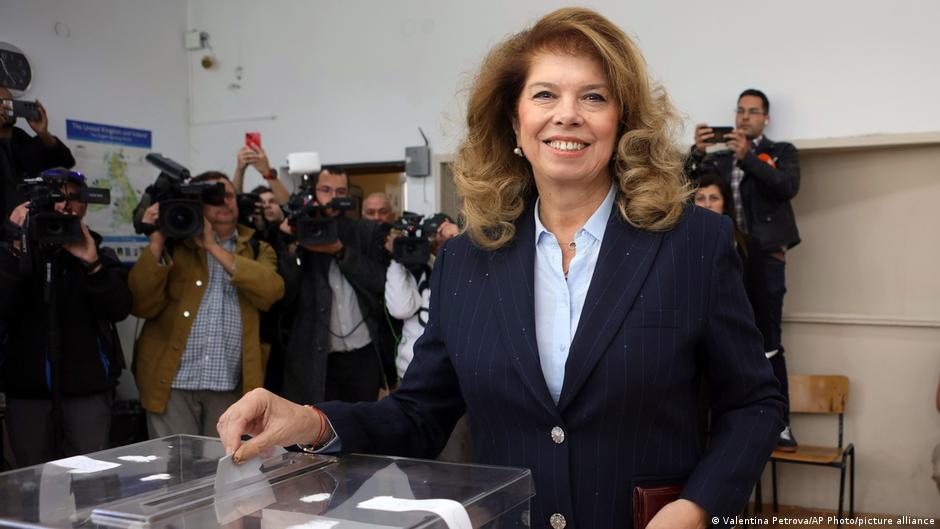
Bulgaria is heading for a presidential runoff after no candidate secured the required absolute majority in the first round, extending political uncertainty for the country’s technology startups, venture investors and innovation ecosystem.
With 95.3% of ballots counted, incumbent President Iliyana Yotova received 34.6% of the vote, while pro-Western former Prime Minister Andrey Gyurov followed with 32%, according to the country’s Central Election Commission. The second round is expected to take place on Nov. 1.
Turnout was only 22.2%, far below the required level of more than 50%. The low participation rate and close result leave Bulgaria facing another round of campaigning at a time when geopolitical risk has become increasingly prominent in domestic politics.
Policy Continuity and Investor Confidence
Although Bulgaria’s presidency has formally limited powers, the office carries meaningful institutional and foreign-policy influence. The president represents the country internationally, with some exceptions, serves as commander-in-chief, signs decrees appointing the prosecutor general and the heads of the highest courts, and selects an acting prime minister from a constitutionally defined group of eligible officials. The president can also veto legislation passed by parliament.
Those powers do not give the office direct control over venture funding or technology policy, but they can affect the broader environment in which startups and investors operate. International representation, appointments touching the judicial system and the ability to return legislation to parliament all contribute to perceptions of political stability, regulatory predictability and institutional direction.
For founders and venture capital firms assessing Bulgaria, the runoff therefore carries implications beyond the presidential office’s narrow constitutional remit. The eventual winner’s approach to international partnerships and national security could influence confidence in Bulgaria’s position within the wider European innovation market, particularly for companies working across borders or building products connected to communications and security infrastructure.
Black Sea Incidents Put Security in Focus
The runoff has acquired additional foreign-policy significance because of Bulgaria’s proximity to the war in Ukraine. In October alone, four merchant ships off Bulgaria’s Black Sea coast were reportedly struck by drones. A Starlink station near Sofia was also damaged in an arson attack.
Yotova and Bulgaria’s government, led by Rumen Radev, responded cautiously to the incidents, neither offering a definitive assessment nor naming those responsible. That reaction also influenced the election campaign, pushing questions of security, resilience and Bulgaria’s international alignment closer to the center of political debate.
The incidents are particularly relevant to the technology sector because they involve commercial shipping and communications infrastructure. Without establishing responsibility for the attacks, they nevertheless underscore the operational risks facing businesses whose services depend on physical connectivity, logistics networks or infrastructure exposed to regional instability.
The runoff is set to test not only Bulgaria’s political direction but also how the country presents its security and institutional outlook to founders, investors and international partners.
Ukraine Divide Shapes the Final Contest
The early phase of the presidential campaign featured few rallies, no televised debates and numerous personal attacks against the two leading candidates. In recent weeks, however, differences between Yotova and Gyurov over support for Ukraine have moved to the foreground.
Yotova supports a diplomatic end to the war and sought to assure voters that Bulgarian troops would not be sent to Ukraine, even though the issue had not been the subject of broad public debate. Gyurov has previously expressed support for Ukraine and signed a security cooperation agreement with Kyiv while serving as head of government.
The contrast gives voters a clearer choice on foreign-policy orientation, even if the president cannot independently determine the country’s entire approach. For the venture and startup community, the relevance lies in the wider consequences of that orientation: the strength of international relationships, perceptions of geopolitical exposure and the confidence of companies or funds considering long-term commitments in Bulgaria.
The election outcome alone will not determine funding volumes, startup acquisitions or the pace of innovation. Yet political signals can influence investment decisions at the margin, particularly when founders and investors are already weighing regional security alongside talent, market access and regulatory conditions.
Until the runoff is resolved, Bulgaria’s technology sector will be watching whether the final campaign produces greater clarity on security, international cooperation and institutional stability. The Nov. 1 vote will decide which candidate occupies an office with limited day-to-day economic authority but substantial visibility—and enough constitutional influence to shape the country’s broader policy climate.



