Bundeswehr Rail Shift Highlights Europe’s Defense Logistics Opportunity
Germany’s revised route for moving tanks to Lithuania puts dual-use transport capacity and defense technology in the spotlight.
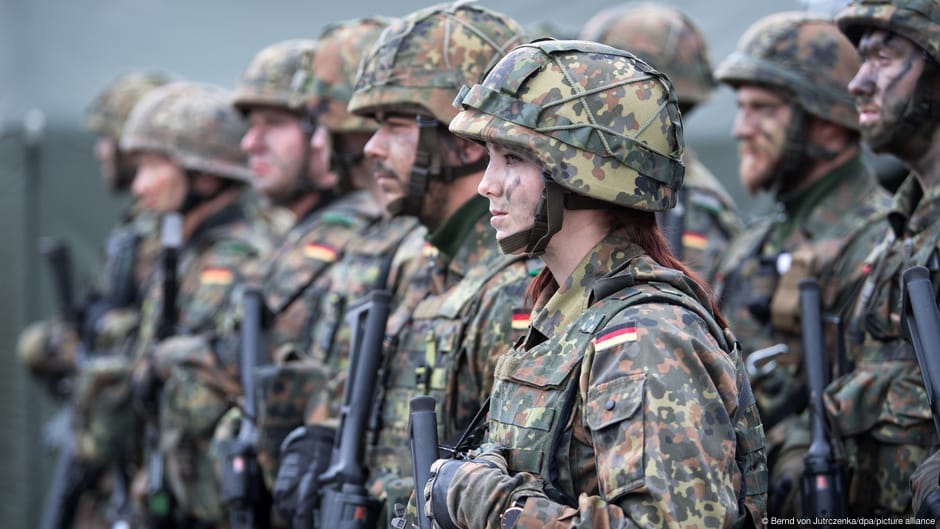
Germany’s armed forces will transport tanks by rail to military exercises in Lithuania rather than drive the vehicles through Poland, a change reportedly intended to avoid provoking Russia. The logistical adjustment, while operational in nature, also highlights a growing area of interest for Europe’s technology companies and investors: the infrastructure, software and industrial capacity needed to move military assets rapidly across the continent.
The Bundeswehr had initially planned for military equipment to travel under its own power through Poland for the “Grand Eagle 26” exercises. Bild reported overnight into Sunday, November 22, citing sources in the security services, that the tanks would instead be transported to Lithuania by railway.
According to the newspaper’s sources, officials made the decision to avoid creating imagery that Russia could use for propaganda. German tanks moving toward the Baltic region near the Belarusian border could have provided such material, they said.
“Images of German tanks moving toward the Baltics near the border with Belarus would have been a propaganda gift for Putin,” Bild’s sources said.
Germany’s Defense Ministry told journalists that changing the mode of transportation was not unusual. It added that different transport methods must be practiced because they would also need to be available in the event of a genuine threat.
Defense logistics becomes an innovation test
For the European startup and venture capital ecosystem, the episode illustrates how defense readiness extends beyond weapons platforms. Rail scheduling, freight coordination, fleet tracking, infrastructure monitoring and secure communications can all shape whether equipment reaches its destination efficiently. Companies developing tools in these areas may find applications across both civilian supply chains and military mobility, although the report did not identify any private contractors or technology vendors involved in the German deployment.
The decision also shows that military logistics must account for political signaling as well as speed and capacity. A route can be technically feasible while still carrying diplomatic or information risks. That creates a complex operating environment in which planners may need secure data, real-time visibility and the ability to switch between road and rail without disrupting broader exercises.
Such requirements can influence innovation across transport technology, cybersecurity and industrial software. They may also affect how investors assess dual-use startups whose products serve commercial customers but can be adapted for defense. The immediate German decision does not constitute a funding or procurement announcement, yet it demonstrates the operational problems that emerging companies may seek to solve.
Scale underscores the coordination challenge
The exercises involve substantial numbers of personnel and vehicles. Reuters previously reported that the Bundeswehr moved more than 2,000 service members through Poland, along with around 50 tracked vehicles and 650 wheeled vehicles. Bild gave a different estimate, reporting approximately 1,800 troops and more than 750 pieces of equipment participating in the exercises.
At the same time, the Bundeswehr’s 45th Armored Brigade is conducting the “Freedom Shield 26 II” exercise. More than 6,000 military personnel are involved across the two sets of maneuvers in Lithuania.
Moving forces on that scale requires coordination among transport networks, military units and national authorities. For established defense groups, this can create demand for integrated logistics systems and specialized mobility services. For startups, potential openings are more likely to emerge in narrower layers of the stack, including planning software, predictive maintenance, asset monitoring and secure operational data. Any commercial opportunity, however, would depend on procurement decisions and security requirements that were not detailed in the reports.
The use of rail rather than an overland convoy may also draw attention to the resilience of Europe’s physical infrastructure. Digital platforms cannot replace tracks, loading facilities or suitable rolling stock, but they can help operators manage capacity and identify constraints. This interaction between hard infrastructure and software is likely to remain central to defense innovation, particularly for companies seeking to demonstrate that civilian logistics products can function in sensitive or high-pressure settings.
Implications for funding and consolidation
Europe’s defense technology market brings together startups, large contractors, transport operators and public-sector buyers. Operational examples such as the Lithuania deployment can help investors understand where coordination gaps exist, even when no specific transaction follows. They can also inform potential partnerships or acquisitions if larger companies decide that specialized logistics or infrastructure software is strategically important.
Still, the reported change should not be read as evidence of a particular venture round, merger or contract. Its significance for the innovation ecosystem lies in the problem it exposes: European forces need multiple, interchangeable ways to move personnel and heavy equipment while managing security, infrastructure and political considerations.
The Bundeswehr’s explanation reinforces that point. Practicing a change in transport mode is part of ensuring that the same option remains available during a real threat. For technology founders and investors examining Europe’s defense sector, that emphasis on operational flexibility provides a clear lens through which to evaluate products: not only whether they improve efficiency, but whether they continue to work when routes, conditions and strategic constraints change.



