Canada’s Russian Hockey Ban Raises Risks for Sports-Tech Partners
Canada’s decision to bar Russian players from the 2027 junior championship adds uncertainty for sports-tech startups and event investors.
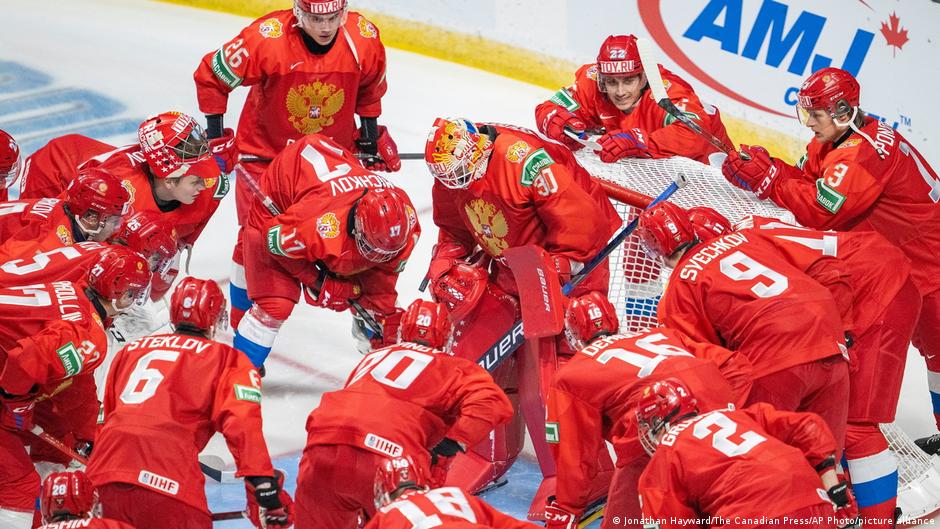
Canada will prevent Russian hockey players from entering the country for the 2027 World Junior Ice Hockey Championship, even if they hold valid visas, Sports Minister Adam van Koeverden said. The decision introduces a new layer of operational uncertainty around a major international event, with potential consequences for sports-technology startups, commercial partners and investors working across ticketing, broadcasting, security and venue services.
Canadian authorities have formally notified the International Ice Hockey Federation, or IIHF, and Hockey Canada that visas will not be issued to Russian participants. Van Koeverden said the immigration minister would also assess cases individually to prevent Russian and Belarusian athletes and officials from entering Canada for the tournament, regardless of whether they already possess valid visas.
“The minister will take action to conduct an individual assessment and prevent Russian and Belarusian athletes and officials from entering Canada to participate in the competition, regardless of whether they hold valid visas,” van Koeverden said.
The minister said the measures were not directed against Russian or Belarusian people. He described them as an effort to stop the governments of Russia and Belarus from using international sporting events held in Canada for state representation, political legitimization or propaganda. Canada’s policy continues to permit individual athletes competing under neutral status to participate in international competitions hosted in the country.
Van Koeverden added that Canada’s position would remain unchanged while Russia continues its war against Ukraine, saying there could be no return to business as usual and that Canada would continue supporting Ukraine. Prime Minister Mark Carney had previously said on Nov. 4 that Russian hockey players would not receive visas for the 2027 championship.
Regulatory conflict creates commercial uncertainty
The Canadian position follows an Oct. 30 ruling by the Court of Arbitration for Sport, or CAS, requiring the IIHF to admit Russian national teams to international tournaments beginning in 2027, despite the continuing full-scale war against Ukraine. The IIHF disagreed with the ruling and cited visa access, security, logistics and the difficulty of changing tournament formats at short notice.
The clash between a sports arbitration ruling and a host government’s immigration policy is commercially relevant for companies serving international competitions. Startups providing accreditation systems, identity verification, travel coordination, cybersecurity, venue access and scheduling may need to plan for several possible team lineups until legal and administrative questions are resolved. The uncertainty may also affect broadcasters, sponsors and hospitality operators whose products depend on confirmed fixtures and participating teams.
For venture capital investors, the dispute highlights a recurring risk in sports technology: scalable software can still depend on national borders, government policy and governing-body decisions. A tournament platform may be technically ready for global deployment, yet its revenue projections can shift when eligibility rules, visas or security requirements change close to an event. Investors assessing sports-tech businesses may therefore place greater weight on flexible contracts, scenario planning and products that can accommodate rapid changes in participants and schedules.
The CAS decision was expected to apply first to the World Junior Championship in Canada, scheduled from Dec. 26 to Jan. 5 in Edmonton and Red Deer. The tournament’s commercial ecosystem typically extends beyond teams and organizers to technology vendors supporting media distribution, fan engagement, data analysis and event operations. Canada’s planned entry restrictions could require those partners to revise integrations, content plans and operational assumptions if Russia cannot participate.
Format changes could ripple through suppliers
On Nov. 8, the Norwegian Ice Hockey Federation said Russia had taken tenth place in the championship’s new competition system following the CAS ruling. That would move Norway, the lowest-ranked team, into Division 1A. The change illustrates how a single eligibility decision can affect multiple national federations, travel plans and supplier contracts across different markets.
According to a draft championship schedule circulated by the IIHF, Russia was due to play in Group B against Canada, the Czech Republic, Switzerland and Latvia. If Canadian authorities enforce the announced restrictions, organizers will face the question of how to reconcile the planned draw with the host country’s entry rules and the CAS mandate.
No financial figures, sponsorship revisions or technology contracts were disclosed in connection with the dispute. Nor has the source material identified any specific startup, venture fund or acquisition directly affected by the decision. The immediate impact is therefore operational rather than a confirmed funding or M&A event.
Still, the episode underscores why sports-tech founders and their backers increasingly treat regulatory resilience as part of product design. Systems built for international competitions may need modular scheduling, rapid credential changes and contingency workflows when political decisions override assumptions made by federations. For potential acquirers of event-technology companies, the ability to manage such disruption could become an important component of due diligence.
The next steps will depend on how the IIHF, Hockey Canada and Canadian authorities implement their respective positions before the tournament begins. Until then, vendors and commercial partners must prepare around a schedule that includes Russia while the host government says Russian and Belarusian athletes and officials will be denied entry.



