Cyberattacks on Ukraine and Russia Alert Apps Expose Govtech Risks
False nuclear and radiation warnings highlight cybersecurity, resilience and investment challenges for startups building critical public infrastructure.
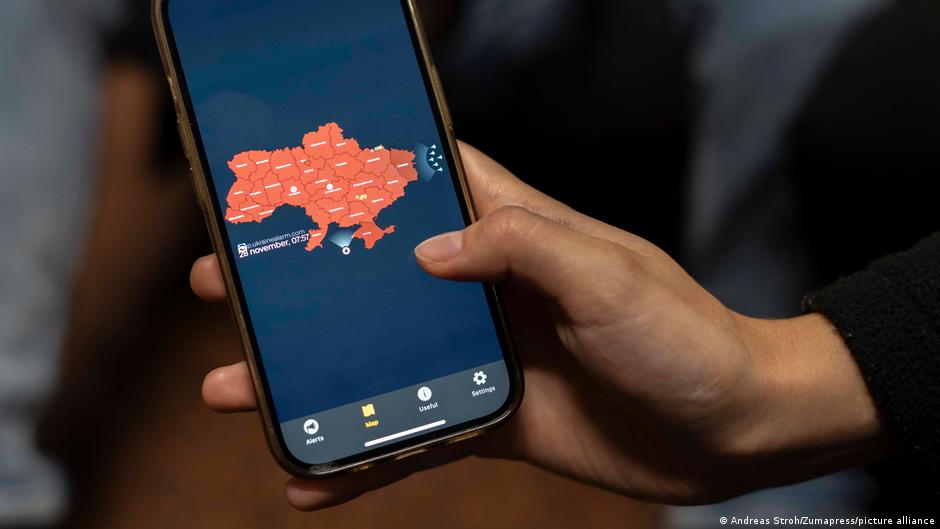
Cyberattacks targeting government alert applications in Ukraine and Russia have exposed the operational and reputational risks facing technology providers that support critical public services. Users in both countries received fabricated emergency messages, including false warnings about radiation, chemical hazards and nuclear warheads.
Ukraine’s official Air Alert application, which is used to warn the public about threats, was attacked on the evening of Sunday, Nov. 1. Users began receiving false notifications about radiation and chemical dangers, as well as messages claiming that street fighting threatened Kyiv.
The Ukrainian Air Force was among the first institutions to respond. The military said the application had probably been subjected to “hostile interference” and stressed that there was no radiation threat. Ukraine’s State Emergency Service said the nationwide warning system continued to operate normally, with genuine alerts still being transmitted to regional administrations and public street-warning systems.
The developers later confirmed unauthorized access to the application. They disabled push notifications and temporarily suspended the service, while advising users not to follow links contained in suspicious alerts.
“Today, unauthorized persons interfered with the operation of the application. We disabled push notifications and temporarily suspended the application,” the developers said.
Critical infrastructure raises the stakes for startups
The incident illustrates the unusually high burden carried by startups and other private technology teams working with government agencies. In consumer software, a compromised notification system can cause spam, fraud or reputational damage. In an emergency platform, the same weakness can spread panic, undermine trust in legitimate warnings and complicate the work of public authorities.
That distinction is important for venture capital firms evaluating cybersecurity, govtech and dual-use startups. Products serving public agencies may benefit from durable demand and strategically important contracts, but they also face demanding security requirements, politically sensitive operations and potentially severe consequences when systems fail. Investors assessing such companies are therefore likely to focus not only on user growth and revenue, but also on incident response, access controls, infrastructure redundancy and the ability to maintain essential functions during an attack.
During the night of Nov. 2, the Ukrainian development team said it was gradually restoring the service after the cyberattack. Users had again begun receiving air-raid notifications, although some functions remained temporarily unavailable. The team also said the application does not store users’ personal data and that additional cybersecurity protections were being introduced.
The absence of stored personal data limits one category of exposure, but the attack demonstrates that integrity and availability can be as important as privacy for critical applications. A system does not need to leak customer records to create major harm: attackers can instead manipulate trusted communication channels or prevent essential messages from reaching users.
Parallel attack broadens the market signal
Russia’s Emergency Situations Ministry reported a cyberattack at almost the same time. The ministry described the incident as a “massive cyberattack” on its mobile application. Attackers used the service to distribute false information claiming that nuclear warheads had been launched toward Russia.
The ministry said specialists were working to eliminate the vulnerability and restore the application’s normal operation. As in Ukraine, the immediate challenge was not only technical recovery but also the restoration of confidence in a channel designed to deliver authoritative information during emergencies.
For the innovation ecosystem, the attacks reinforce the potential market for technologies that secure notification infrastructure, authenticate official communications and rapidly distinguish legitimate alerts from manipulated content. They also highlight opportunities for companies offering continuous security testing, identity and access management, resilient cloud architecture and monitoring tools designed for public-sector systems.
The incidents could influence technology procurement and partnership decisions by encouraging agencies to scrutinize vendors more closely and require stronger security controls. That may raise compliance and development costs for early-stage companies, while giving an advantage to startups that can demonstrate mature cyber defenses and reliable recovery procedures.
Mergers and acquisitions could also become part of the sector’s response. Larger cybersecurity and infrastructure providers may see value in specialized teams that understand emergency communications, while smaller govtech developers may seek partnerships or strategic buyers capable of funding round-the-clock monitoring and advanced threat protection. No transactions were announced in connection with these attacks, but the operational pressure revealed by the incidents underscores why security capabilities can become strategically valuable assets.
For founders and investors, the central lesson is that public trust is a core component of critical-service technology. The attacks in Ukraine and Russia show how quickly compromised alerts can turn a software vulnerability into a national public-safety issue, making resilience a business requirement as well as a technical one.



