Democrats Secure Biggest US House Majority Since 1992 in Midterm Sweep
The party’s expanding control of Congress could reshape the policy environment for technology startups, venture investors and dealmakers.
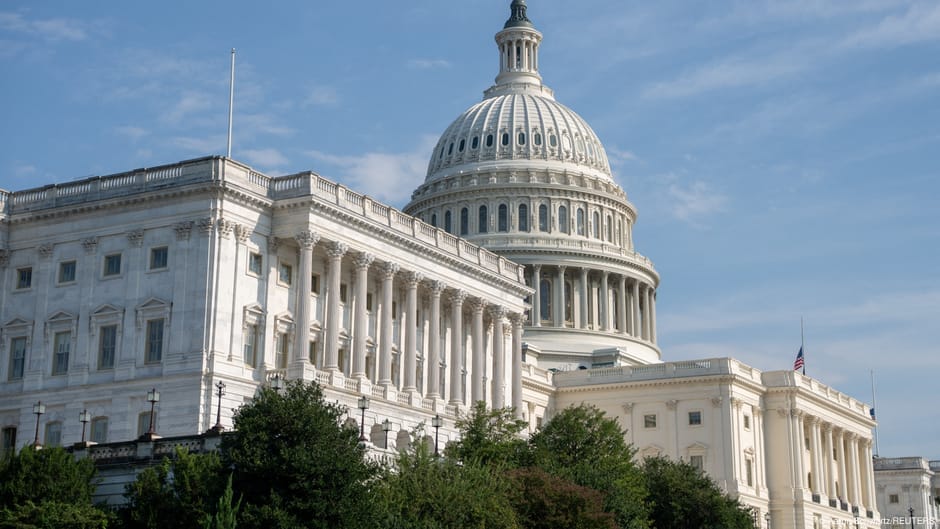
The Democratic Party will hold at least 258 of the 435 seats in the US House of Representatives, securing its largest presence in the chamber since 1992 and strengthening its ability to shape the legislative environment facing startups, venture capital firms and technology companies.
The latest addition came in North Carolina, where the Associated Press projected a victory for Democrat Chuck Hubbard on Sunday evening, November 22, after 99% of votes had been counted. Hubbard had 48.7% of the vote and led Republican Virginia Foxx by only 300 votes. Winners had yet to be determined in four other House races.
The result gives Democrats their most substantial House majority in more than three decades. For founders and investors, the scale of the victory is significant because control of the chamber can affect the direction and pace of legislation touching the innovation economy. Congressional priorities can influence the regulatory conditions surrounding fundraising, acquisitions and the development of emerging technologies, even when the details of future policy remain unsettled.
“House Democrats have just secured the largest majority that either party has held in Congress in this century,” House Democratic leader Hakeem Jeffries said.
A broad mandate with implications for the innovation economy
Democrats last won 258 House seats in 1992. In 2008, the party secured 257 seats. Republicans, by comparison, controlled 247 seats in the lower chamber from 2015 to 2017, their largest recent majority there.
The House result was part of a wider Democratic sweep in the November 3, 2026, US midterm elections. The party also captured 56 of the Senate’s 100 seats, giving it a commanding position across both chambers. Democratic candidates recorded surprise victories in states traditionally associated with Republican strength, including Alaska, Texas, Kansas, Iowa, Ohio, South Carolina and Mississippi.
For the venture capital and startup ecosystem, unified control of Congress increases the importance of the Democratic legislative agenda. The election result does not by itself determine how individual rules or spending priorities will change, but it gives the party greater capacity to advance bills and conduct congressional oversight. Technology companies, investors and prospective acquirers will therefore be watching closely for policy signals that could affect capital formation, competition and innovation.
The consequences for mergers and acquisitions will depend on the measures lawmakers ultimately pursue and how federal agencies apply existing authority. Startups often view acquisitions as one possible route to liquidity, while venture funds rely on exits to return capital to their investors. Any shift in the political approach to corporate consolidation could therefore influence deal timing, valuations and the strategic calculations of both founders and larger technology buyers.
At the same time, a large congressional majority can create opportunities for policy initiatives intended to support new industries or expand economic development beyond established technology centers. The Democrats’ gains across several traditionally Republican states may also encourage lawmakers to frame innovation policy in broader geographic terms, with attention to companies, workers and investors outside the largest coastal startup hubs. The election results alone, however, do not establish which initiatives will receive priority.
Investors face a new political landscape
Venture investors tend to plan across long time horizons, but changes in congressional control can alter assumptions about regulation, taxation, public investment and market oversight. With Democrats holding at least 258 House seats and 56 Senate seats, portfolio companies may need to follow federal policymaking more closely as they prepare financing plans, evaluate acquisitions or enter regulated markets.
The narrow margin in Hubbard’s race also illustrates the local contests behind the national shift. A lead of just 300 votes in North Carolina helped push the party to a representation level not reached since 1992. Four unresolved House races could still change the final size of the majority, although Democrats have already secured the threshold highlighted by party leaders.
Democrats also made gains at the state level. For the first time since 1998, Alaska elected a Democratic governor. Jonathan Kreiss-Tomkins won 51% of the vote, comfortably finishing ahead of several Republican rivals.
That state-level victory adds another dimension to the post-election environment. Governors can play an important role in shaping regional business conditions and economic development priorities, while Congress determines the federal framework. For startups and venture funds assessing where to build, hire and invest, the interaction between state and national policy will remain relevant.
The immediate takeaway for the technology industry is political clarity at the congressional level, accompanied by continuing uncertainty over the substance of the next policy agenda. Democrats have secured their strongest House position since 1992 and a 56-seat Senate majority, but the practical effects on venture funding, M&A and startup innovation will emerge only as lawmakers translate that electoral advantage into legislation and oversight.



