Deutsche Bahn Russia Links Raise Sanctions Risks for Transport Tech
Reported payments linked to DB Cargo’s Russian subsidiary highlight compliance and due-diligence risks across logistics investment and M&A.
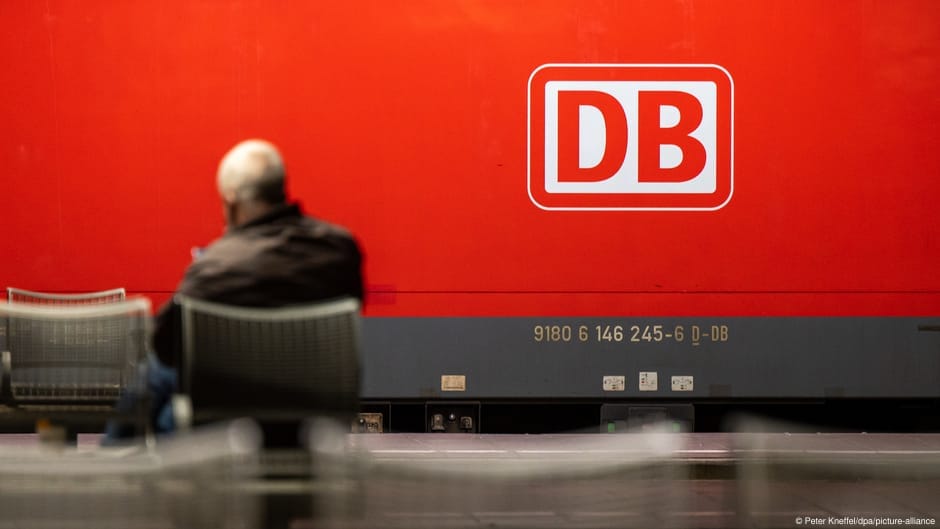
Deutsche Bahn’s freight business is facing renewed scrutiny over its continued commercial links to Russia, raising broader questions for investors and technology companies operating across complex international logistics networks.
German business newspaper Handelsblatt reported that nearly €400 million has passed through DB Cargo Russija, a Russian limited liability company owned by Deutsche Bahn subsidiary DB Cargo, since 2022. According to the newspaper’s analysis of the company’s annual reports, most of the money went to railway network operators and Russian counterparties.
Handelsblatt said it was impossible to establish the precise amount paid to Russian Railways, or RZD, for access to rail infrastructure. It estimated, however, that several hundred million euros may have reached the state-owned railway group either directly or indirectly.
The report has implications beyond Deutsche Bahn. For venture capital firms, mobility startups and potential acquirers of logistics technology businesses, it illustrates how sanctions exposure can arise through subsidiaries, intermediaries, infrastructure providers and corporate structures spanning several jurisdictions.
Russian subsidiary remains operational
DB Cargo Russija openly continues to conduct business in Russia. Its publicly accessible website says the company has operated since 1999 and provides a Moscow address and employee information. It describes its activities as Europe-China-Europe transit container transport and transport solutions covering countries in the Commonwealth of Independent States, the European Union and Asia.
In May, Russia’s Transport Ministry registered DB Cargo Russija in a recently created state register of freight forwarding companies, according to Handelsblatt. The registration indicates that the subsidiary remains part of the country’s formal freight-forwarding infrastructure.
DB Cargo told the newspaper that it fully complies with European Union sanctions and does not send its own trains through Russia. Handelsblatt reported that DB Cargo Russija does not itself operate trains. Instead, it arranges shipments by purchasing transport capacity from railway operators.
Those purchases are often made through UTLC, an intermediary jointly owned by three state railway groups: Russian Railways, Belarusian Railway and Kazakhstan Temir Zholy.
DB Cargo says transit shipments do not fall under the EU embargo and comply with applicable sanctions conditions.
The distinction between operating trains and arranging capacity is central to the company’s position. It is also relevant to startups developing freight-booking platforms, supply-chain software and digital marketplaces, where a business may facilitate transactions without directly controlling the physical infrastructure used to complete them.
Corporate restructuring draws legal scrutiny
The latest report follows earlier questions about Deutsche Bahn’s Russia-related transit activity. In September 2024, German magazine Der Spiegel cited a German Transport Ministry document indicating that Deutsche Bahn continued to route tens of thousands of containers through Russia. At the time, DB Cargo said transit services were not covered by the EU embargo and met sanctions requirements.
Handelsblatt reported that DB Cargo subsequently reorganized its internal structure. Orders placed with DB Cargo Russija are now made by DB Cargo Transasia in Shanghai rather than DB Cargo Eurasia GmbH in Berlin, according to the newspaper.
Viktor Winkler, a German law professor and prominent sanctions-policy expert consulted by Handelsblatt, said the structure could, from a legal perspective, be interpreted as circumvention of sanctions. He warned that DB Cargo could face severe sanctions risks because of its operations in Russia.
DW separately contacted Deutsche Bahn to request information about its business activities in Russia.
Due diligence challenge for investors and acquirers
For the innovation ecosystem, the case underscores the growing importance of tracing not only direct customers and suppliers but also intermediaries, capacity providers and ultimate recipients of payments. A logistics company’s contractual counterparty may be outside Russia while the underlying service still depends on Russian state infrastructure or joint ventures involving sanctioned or politically exposed entities.
That complexity can affect venture funding and M&A reviews. Investors assessing transport technology companies may need to examine transaction flows, subsidiary relationships and the physical routes behind digitally arranged shipments. Acquirers may likewise face inherited exposure if a target relies on freight networks whose ownership or payment chains are difficult to establish.
The reported shift from a Berlin entity to a Shanghai-based company also demonstrates why geographic restructuring does not necessarily eliminate compliance questions. Legal analysis may focus on the economic substance of transactions, the role of the wider corporate group and whether a new ordering structure changes the underlying activity.
No finding of a sanctions violation was reported. DB Cargo maintains that it complies fully with EU restrictions. Nevertheless, the scale of the reported flows and the warning from a sanctions expert are likely to reinforce investor caution around cross-border rail, freight technology and Europe-Asia logistics businesses with continuing exposure to Russian infrastructure.



