Drone Alert at UK Air Base Highlights Demand for Defence Technology
The incident at RAF Lakenheath underscores the growing market for counter-drone systems and related security innovation.
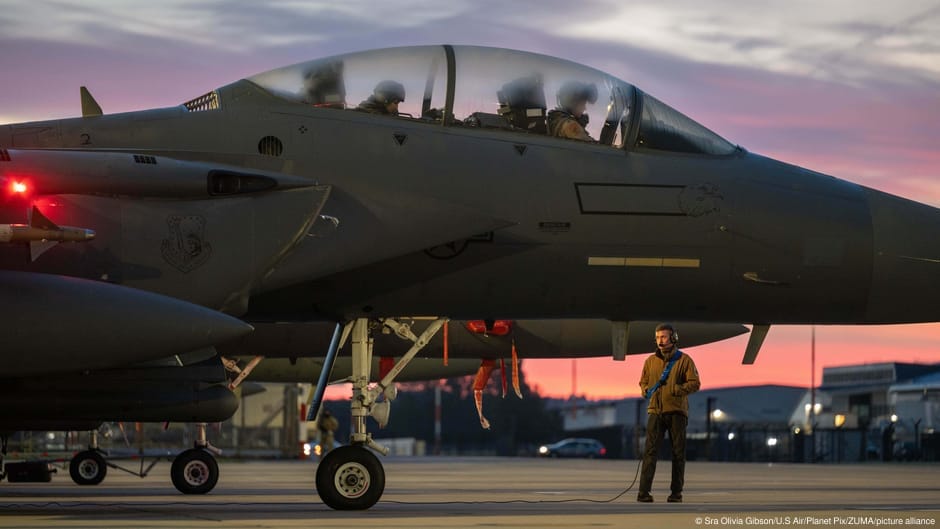
The US Air Force reported suspected unauthorised drone activity at RAF Lakenheath in eastern England on Friday evening, November 13, prompting personnel at the base to shelter in place. The incident puts renewed attention on the technologies used to detect and counter unmanned aircraft around sensitive infrastructure.
RAF Lakenheath is operated by Britain’s Royal Air Force and also hosts US military personnel. According to a US Air Force statement, the suspected drone activity caused no injuries or damage.
“Neither personnel, aircraft nor infrastructure were affected,” the US Air Force said.
US military representatives said they were continuing to work closely with British partners to protect their personnel and nearby communities. Sky News, which reviewed a copy of the warning distributed to military personnel at the base, reported that service members had been instructed to “shelter in place” when the drones appeared.
Residents of a neighbouring village heard sounds resembling a siren, according to the BBC. The Daily Mail also reported that people living near RAF Feltwell, another base about 11 kilometres from Lakenheath, heard an alarm on the evening of November 13.
Counter-drone technology moves higher on the defence agenda
Although officials disclosed no information about the number, type or origin of the suspected drones, the episode illustrates the operational challenge that has helped turn counter-unmanned aircraft systems into an important segment of defence technology. Startups and established contractors are developing tools that combine radar, radio-frequency monitoring, optical sensors, acoustic detection and software to identify small aircraft and assess potential threats.
For venture capital investors, incidents involving protected military sites can strengthen the commercial case for technologies that shorten detection times, reduce false alarms and coordinate responses across several locations. The same capabilities may also have applications at airports, energy facilities, ports and other critical infrastructure. However, the Lakenheath statement did not identify any supplier, procurement programme or new funding commitment connected with the alert.
The incident also highlights a central obstacle for founders in this market: detection alone is not enough. Counter-drone products must operate within strict legal, safety and communications constraints, particularly near civilian communities and active airfields. That can favour companies able to integrate hardware, data analysis and secure command systems, while also meeting the procurement requirements of allied governments.
From an M&A perspective, demand for integrated systems may encourage larger aerospace and defence groups to seek specialised capabilities from smaller companies. Sensor fusion, autonomous monitoring and electronic protection are areas where startups can contribute focused intellectual property. Still, no acquisition or investment activity was announced in connection with the events at Lakenheath.
Alert follows wider security developments at UK bases
The suspected drone activity occurred amid several other security developments involving US forces and British military installations. On November 9, the United States withdrew its military tanker aircraft from RAF Mildenhall in eastern England. The following day, a senior US military officer was detained in Britain on suspicion of spying for Russia. Local police said the detention was not connected to other counterterrorism investigations.
The Wall Street Journal reported that the United States relocated the aircraft because of a threat from Iran. The newspaper cited as an indirect supporting factor the US Air Force’s withdrawal of B-1 bombers from RAF Fairford, another English air base, in early October. Those aircraft had been used in strikes against Iran.
In late September, three white vans were discovered on the grounds of RAF Fairford, after which police temporarily detained five suspects. British Prime Minister Andy Burnham said there were “strong indications” that Iran had played a role in those events. Tehran described the accusations as unfounded.
Officials have not publicly linked the suspected drone activity at Lakenheath to the aircraft movements, the espionage arrest or the earlier incident at Fairford. For the defence innovation ecosystem, the immediate significance lies instead in the persistent difficulty of securing geographically dispersed installations against relatively small and potentially inexpensive unmanned systems.
That imbalance continues to shape investment interest in dual-use technology: low-cost aircraft can trigger disruptive security procedures, while effective monitoring may require networks of sensors and sophisticated software. The latest alert therefore adds to the demand signal for counter-drone startups, even though authorities have not established who operated the suspected aircraft or why they appeared near the base.



