Drone Strike on Russian Refinery Raises Risk for Regional Tech Startups
The reported attack on the KINEF refinery highlights infrastructure and funding risks for startups operating in Russia’s northwest.
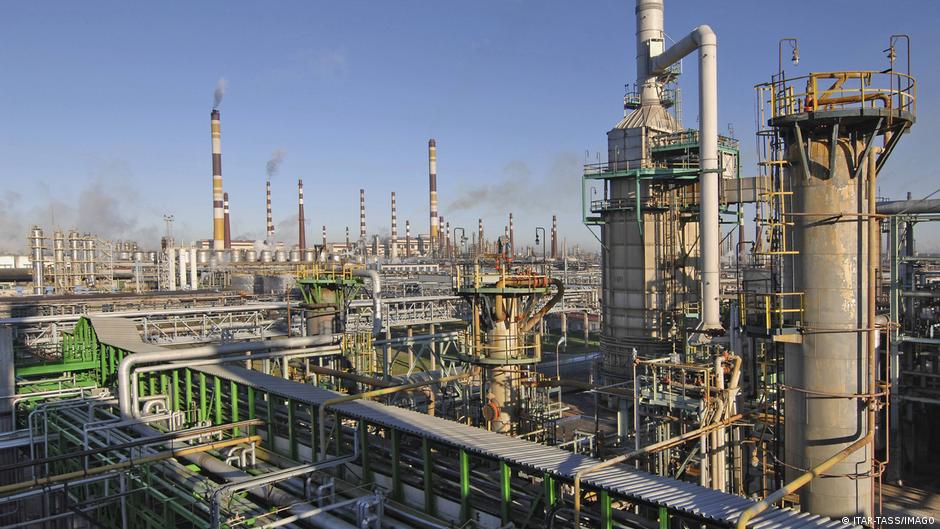
Ukrainian drones reportedly attacked the KINEF oil refinery in Kirishi, in Russia’s Leningrad region, overnight on Monday, November 9, placing renewed attention on the resilience of critical infrastructure that supports the wider regional economy. The facility, owned by the Surgutneftegas group, accounts for about 7% of Russia’s total oil refining and is a major supplier of fuel to the country’s northwest.
The reported strike has implications extending beyond the energy sector. For technology startups, venture investors and corporate innovation programs operating around St. Petersburg and the wider Leningrad region, repeated disruptions to strategically important industrial assets can raise operating costs, complicate risk assessments and influence decisions about funding, acquisitions and expansion.
Astra and Ukrainian monitoring channels on Telegram reported the attack, citing eyewitnesses. Leningrad region Governor Alexander Drozdenko confirmed that a drone had struck the industrial zone in Kirishi but did not identify the facility. He claimed that Russian air defenses had intercepted 113 drones over the region during the night. Videos posted on social media showed a fire on the refinery’s grounds.
According to Astra, Kirishi residents reported air-defense activity and powerful explosions near the KINEF complex. Residents also reported the evacuation of an apartment building. Ukraine had not officially commented on the reported strike.
Infrastructure risk reaches the innovation economy
KINEF is located roughly 100 kilometers southeast of St. Petersburg and is considered one of Russia’s largest refineries. Its role in supplying fuel to the northwest gives the facility significance for transportation, industrial production and logistics across a region that also contains a substantial concentration of technology companies, engineering businesses and early-stage ventures.
KINEF processes about 18 million tonnes of oil annually, representing approximately 7% of Russia’s total refining volume.
The refinery’s design capacity is estimated at 20 million to 21 million tonnes of crude oil per year. In recent years, it has processed around 18 million tonnes annually. The plant also supplies aviation kerosene to Pulkovo Airport, making its operations relevant to a transport hub serving St. Petersburg and connecting the region with domestic and international markets.
For startups, the immediate significance lies in exposure to essential services and supply chains. Any interruption affecting fuel availability or transportation can feed through to freight costs, employee mobility, hardware deliveries and data-center or backup-power planning. Young companies generally have fewer financial buffers than large corporations, leaving them more vulnerable to sudden changes in insurance, logistics or security expenses.
The incident may also sharpen investor scrutiny of startups whose business models depend on physical infrastructure in the region. Venture funds assessing industrial technology, logistics software, mobility services or energy-intensive businesses may place greater weight on operational redundancy and geographic diversification. That can lengthen due-diligence processes and make capital more selective, particularly for companies already contending with restricted access to international funding.
Sanctions and repeated attacks reshape deal calculations
Surgutneftegas was sanctioned by the United States, United Kingdom and European Union in 2025, and KINEF was also named in sanctions documents. Those restrictions add another layer of complexity for technology vendors, investors and potential acquirers evaluating relationships with companies connected to the refinery or its broader industrial supply chain.
Sanctions exposure can affect payment routes, access to imported equipment and the pool of counterparties able to participate in transactions. In the venture and M&A markets, that can reduce the number of eligible buyers for startups serving sanctioned industrial groups, complicate cross-border exits and increase the cost of legal and compliance reviews. Even companies without direct ties to KINEF may face broader questions about customer concentration and their reliance on Russian energy and infrastructure clients.
At the same time, repeated attacks on large industrial sites can increase demand for locally developed technologies in areas such as infrastructure monitoring, cybersecurity, autonomous inspection, emergency communications and supply-chain planning. The potential commercial opportunity, however, comes with heightened regulatory, sanctions and reputational risks. Investors considering such companies would need to distinguish between civilian resilience products and technologies that could have military or dual-use applications.
The Kirishi refinery has been targeted by Ukrainian drones several times in recent years. After a strike in late August 2026 damaged two primary refining units, the facility completely halted crude processing. That earlier shutdown demonstrates how damage to a limited number of critical units can interrupt operations across a major industrial complex.
For the regional innovation ecosystem, the latest reported attack reinforces a central challenge: startups are being asked to build resilient products while operating in an environment where physical infrastructure, sanctions policy and security conditions can change rapidly. The result may be stronger demand for risk-management technology, but also tighter funding conditions and more cautious M&A decisions across sectors linked to transport, energy and industrial production.



