Drone Strike Report in Krasnodar Raises Risk Concerns for Tech Investors
An OSINT assessment of a suspected strike on a regional security headquarters highlights operating risks for startups and investors in southern Russia.
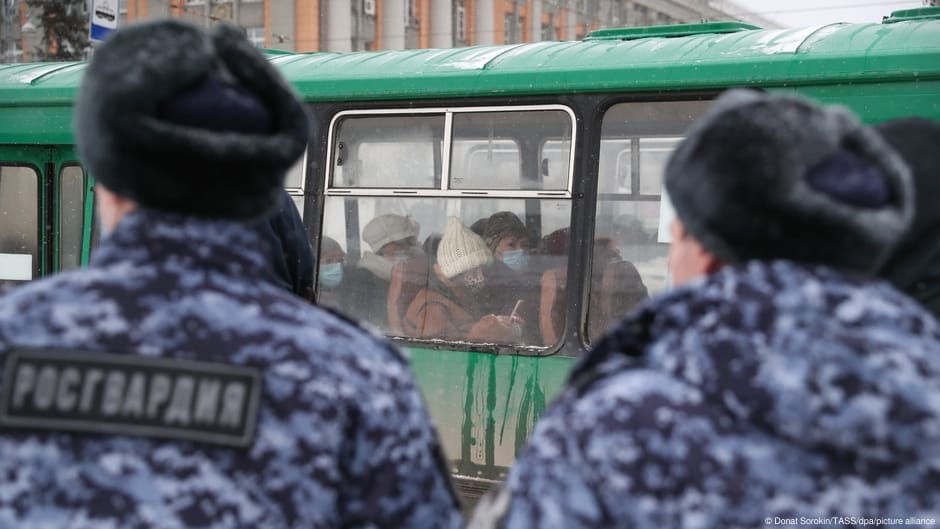
A Ukrainian drone attack may have struck the main directorate of Russia’s National Guard, known as Rosgvardiya, in the southern city of Krasnodar overnight on Sunday, November 22, according to an open-source intelligence assessment by the Russian outlet Astra.
The assessment was based on photographs submitted by a reader and video published by the monitoring channel Exilenova+. Astra’s journalists analyzed the visual material and concluded that the Rosgvardiya headquarters for the Krasnodar region was probably affected. The report did not establish the scale of any damage, and Russian officials had not confirmed that the facility itself was hit.
Residents reported a smell of burning during the night and shared photographs showing smoke. Krasnodar’s municipal authorities said a drone attack had been repelled, while restrictions were imposed at the city’s airport. At the time the original report was prepared, those measures had remained in place since the evening of November 21.
Operational risk extends beyond the reported target
For technology startups, venture capital firms and corporate innovation teams operating in southern Russia, the immediate relevance lies less in the identity of the reported target than in the broader disruption associated with recurring drone activity. Airport restrictions can complicate business travel, delay meetings and affect the movement of personnel, while uncertainty surrounding critical infrastructure may disrupt planning for companies dependent on predictable logistics and regional connectivity.
The available information does not indicate that any startup, technology company, venture fund or innovation center was directly affected. Nor does it provide evidence of an immediate change in funding activity or mergers and acquisitions. However, the reported events add to the security considerations facing investors assessing companies with employees, physical assets, suppliers or customers in the Krasnodar region.
The reported strike has not been officially confirmed, and the extent of any damage remains unclear.
Such uncertainty can influence due diligence even when the businesses under review are not direct targets. Investors may examine continuity plans, remote-working capacity, data redundancy, insurance coverage and dependence on local transport or energy infrastructure. Startups with hardware, logistics, agricultural technology, industrial software or other operations tied to physical sites may face greater exposure than companies able to move workloads and teams between regions.
Potential acquirers may likewise place additional emphasis on geographic concentration when evaluating transactions. A company with revenue, staff and infrastructure concentrated in one region can carry different operational risks from a distributed business. The reported incident does not by itself establish an effect on valuations or deal terms, but it adds another data point for investors and corporate buyers monitoring the operating environment.
Separate refinery reports remain unverified
Several local and Ukrainian Telegram channels also reported a possible attack on the Afipsky oil refinery in the Krasnodar region. That claim had not been confirmed by open-source analysts or government officials at the time of reporting and should therefore be treated separately from the visual assessment concerning the Rosgvardiya directorate.
The Afipsky refinery was last attacked by Ukrainian forces overnight on November 18. Repeated reports involving energy infrastructure are relevant to technology companies because power availability, fuel supply and transport costs can affect data operations, manufacturing, delivery networks and other parts of the innovation economy. In this case, however, there was no verified information showing fresh damage to the refinery or any resulting commercial disruption.
The distinction between verified facts, visual assessments and unconfirmed social-media claims is particularly important for venture investors and founders making operational decisions. The municipality confirmed that a drone attack had been repelled, residents documented smoke and a burning smell, and airport restrictions were imposed. The conclusion that the regional Rosgvardiya headquarters was struck remains an OSINT assessment rather than an official finding, while the refinery report remains unconfirmed.
For the regional startup ecosystem, the episode underscores the growing importance of resilience rather than demonstrating a measurable investment shock. Companies seeking capital may increasingly need to show that they can maintain operations during transport restrictions or localized infrastructure incidents. Investors, meanwhile, are likely to continue separating documented disruption from preliminary wartime reporting as they assess exposure, transaction risk and the durability of technology businesses in the region.



