Eisenkot Coalition Bid Brings New Uncertainty for Israel’s Tech Sector
Israel’s startup and investment ecosystem faces a pivotal coalition process after opposition leader Gadi Eisenkot secured 67 recommendations.
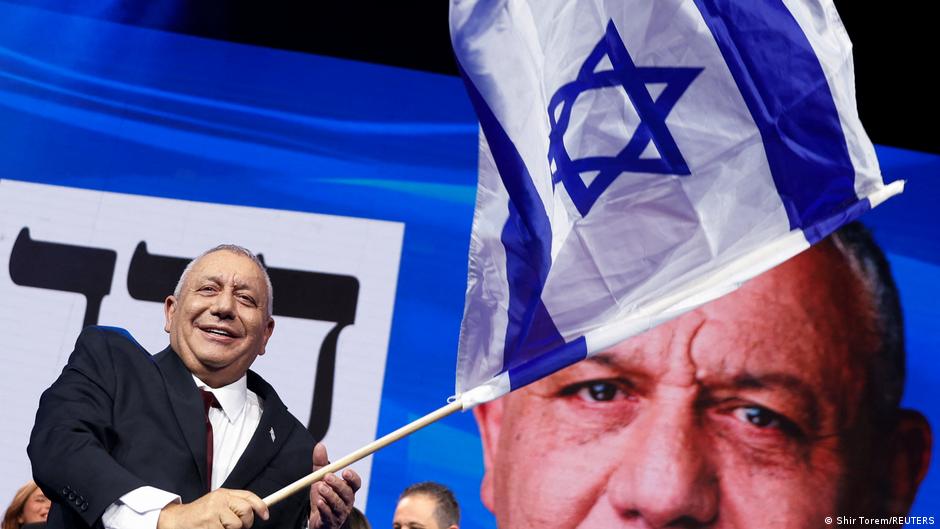
Israeli President Isaac Herzog will ask opposition leader Gadi Eisenkot to form a new government following the country’s recent election, opening a coalition process that could influence the policy environment for Israel’s technology startups, venture capital firms and international investors.
Herzog will formally give the mandate to Eisenkot, leader of the opposition Yashad party, at the presidential residence in Jerusalem on the evening of Sunday, November 8, the president’s office said on Saturday, November 7. Eisenkot will then have 28 days to assemble a governing coalition. The president may extend that period by another 14 days if necessary.
Receiving the mandate does not automatically make Eisenkot prime minister. If he cannot form a government within the allotted period, the mandate could pass to another politician, including Benjamin Netanyahu, leader of the governing Likud party. Should that effort also fail, Israel could face another election, prolonging uncertainty for businesses and investors.
Arab parties hold the coalition balance
Herzog made the decision after extensive consultations with politicians and party leaders about their preferred candidate for prime minister. Eisenkot received 67 recommendations, compared with 46 for Netanyahu, according to The Times of Israel.
No political force won a majority in the October 27 parliamentary election. A majority requires 61 seats in the Knesset. The governing far-right coalition led by Likud lost its majority and secured 53 seats, while the four-party alliance headed by Eisenkot’s Yashad holds 48.
Two Arab parties, which won a record combined 19 seats, are therefore positioned to play a decisive role in Eisenkot’s attempt to build a coalition. Eisenkot, a former chief of the General Staff of the Israel Defense Forces, has previously rejected an alliance with Arab parties. Any change in that position could determine whether he can construct a parliamentary majority.
For Israel’s innovation economy, the central question is not only who leads the next government, but whether the coalition process produces durable institutions and predictable policymaking.
Netanyahu earlier called for a national unity government intended to prevent parties representing Israel’s Arab citizens, who have citizenship and voting rights, from participating in government. The competing coalition strategies leave Israel’s political direction unresolved at a time when technology companies and venture investors must assess regulatory continuity, public spending priorities and the country’s relationships with Western markets.
Political stability matters to the startup ecosystem
Israel’s startup sector depends on long investment horizons, cross-border capital and confidence in the country’s institutions. The election result does not by itself establish how a potential Eisenkot government would approach innovation policy, taxation, technology regulation or support for young companies. No specific startup or venture-capital platform was detailed in the reported coalition process.
Nevertheless, the ability to establish a stable government could shape sentiment around fundraising and mergers and acquisitions. A prolonged impasse or another election would extend the period in which founders, funds and prospective acquirers lack clarity about the governing coalition. Conversely, a workable majority could give companies a clearer basis for planning, even if the coalition’s policy agenda would still need to be negotiated among parties with different priorities.
Eisenkot entered politics in 2022. After the Hamas attack on Israel, he joined Netanyahu’s war cabinet for a period before returning to the opposition. He has sharply criticized the prime minister’s governing style and the conduct of the military operation in the Gaza Strip.
He has also condemned violence by Israeli settlers against Palestinians in the occupied West Bank. Eisenkot argues that such violence contributed to strained relations between Israel and Western countries. Those diplomatic relationships are relevant to the wider innovation ecosystem because Israeli startups, venture funds and potential acquisition targets operate across international markets, although the source material provides no specific evidence of how Eisenkot’s position would affect individual deals or funding rounds.
Eisenkot’s political reputation draws on both his military career and a personal tragedy. His 25-year-old son was killed in fighting in Gaza in December 2023, followed by two of his nephews. One of Eisenkot’s main election promises was to establish an independent state commission to investigate the security failures of October 7, 2023.
He is also associated with the Israeli military strategy known as the Dahiya doctrine. It calls for an asymmetric, disproportionately large response to security threats and the destruction of civilian infrastructure in areas used by an adversary to fire on Israel. Eisenkot applied the doctrine against Hezbollah in Lebanon during the 2006 Lebanon war.
The immediate focus now shifts to coalition negotiations and the two Arab parties holding the pivotal seats. Until Eisenkot either secures a majority or exhausts his mandate, Israel’s technology and investment community will remain exposed to political uncertainty, with the composition and durability of the next government likely to matter more in the near term than any policy agenda that has yet to be defined.



