EU Budget Deadlock Clouds Funding Outlook for Europe’s Startup Ecosystem
Deep divisions over the EU’s 2028-2034 budget leave future innovation funding subject to a broader dispute over spending and debt.
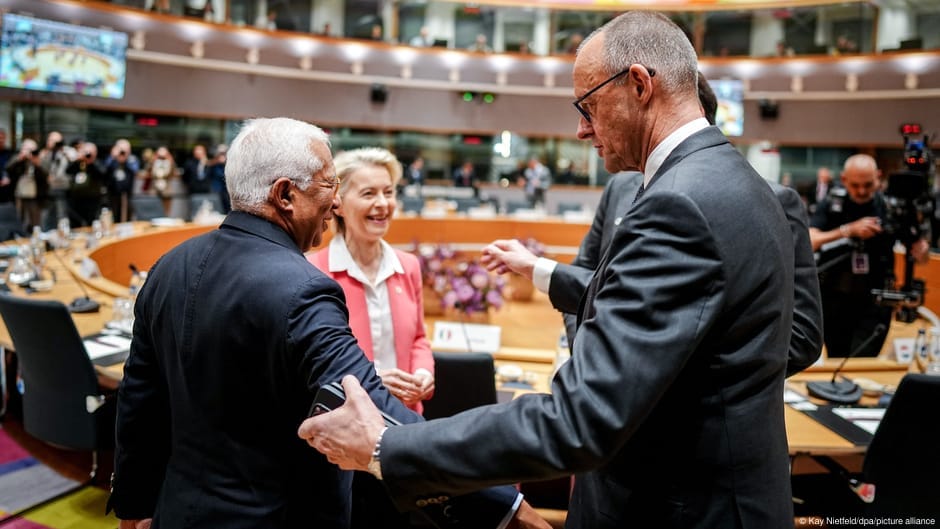
European Union leaders ended a special two-day budget summit early without reaching an agreement on the bloc’s financial framework for 2028-2034, prolonging uncertainty over the public funding environment that supports Europe’s innovation economy.
The Brussels meeting, which opened on Thursday, November 26, concluded after its first day when leaders decided that their positions remained too far apart. German Chancellor Friedrich Merz told a press conference that an agreement would not be possible that evening, although he said he still hoped a deal could be reached before the end of the year.
“We understand that we will not reach a result this evening,” Merz said.
The dispute centers on the overall size of the seven-year budget, the use of common borrowing and the distribution of spending among member states. Those choices will also define the resources available for EU-backed research, regional development and other programs that form part of the operating environment for technology startups, venture investors and corporate innovation across Europe.
Spending Cuts Divide Europe’s Largest Economies
EU leaders abandoned plans to continue negotiations on the morning of November 27 and instead held a final round of discussions late on November 26, according to dpa. Talks are scheduled to resume at the December 17-18 summit.
Before the special meeting began, Merz met leaders from six net contributors that oppose higher EU spending: the Netherlands, Austria, Sweden, Finland, Denmark and Belgium. During the summit, he also criticized the €1.78 trillion seven-year budget proposed by European Council President António Costa on November 21.
Costa’s proposal was approximately €204 billion below the amount put forward by the European Commission in the summer of 2025. Merz nevertheless argued that expenditure should be reduced further, positioning Germany alongside governments seeking tighter limits on the bloc’s long-term financial commitments.
The German chancellor also opposed financing at the European level through additional borrowing. EU countries are due to pay more than €150 billion in interest on debt during the 2028-2034 period, and Merz warned that further increases in borrowing could leave the union unable to act effectively.
Merz called for a “fair distribution” of costs and demanded that budget rebates be retained, allowing net-contributor countries to recover part of their payments. Germany contributes about one-quarter of the entire European budget but directly receives only around 8% of those funds back, he said.
Italy, Spain, France and Poland are among the countries opposing the push for a smaller budget. Their leaders want more funding for economically weaker regions and agricultural development. Italian Prime Minister Giorgia Meloni said her country was not prepared to approve a budget under which it would contribute more while receiving less, adding that the sides appeared “light-years” away from an agreement on financing.
French President Emmanuel Macron described the further reductions advocated by Merz as a “strategic mistake.” Macron also called for an agreement before year-end, saying his participation in negotiations would become more difficult in the following months because France’s presidential election is scheduled for April 18.
Innovation Funding Faces a Wider Fiscal Contest
For Europe’s startup and venture capital ecosystem, the summit produced no dedicated decision on technology funding. The significance lies instead in the unresolved size and structure of the overall budget from which future EU priorities will be financed.
A deeper reduction in expenditure would intensify competition among policy areas when member states allocate resources for 2028-2034. Regional support is particularly relevant to emerging technology hubs outside Europe’s largest capitals, while broader public investment can influence early-stage company formation, university commercialization and the pipeline of businesses later targeted by venture capital or strategic acquirers.
The opposing positions also expose a fundamental debate over how Europe intends to finance collective priorities. Net contributors are emphasizing fiscal restraint and debt-service obligations, while other major member states argue that cuts would weaken support for regions and sectors dependent on EU investment. Until the headline budget is agreed, the scale of downstream programs—and the extent to which they can help crowd in private capital—will remain unsettled.
The deadlock comes as European leaders must balance long-term domestic investment with immediate geopolitical financing requirements. In addition to the seven-year budget, the summit discussed further financial assistance for Ukraine, including a proposed additional €45 billion loan to Kyiv in 2027.
Merz called assistance to Ukraine a task that EU countries must address jointly. He stressed that the union consists of 27 states, “not 23 or 24,” referring to the fact that the Czech Republic, Slovakia and Hungary are not participating in the €90 billion loan for Ukraine covering 2026-2027, which the EU finalized in April.
The December summit will therefore carry consequences beyond the budget’s aggregate figure. Its outcome will indicate how much fiscal capacity Europe is prepared to reserve for long-term economic development while meeting debt obligations, supporting agriculture and weaker regions, and financing Ukraine. For founders and investors, the immediate result is continued uncertainty over the public-policy foundation for Europe’s next cycle of innovation, scale-up financing and technology-sector consolidation.



