EU Closes Erasmus Programmes to Russia, Tightening Talent Pipeline
The restrictions could narrow European education routes for Russia-based students and researchers, with implications for startup talent mobility.
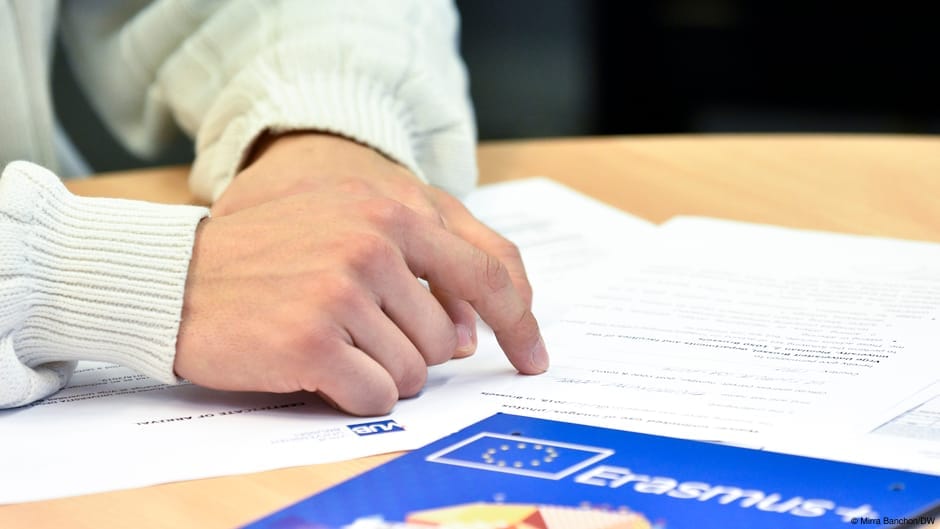
The European Union has barred organisations based in Russia and individuals residing in the country from participating in Erasmus+ activities through the end of 2027, closing an education and research channel that has connected thousands of Russian students and academics with European institutions.
Under the European Commission’s programme guide, presented on Thursday, November 19, organisations established in Russia and people residing there cannot participate “in any capacity” in “any activities” conducted under Erasmus+. The wording applies broadly to Russia-based entities and residents rather than only to Russian citizens.
People living in Russia are also no longer eligible for scholarships under Erasmus Mundus Joint Master programmes at European universities, regardless of their citizenship. The document does not specify whether the restrictions affect scholarships and projects whose funding had already been approved.
A narrower route into Europe’s innovation ecosystem
Although Erasmus is primarily an education and mobility programme, its relevance extends into Europe’s innovation economy. Universities serve as important entry points into startup hubs, research partnerships and founder networks. Limiting access for Russia-based participants may therefore reduce the movement of students and researchers into the communities from which new technology companies, scientific ventures and specialist teams often emerge.
For venture-backed startups, the immediate issue is less about direct capital than about the availability and circulation of skilled workers. Erasmus exchanges and joint master’s programmes can help participants form cross-border professional relationships, gain access to university research and encounter potential co-founders, employers and investors. Excluding residents of Russia removes one established route into those networks through at least 2027.
Organisations and individuals in Russia cannot participate “in any capacity” in “any activities” under Erasmus+, according to the programme guide.
The restrictions may also complicate collaboration for European startups, universities and research-linked ventures that previously drew on Russia-based academic partners or recruited programme participants. The impact will depend partly on how the rules are implemented and whether previously approved grants and projects are allowed to continue, an issue the document leaves unresolved.
Russia-based founders and technical specialists seeking connections with European technology ecosystems may need to rely more heavily on private education, direct hiring, commercial partnerships or relocation pathways outside Erasmus. Those alternatives can involve different costs and eligibility requirements, potentially making access more uneven. The policy could consequently influence where internationally mobile talent chooses to study, conduct research and establish companies.
Long-running programme faces a larger funding cycle
Erasmus has operated for more than 30 years. Between 2014 and 2021, approximately 13,200 students and researchers from Russia participated in the programme, illustrating the scale of the academic links now affected by the exclusion.
The change arrives as European policymakers consider a substantial expansion of Erasmus funding. On October 22, the European Parliament backed increasing the programme’s budget to €47.4 billion for the 2028-2034 period. The final amount still requires agreement with EU member states.
A larger budget could deepen the programme’s role in developing Europe’s broader talent base, including graduates who later join startups, commercialise research or contribute to innovation clusters. Russia-based organisations and residents, however, are excluded under the current guidance through 2027, and the source document does not establish their status for the subsequent funding period.
Restrictions follow earlier EU measures
The latest rules build on measures adopted after Russia’s full-scale invasion of Ukraine in 2022. Following the invasion, the Council of the European Union prohibited financial and other support for Russian state organisations through programmes financed by the EU budget.
The new programme language reaches beyond state organisations by excluding organisations based in Russia and individuals residing there from Erasmus+ participation. The separate Erasmus Mundus scholarship restriction likewise applies according to place of residence and covers people living in Russia regardless of nationality.
For the venture capital and startup market, the longer-term consequences are likely to emerge through changes in talent flows and institutional relationships rather than an immediate change in financing. European investors assessing research-intensive startups often consider access to universities, specialist recruitment and international collaboration alongside market potential. Any sustained reduction in academic mobility can alter those inputs, particularly in fields where advanced technical expertise and cross-border research networks are central to company formation.
Uncertainty over previously approved funding remains a practical concern for participants and partner institutions. Until the treatment of existing scholarships and projects is clarified, affected universities, researchers and organisations may face difficulty planning ongoing work. That ambiguity could also matter to startups connected to academic projects if they depend on researchers, partnerships or intellectual networks associated with Erasmus-supported activity.



