France Protests Raise New Risks for Startups and Venture Investors
Nationwide demonstrations over education and living costs are creating operational uncertainty for France’s technology and investment ecosystem.
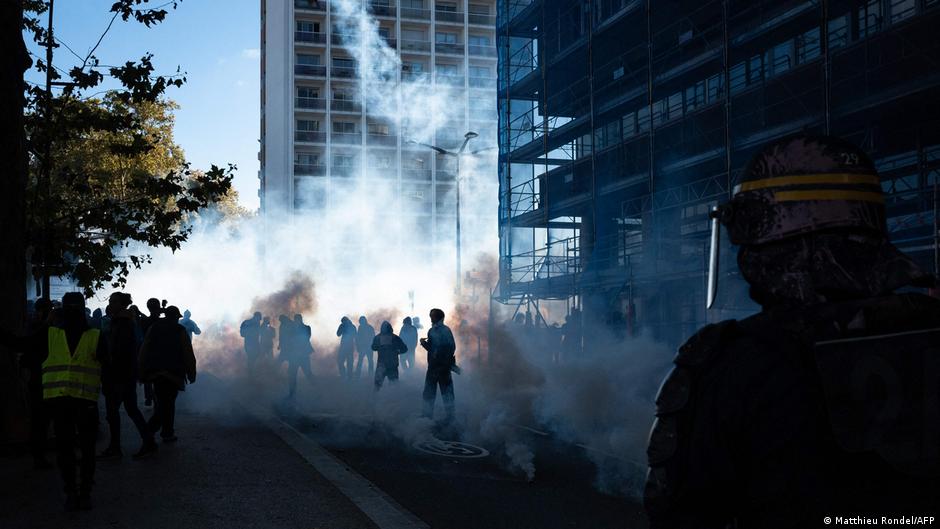
France detained 565 people during a third consecutive Saturday of nationwide mass protests, as demonstrations over education, the cost of living and broader social concerns continued to test the country’s stability. For technology startups and venture investors, the unrest introduces fresh questions about business continuity, talent retention and the resilience of one of Europe’s leading innovation ecosystems.
Authorities said 320,000 people participated across France, including 70,000 in Paris. Organizers put nationwide attendance at nearly 500,000. Although the official figure was lower than for the demonstrations on October 17 and October 24, the scale of the mobilization remains significant for founders, employees and investors operating in major French technology centers.
The protests were largely peaceful, Interior Minister Laurent Nuñez said, but he accused members of far-left groups of using “monstrous violence” against law enforcement officers. A total of 70,000 police officers were deployed throughout France to maintain security.
Official estimates indicate that protest participation has declined from 550,000 on October 17 to 410,000 on October 24 and 320,000 in the latest demonstrations.
Operational uncertainty for startup hubs
Paris, home to a large concentration of French startups, venture funds and corporate innovation teams, was one of the main centers of unrest. Five police officers were injured in clashes with several hundred protesters in the capital. Three were wounded by Molotov cocktails, and one officer’s clothing caught fire, causing a burn to his leg.
Protesters also threw paving stones and rocks at police, who responded with tear gas and batons. Such confrontations can disrupt mobility, complicate access to offices and events, and affect companies whose operations depend on urban transport, retail activity or in-person services. The source figures do not quantify any direct financial impact on startups, investment deals or mergers and acquisitions.
Clashes were reported beyond Paris. Police in Toulouse used water cannons and tear gas against participants in an unauthorized demonstration. An unauthorized march involving approximately 10,000 people took place in Marseille before developing into confrontations with law enforcement. Police also clashed with protesters in Lyon, where tear gas was used against people involved in disorder, according to France24.
For venture-backed businesses, prolonged unrest may become an additional factor in risk assessments, particularly for companies with physical locations, logistics networks or large urban workforces. Investors typically evaluate regulatory conditions, labor availability and operating stability when considering funding or acquisitions. The demonstrations do not by themselves establish a change in French venture financing or M&A activity, but they add uncertainty to the environment in which those decisions are made.
Education concerns intersect with the talent pipeline
The nationwide movement began with protests by school pupils and university students in late September. Initial grievances included teacher shortages, overcrowded classrooms, excessively long school days, outdated school buildings and a lack of modern equipment. Participants also expressed anxiety about their future, including difficulties gaining admission to universities.
Those complaints have direct relevance to France’s longer-term innovation ecosystem. Technology companies depend on a sustained pipeline of educated workers, while founders and investors rely on universities and schools to develop technical, scientific and entrepreneurial talent. Concerns about educational capacity and modern equipment could therefore resonate beyond the immediate protest movement, even though no specific effect on startup hiring has been reported.
The demonstrations subsequently attracted people dissatisfied with other social issues, including the rising cost of living. They have also increasingly descended into disorder marked by burning garbage containers and cars, severe clashes with police, vandalism and looting. Higher living costs can place pressure on startup employees and may influence wage expectations, although the source provides no figures on salaries, recruitment or company expenses.
A wider European signal
The French demonstrations have inspired young people to protest in other European countries, including Italy, Germany and Belgium. In major German cities, demonstrations on October 31 ended in disorder. The cross-border spread gives the movement broader relevance for venture firms and technology companies that manage teams, offices and investment portfolios across several European markets.
At the same time, official attendance estimates show a steady decline over the three Saturdays. Authorities counted 550,000 participants on October 17, 410,000 on October 24 and 320,000 in the latest protests. Organizers’ estimate for the most recent demonstrations was substantially higher, at almost 500,000.
Whether the declining official turnout develops into a sustained easing of tensions will matter to France’s business and innovation communities. For now, the protests remain a social and operational risk rather than a documented financing shock. Startup leaders and investors will be watching whether education and living-cost grievances lead to policy responses, continued disruption or longer-term changes affecting the country’s ability to attract talent and capital.



