G20 Talks Show No Ukraine Breakthrough, Extending Risk for European Startups
EU foreign policy chief Kaja Kallas said Moscow showed no readiness for peace talks, prolonging uncertainty across Europe’s innovation economy.
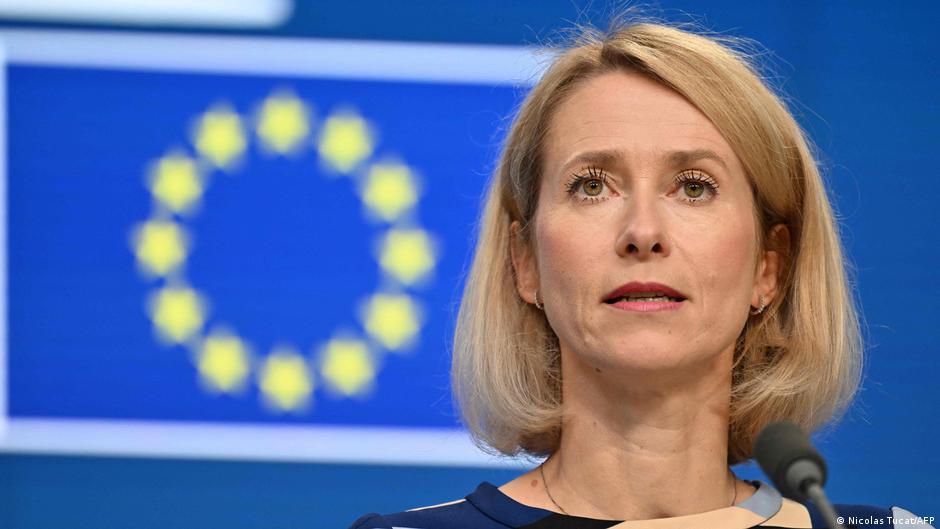
Russia offered no indication that it was prepared to negotiate an end to the war in Ukraine during a meeting of G20 foreign ministers in Atlanta, according to Kaja Kallas, the European Union’s high representative for foreign affairs and security policy.
Kallas said on Friday, October 30, that Russian Foreign Minister Sergei Lavrov had not demonstrated Moscow’s willingness to enter peace negotiations. Her assessment points to continued geopolitical uncertainty for Europe, with consequences extending beyond diplomacy and defense to the region’s technology startups, venture capital market and cross-border investment environment.
Asked by an AFP journalist whether Lavrov had signaled any willingness to make concessions to end the war, Kallas answered in the negative. She argued that Russia’s conduct remained more significant than its public statements.
“Even if they claimed otherwise in words, their actions say something else,” Kallas said.
Russia must demonstrate “in practice that it is ready for negotiations,” she added. Kallas also noted that July, August and September had been the deadliest months for Ukrainian civilians.
Geopolitical uncertainty weighs on startup investment
The absence of diplomatic progress leaves Europe’s innovation ecosystem operating against a prolonged backdrop of political and security risk. For venture-backed companies, that environment can affect fundraising assumptions, expansion planning, talent mobility and the due diligence applied to international transactions.
Startups with exposure to Ukraine, Russia or neighboring markets face particularly complex operating conditions. Even when companies have no direct business in the conflict zone, investors may examine supply chains, cybersecurity protections, sanctions compliance and the geographic concentration of customers and employees more closely. Such scrutiny can lengthen investment and acquisition processes, especially when deals involve sensitive technologies or cross-border ownership.
At the same time, an extended conflict can reinforce investor attention on technologies linked to resilience. Cybersecurity, secure communications, energy infrastructure and tools supporting distributed operations are among the areas whose strategic relevance may rise when governments and businesses plan for continuing instability. The G20 exchanges did not establish any new investment measures, but they provided little basis for founders or investors to assume that geopolitical conditions will normalize soon.
Kallas also criticized Lavrov’s presentation at the meeting. “Of course, he voiced many lies, many distorted facts, which we were subsequently able to refute,” she said. She called for stronger pressure on Moscow.
Any intensification of pressure could become relevant to venture capital and technology M&A if it produces additional restrictions affecting capital flows, counterparties or dual-use products. The reported remarks did not specify new sanctions or commercial rules. Nevertheless, investors evaluating European technology businesses must account for the possibility that political measures could change the compliance requirements surrounding financing, exports and acquisitions.
European ministers resist a return to normal relations
The diplomatic atmosphere in Atlanta also underscored Europe’s unwillingness to treat engagement with Russia as a return to routine relations. German Foreign Minister Johann Wadephul said earlier that European participants in the G20 foreign ministers’ meeting had refused to join a group photograph with Lavrov because of the continuing war in Ukraine.
“There are no normal relations with Russia,” Wadephul said. He acknowledged that contacts with the Russian side were necessary to discuss disagreements, but stressed that those contacts should not create the impression that the parties were returning to their usual format of interaction.
That distinction matters for businesses and investors attempting to interpret diplomatic engagement. Meetings between officials can reopen channels of communication without signaling an easing of political or economic constraints. For founders considering market entry and venture firms assessing regional exposure, the Atlanta gathering therefore offered dialogue but no clear evidence of de-escalation.
Technology companies planning acquisitions or fundraising rounds may consequently continue to price geopolitical risk into their strategies. Buyers can seek stronger contractual protections, while investors may place greater weight on regulatory reviews and a startup’s ability to operate across jurisdictions. Companies dependent on international hiring or infrastructure may also need contingency plans for further disruption.
The meeting ultimately produced sharply different political messages rather than a visible path toward negotiations. Kallas’s demand that Russia demonstrate its intentions through action, combined with the European ministers’ refusal to present relations as normal, suggests that the innovation economy will continue to operate under elevated uncertainty. Until diplomacy produces measurable progress, European startups and their backers are likely to treat the war not as a temporary market shock, but as a continuing factor in investment, expansion and M&A decisions.



