German Fears of Russia Add Risk for Startups, Investors and Energy Deals
An Ipsos poll points to lasting geopolitical and energy uncertainty for Germany’s technology startups, venture funds and prospective acquirers.
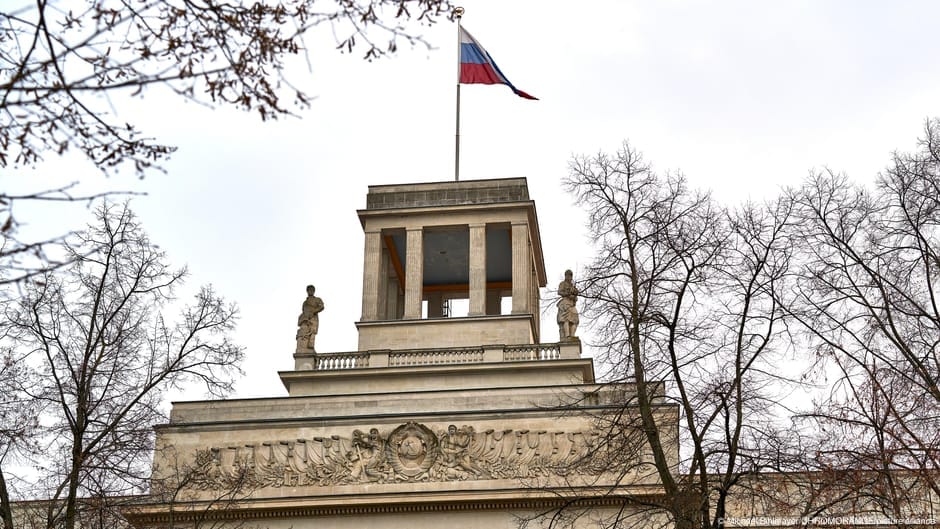
More than 60% of Germans view Russia as a threat to their country, according to a new poll that highlights the geopolitical uncertainty confronting Germany’s startup and venture capital ecosystem. While the survey does not measure business sentiment directly, its findings point to a political environment in which security, energy policy and resilience are likely to remain important considerations for founders, investors and corporate buyers.
Der Spiegel reported the results on Monday, November 16, citing an Ipsos survey conducted from November 5 to 8 among 2,019 German citizens eligible to vote. Twenty-four percent of respondents rejected the view that Russia poses a threat. The poll’s statistical margin of error is up to 2.2 percentage points.
Opinions varied sharply by political affiliation. More than 80% of voters supporting the conservative Christian Democratic Union and Christian Social Union bloc, the Social Democratic Party or Alliance 90/The Greens considered Russia a threat to Germany. The same view was held by 54% of respondents who voted for the Left Party.
Among voters for the far-right Alternative for Germany, or AfD, only 26% said Russia represented a danger. Thirty-nine percent of AfD supporters said they completely disagreed with that characterization, while another 21% said they tended to disagree. A similar distribution appeared among voters for the left-wing populist BSW party, founded by Sahra Wagenknecht.
Security concerns reshape the innovation agenda
For technology companies and their financial backers, broad concern about Russia provides context for an innovation market increasingly attentive to national security, cyber resilience, critical infrastructure and supply-chain protection. The poll offers no figures on venture investment or startup performance, but the level of public concern may reinforce political support for technologies intended to reduce strategic vulnerabilities.
This environment can affect how venture funds assess market risk and how corporate acquirers conduct due diligence. Startups dependent on sensitive infrastructure, cross-border data flows, industrial supply chains or volatile energy inputs may face closer scrutiny. Companies offering cybersecurity, infrastructure monitoring, energy efficiency or operational resilience may, by contrast, find their products aligned with prominent public concerns.
Regional differences add another layer for investors and founders deciding where to hire, expand or sell. In western Germany, 65% of respondents considered Russia a threat regardless of political preference, compared with 53% in the country’s eastern regions. That gap may matter to companies navigating local attitudes toward security policy, Russian commercial ties and the energy transition, although the survey does not establish any direct effect on regional funding or M&A activity.
AfD and BSW are both associated with pro-Russian narratives. Nevertheless, nearly 40% of their supporters agreed that Russia bears responsibility for the war against Ukraine. Across the full sample, 55% completely agreed with that statement and another 18% tended to agree.
The survey depicts a German market where geopolitical exposure is no longer a peripheral issue for long-term business planning.
Energy divisions complicate startup planning
Germans were almost evenly divided over whether imports of Russian oil and gas should resume. Forty-four percent opposed renewed supplies, 42% supported them and 14% were undecided. That narrow split leaves energy policy politically contested, creating uncertainty for energy-intensive startups and scaleups as well as for investors modeling future operating costs.
The division also shapes the commercial setting for climate and energy innovation. A return to Russian supplies and continued efforts to reduce dependence would imply different trajectories for prices, infrastructure and demand. The polling does not indicate which course Germany will take, but it shows that neither position commands a decisive public majority. Venture investors evaluating clean-energy software, storage, industrial technology or alternative supply solutions must therefore account for policy uncertainty alongside technical and market risk.
Recent warnings from German intelligence services have intensified the wider security debate. The agencies have warned that Russia could begin testing NATO’s resolve and cohesion by 2030 through targeted operations on alliance territory. Asked about reports that a war between Russia and Germany could begin within the next four years, 43% of respondents said they were concerned.
Concern was higher among women, at 50%, than among men, at 37%. It also differed substantially by age: 54% of people aged 18 to 29 expressed fears about a possible war, compared with 35% of those aged 60 to 75.
The elevated concern among younger Germans is particularly relevant to the innovation economy because that age group overlaps with much of the startup workforce and the next generation of founders. The poll does not show whether those fears affect employment, entrepreneurship or investment decisions. It does, however, underline the social backdrop against which German technology companies will compete for talent and capital.
For the country’s venture and M&A markets, the central message is one of persistent strategic uncertainty. Political divisions remain pronounced, especially over Russia and energy imports, but majorities assign responsibility for the Ukraine war to Russia and regard it as a threat. Startups, funds and prospective acquirers will need to treat geopolitical resilience as a continuing factor in financing, product strategy and transaction planning.



