Germany’s EV Surge Favors Chinese Rivals as Local Carmakers Lose Ground
Electric vehicle registrations jumped about 80% in October, sharpening competitive pressure across Germany’s automotive innovation ecosystem.
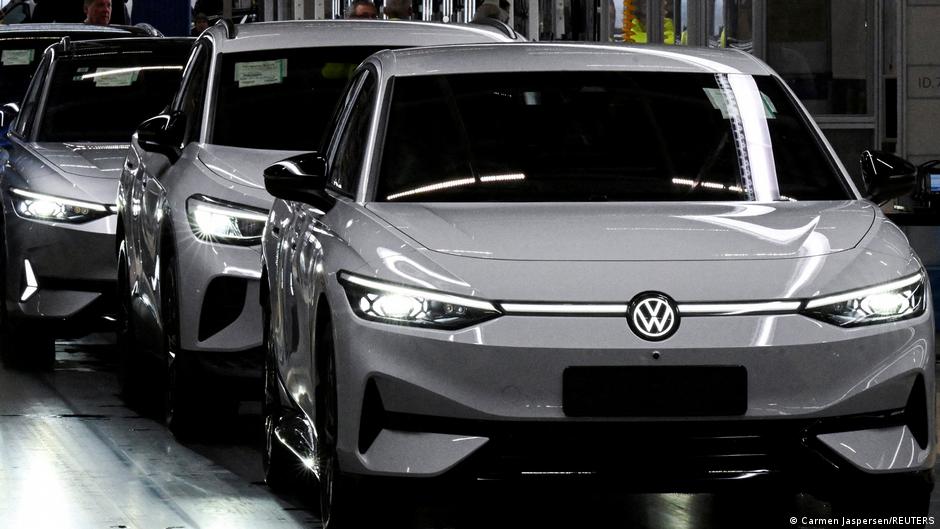
Germany’s electric vehicle market is expanding rapidly, but the acceleration is delivering its strongest gains to foreign manufacturers rather than the country’s established automotive groups. The shift is intensifying competitive pressure in Europe’s largest car market and could influence investment, partnerships and consolidation across the mobility technology sector.
According to Germany’s Federal Motor Transport Authority, or Kraftfahrt-Bundesamt (KBA), approximately 254,500 new passenger cars were registered in October 2026. Around 94,000 of those vehicles were fully electric, representing an increase of roughly 80% compared with the same period in 2025.
The figures indicate that fully electric models accounted for a substantial portion of new registrations during the month. At the same time, demand for vehicles with internal combustion engines, a category that also includes hybrid cars in the reported data, fell sharply from October last year. The KBA recorded about 62,400 new registrations for those vehicles in October 2026.
Subsidies and energy costs reshape demand
High fuel prices and a government subsidy program for electric vehicle purchases are the main factors behind the changing market, according to Reuters. The subsidy program was introduced in May 2026, giving motorists an additional financial incentive to choose fully electric cars as Germany continued to contend with the effects of the energy crisis.
For technology startups and venture investors, a sustained increase in electric vehicle adoption can expand the addressable market surrounding the cars themselves. Charging technology, fleet software, battery services, energy management and other mobility infrastructure all depend on a sufficiently large base of electric vehicles. Germany’s registration growth therefore strengthens the commercial backdrop for companies building products around electrified transport, even though the source data does not specify funding volumes or individual startup performance.
Germany’s EV market is growing quickly, but domestic manufacturers are not capturing the largest share of that momentum.
The combination of public subsidies and high conventional fuel costs also highlights the extent to which policy can alter the outlook for emerging mobility businesses. Startups operating in this market face an opportunity created partly by public incentives, while investors must assess how durable consumer demand will remain if subsidy conditions or energy prices change.
Chinese manufacturers capture the fastest growth
Despite the rapid rise in Germany’s electric vehicle demand, foreign automotive groups are emerging as the primary beneficiaries, according to dpa. Chinese manufacturers recorded the strongest growth. Their share of the market increased from 5.2% to 8.4%, according to consulting firm EY.
German manufacturers, meanwhile, are losing electric vehicle market share month after month. That decline is significant for an industry that has historically anchored Germany’s manufacturing base and supported a broad network of suppliers, engineering companies and technology developers.
The market-share shift may create openings for startups able to help established manufacturers reduce development cycles, improve software capabilities or lower production costs. It may also make partnerships with technology providers more strategically important as domestic groups respond to increasingly effective foreign competition. However, the registration figures alone do not show whether German automakers will pursue acquisitions, minority investments or internal development to close the gap.
For venture capital firms, the emerging competitive landscape presents a more complex opportunity than simple growth in vehicle sales. Chinese manufacturers’ expanding presence could create demand for European distribution, charging, servicing and localization partners. At the same time, German automakers’ weakening position could increase interest in technologies that offer faster product differentiation, particularly across software-defined vehicle systems, batteries, manufacturing and energy integration.
Pressure builds across the mobility ecosystem
The figures also suggest that Germany’s innovation ecosystem will need to adapt to a market in which the fastest-growing brands may not be domestic. Startups selling exclusively to incumbent German carmakers could face different risks from companies serving multiple manufacturers or providing infrastructure that benefits from overall EV adoption regardless of brand.
Potential consolidation is another issue for investors to watch. Sustained pressure on incumbent profits and market share can encourage strategic transactions, although no specific deals are identified in the registration data. Mobility startups with proven technology, established industrial relationships or access to critical capabilities may become more relevant to automakers seeking to respond quickly. Equally, weaker suppliers may encounter pressure if customer volumes shift toward manufacturers outside their traditional networks.
Germany’s October results ultimately show two trends moving in opposite directions: electric vehicle demand is rising strongly, while domestic automotive groups are steadily surrendering ground within that expanding segment. For startups and venture investors, the opportunity lies in the market’s continued electrification. The central risk is that competitive advantage, investment activity and innovation leadership may increasingly move toward companies connected to foreign manufacturers, particularly rapidly growing Chinese brands.



