Germany’s Gen Z Protests Raise New Risks for Urban Startup Hubs
Unrest across major German cities highlights economic pressures affecting young talent, urban commerce and the wider innovation ecosystem.
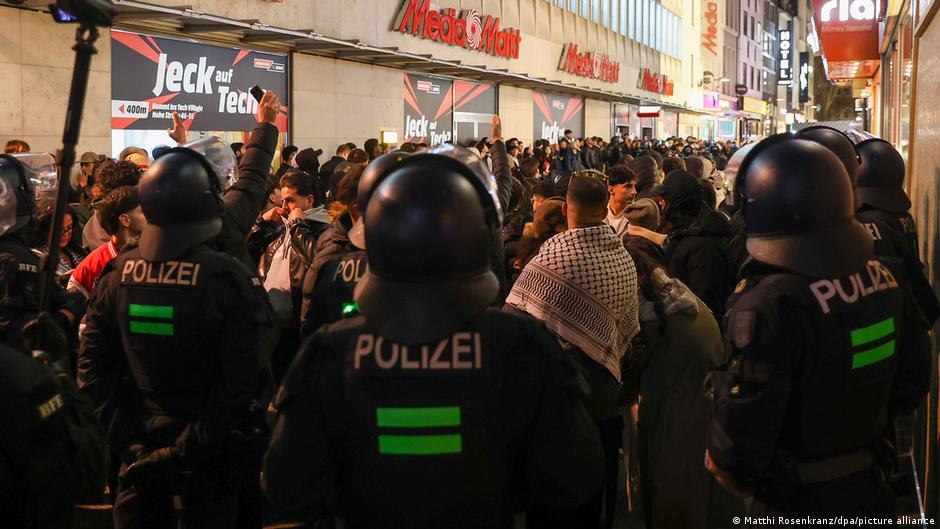
Youth demonstrations across Germany’s largest cities descended into disorder on Saturday evening, October 31, creating fresh concerns for urban business districts and the technology ecosystems that depend on them. The protests, organized by the movement Gen-Z regelt, or “Generation Z Decides,” took place in more than 30 German cities and drew more than 100,000 participants, according to organizers.
Protesters called for better education, action against the rising cost of living, stronger climate protection, easier access to psychotherapy and addiction treatment, and opposition to mandatory military service and cuts in social spending. These demands touch several issues that shape Germany’s startup environment, including the affordability of major technology hubs, the supply of skilled workers and the public services available to younger employees and founders.
The scale of the demonstrations illustrates growing dissatisfaction among a generation that startups and venture investors increasingly depend on for technical talent, entrepreneurship and consumer demand. However, the unrest also created immediate operational risks in city centers, with damaged retail property, transport disruption and heightened security measures affecting several important commercial hubs.
Frankfurt unrest disrupts a major financial center
In Frankfurt am Main, a demonstration involving between 8,000 and 9,000 people began peacefully before deteriorating into looting and attacks on police officers, including the use of Molotov cocktails. Some protesters smashed shop windows and entered a gun store as well as a Snipes clothing and sneaker shop. Authorities confiscated two weapons from those who attacked the gun store.
Hesse Interior Minister Roman Poseck said the disorder was driven by “around 100 violence-prone left-wing extremists” who had joined the demonstration. Police checked the identities of approximately another 100 people and detained more than 30.
By late evening, police had brought the unrest under control using water cannons, armored police vehicles, a helicopter and drones. Authorities closed part of Frankfurt’s city center, disrupting an area central not only to retail but also to banking, fintech and professional services.
“Those who behave like the perpetrators in central Frankfurt place themselves outside our society,” Hesse Premier Boris Rhein said.
Rhein said authorities would closely analyze the aggressors’ actions, the composition of the groups responsible for offenses and the sequence of events before drawing conclusions.
For founders and investors, Frankfurt’s role as a financial and fintech center makes prolonged instability particularly relevant. The reported events do not establish a direct impact on startup financing or transactions, but repeated disruption in business districts can increase security and operating costs while complicating recruitment and workplace planning.
Berlin, Cologne and other startup centers affected
In Berlin, one of two large demonstrations turned violent. The event drew about 3,500 people, predominantly members of far-left groups. Some participants threw firecrackers and bottles toward police and launched fireworks. Police also reported property damage and violations of weapons law.
Authorities detained 56 people, while 27 police officers suffered minor injuries. Berlin is Germany’s leading startup center, and public disorder in the capital adds another layer of uncertainty for companies already navigating demands from young workers for affordable housing, accessible mental-health care and credible climate policies.
In Cologne, police prohibited protesters from holding a march and allowed only a stationary gathering. The decision followed violations involving face coverings and pyrotechnics, some of which were thrown at officers. Police used water cannons at the end of the event.
In Hamburg, some protesters erected and set fire to barricades, then threw bottles and stones at police. Demonstrations ended in similar disorder in Stuttgart and Bremen. Together, the incidents affected cities that host significant clusters in logistics technology, mobility, advanced manufacturing, media and digital services.
Economic grievances carry implications for venture capital
The demonstrations present a mixed signal for Germany’s innovation economy. Violence, property damage and clashes with police can undermine confidence in urban operating conditions. At the same time, the movement’s broader demands identify structural pressures that can influence startup formation and venture investment over the longer term.
Education quality affects the pipeline of engineers and founders. Rising living costs can make it harder for early-stage companies to hire young employees on limited budgets. Access to psychotherapy and addiction treatment can influence workforce well-being, while climate policy is a major driver of investment in energy, mobility and industrial technology. Opposition to social-spending cuts also reflects concern about the public infrastructure supporting younger and less financially secure workers.
Any direct effect on venture funding or mergers and acquisitions remains uncertain. Still, investors assessing Germany may increasingly consider whether major cities can balance public order with solutions to the economic and social concerns expressed by young people. For startups, the central issue is whether Germany’s established hubs remain attractive and affordable places to build companies.
A wider European wave
The German protests were part of a wider wave of youth demonstrations across Europe in recent weeks. In France, protests in several cities also developed into rioting and clashes with police, while demonstrations have taken place in Belgium.
Italy has faced an especially difficult situation. On October 30, more than one million people joined protests, according to organizers. Earlier, after severe rioting in Milan, Italian authorities ordered the deployment of 500 military personnel to maintain order.
The cross-border character of the unrest matters to venture-backed businesses that recruit, sell and raise capital across Europe. Although the immediate damage was concentrated in individual city centers, the underlying grievances concern the conditions under which Europe’s next generation will study, work and establish companies. How governments respond could shape talent mobility, innovation policy and investor perceptions across the region.



