Huawei Conviction Raises New Risks for Telecom Startups and Investors
The US verdict adds legal and market uncertainty for startups, venture investors and potential acquirers across the global telecom ecosystem.
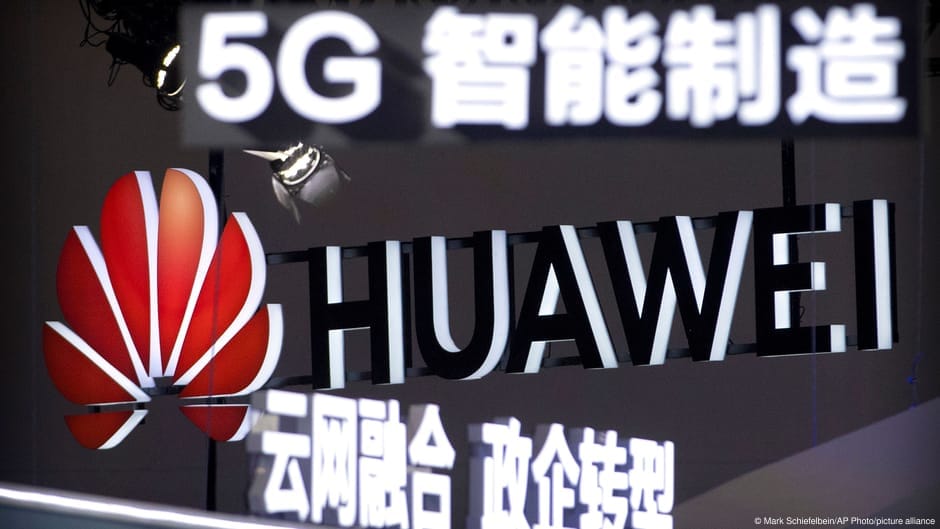
A federal district court in Brooklyn has found Chinese telecommunications group Huawei guilty on 10 of 12 criminal counts, including conspiracy to steal trade secrets, bank fraud and conspiracy to defraud the United States. The verdict also found the company guilty of circumventing US sanctions against Iran.
For technology startups and venture investors, the case reinforces the growing importance of intellectual-property controls, sanctions compliance and geopolitical risk in financing and acquisition decisions. The ruling concerns one of the world’s largest telecommunications companies, but its effects could extend across the ecosystem of network-equipment suppliers, enterprise software developers, semiconductor companies and other ventures seeking partnerships with major international corporations.
Huawei was acquitted of conspiracy to conduct criminal activity, rejecting the US Justice Department’s central contention that the company operated as a criminal enterprise. Jurors also acquitted the group of conspiracy to obstruct justice. Huawei’s lawyer said the company would challenge the guilty findings.
Intellectual Property Moves Higher on the Venture Agenda
The trial lasted 11 weeks, followed by a week of jury deliberations. Prosecutors alleged that Huawei’s management encouraged employees to steal intellectual property from US and other companies. The commercial secrets at issue were said to have been taken from T-Mobile, Cisco and additional businesses.
According to the prosecution’s case, information obtained from competitors apparently enabled Huawei to develop analogous products and later sell them at lower prices. That allegation is especially consequential for venture-backed companies, whose valuations can depend heavily on proprietary technology, patents, confidential engineering processes and defensible product advantages.
The verdict puts trade-secret protection, partner diligence and internal compliance at the center of investment risk in strategic technology markets.
For venture capital firms, the decision may encourage closer examination of how portfolio companies protect confidential information when negotiating joint development, licensing, manufacturing or distribution agreements. It may also affect M&A reviews involving businesses exposed to sensitive telecommunications technology or customers in sanctioned markets. These are implications of the verdict rather than additional findings by the court.
Huawei has effectively been barred from selling its products in the United States since 2019, meaning the ruling may not materially change the company’s position in that market. However, a severe financial penalty and the reputational stain of a criminal conviction could still hinder its broader business. Huawei described the guilty verdict as baseless and said during the night of November 25 that it would take the necessary legal steps.
Geopolitics Shapes Telecom Investment and Exit Paths
The conviction arrives amid longstanding Western scrutiny of Huawei’s telecommunications equipment. Western intelligence services have suspected that the company’s hardware could be used for espionage on China’s behalf. Huawei denies all such allegations.
Security concerns surrounding Huawei equipment have also been debated for years in the European Union and Germany. In summer 2024, Germany’s federal government reached an agreement with mobile network operators under which Huawei-made components cannot be used in core networks and certain software used to manage radio-access networks from the end of 2026.
For startups, restrictions of this kind can reshape addressable markets and procurement requirements. They may create openings for alternative network suppliers and security-focused technology providers, while also raising compliance costs and making international scaling more complex. Investors assessing telecom infrastructure companies must increasingly consider whether products can be deployed across jurisdictions with diverging security policies.
The same dynamics can influence acquisition prospects. A startup’s relationship with a restricted supplier, exposure to controlled technology or dependence on a politically sensitive market may complicate due diligence by strategic buyers. Conversely, companies offering trusted alternatives may become more relevant to operators seeking to diversify their supply chains. The court ruling itself does not establish those commercial outcomes, but it strengthens the legal and political pressures already shaping the sector.
Huawei’s supporters have long argued that the pursuit of the company is politically motivated and represents retaliation for China’s initiative to build 5G networks around the world. The mixed verdict—convictions on most counts alongside acquittals on the criminal-enterprise and obstruction allegations—will likely sustain competing interpretations of the case.
Iran Sanctions Case Remains Part of the Backdrop
The dispute also has a long-running sanctions dimension. On December 1, 2018, Canadian authorities detained Huawei Technologies founder Ren Zhengfei’s daughter, chief financial officer Meng Wanzhou, in Vancouver at the request of the United States. She was suspected of violating Washington’s trade sanctions against Tehran.
On December 11, 2018, a court in British Columbia released Meng on bail of $7.5 million, equivalent at the time to €6.6 million. The conditions included wearing an electronic monitoring bracelet, surrendering her passport, remaining within Vancouver and staying at one of her two homes in the city between 11 p.m. and 6 a.m.
Meng was released in September 2021 after reaching an agreement with US authorities seeking her extradition and was able to return to China. At that time, she acknowledged that Huawei had misled a bank about its dealings with Iran.
The Brooklyn verdict now adds a corporate conviction to that history. For founders, investors and acquirers operating in globally regulated technology markets, the case illustrates how alleged trade-secret violations, banking conduct and sanctions exposure can converge into a single legal risk with consequences for financing, partnerships and market access.



