Italy Cost-of-Living Protests Add Risk for Startups and Investors
Demonstrations across major Italian cities are raising operational and consumer-market concerns for technology companies and venture investors.
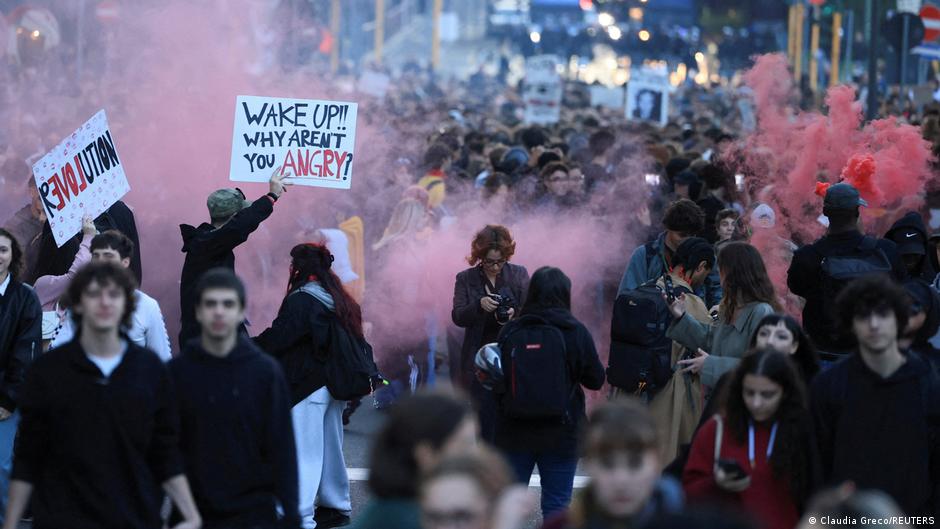
Italy faced renewed demonstrations on Saturday, October 24, over the high cost of living, rising fuel prices, increased military spending and the policies of Prime Minister Giorgia Meloni’s government. The protests, which followed unrest on October 17 and 18, prompted an extensive security operation across several of the country’s largest cities.
Police reported nine arrests and 371 preliminary detentions, including 110 involving minors, according to AFP. Authorities deployed drones and helicopters to monitor demonstrations, strengthened patrols at railway stations and closely tracked online activity for new calls for disorder.
For Italy’s technology startups and venture capital market, the immediate issue is not a direct change in investment policy but a more uncertain operating environment. Demonstrations in Milan, Rome, Bologna, Turin, Naples and Florence affected prominent commercial and transport areas, potentially complicating employee travel, retail activity, deliveries and scheduled business meetings. The disruption is particularly relevant to young companies with limited cash reserves and less capacity than established businesses to absorb temporary interruptions.
Milan unrest reaches Italy’s investment center
Milan carries particular significance for the country’s startup and investment ecosystem. Protests there remained largely peaceful until the evening, according to dpa, but demonstrators eventually clashed with law enforcement in the city center. Police stopped a column of protesters and used batons.
Fearing further unrest, the owners of many luxury stores barricaded their windows. The defensive measures offered a visible sign of concern among businesses dependent on physical premises and consumer traffic. Although the source reported no financial losses, the precautions illustrate how civil disorder can quickly create additional security and continuity costs for retailers and the technology companies serving them.
For early-stage businesses, recurring disruption can affect staffing, logistics and customer activity even without causing direct physical damage.
The broader economic grievances behind the demonstrations are also relevant to startup demand. Higher living and fuel costs can constrain household spending, while transport expenses can raise costs for mobility, delivery and commerce businesses. Companies selling discretionary products may face a more cautious customer base, while startups promising savings, efficiency or lower operating costs could become more strategically important. The protests themselves do not establish how investment volumes or company valuations will change, but they add another factor for founders and investors assessing the Italian market.
Security measures expand after earlier disorder
Following the October 17 and 18 protests, which descended into riots, Italian authorities sent 500 members of elite military units to Milan. The government also simplified procedures for detaining minors and for imposing financial penalties on their parents when property is damaged.
The use of aerial surveillance and online monitoring underscores the growing role of technology in public-security operations. It may also intensify debate about how authorities balance public safety, privacy and freedom of assembly. Those questions can matter to startups working in drones, artificial intelligence, cybersecurity, social-media analysis and identity technologies, particularly when governments are potential customers.
Elsewhere, police used tear gas and water cannons in Bologna to prevent a column of demonstrators from approaching the railway station. In Turin, law-enforcement officers pushed protesters back with shields. Railway stations are important nodes for workers, business travelers and freight connections, making disruption around them a practical concern for companies operating across multiple Italian cities.
In Rome, a predominantly pro-Palestinian demonstration passed through the historic center. At one point, participants entered the Colosseum, dpa reported. Protests were also held in Naples and Florence.
Investors assess resilience rather than immediate deal impact
No startup funding round, acquisition or technology-company transaction was reported as being directly affected by Saturday’s events. Nevertheless, venture investors routinely evaluate political stability, consumer confidence, regulatory conditions and the reliability of transport and commercial infrastructure when making long-term commitments.
For founders, the latest demonstrations reinforce the value of contingency planning, flexible working arrangements and clear employee-safety procedures. Consumer-facing startups may need to monitor changing demand and local access restrictions, while businesses with shops, warehouses or other physical assets could face higher security requirements.
The unrest also highlights pressures that can shape innovation priorities. Persistent concern over household expenses and fuel prices may strengthen demand for technologies focused on energy efficiency, affordable mobility, digital commerce and business-cost reduction. At the same time, tougher enforcement and expanded surveillance could create regulatory and reputational risks for companies supplying public-sector security systems.
Italy’s innovation ecosystem remains active across major urban centers, but the demonstrations show how quickly wider economic dissatisfaction can spill into the business environment. Investors and startup executives will now watch whether the protests persist, whether security restrictions expand and whether pressure on household budgets begins to influence growth expectations, fundraising conditions or consolidation strategies.



