Italy’s Cost Protests Raise Questions for Startups and Investors
Mass demonstrations and a nationwide strike highlight economic pressures shaping Italy’s technology and venture ecosystem.
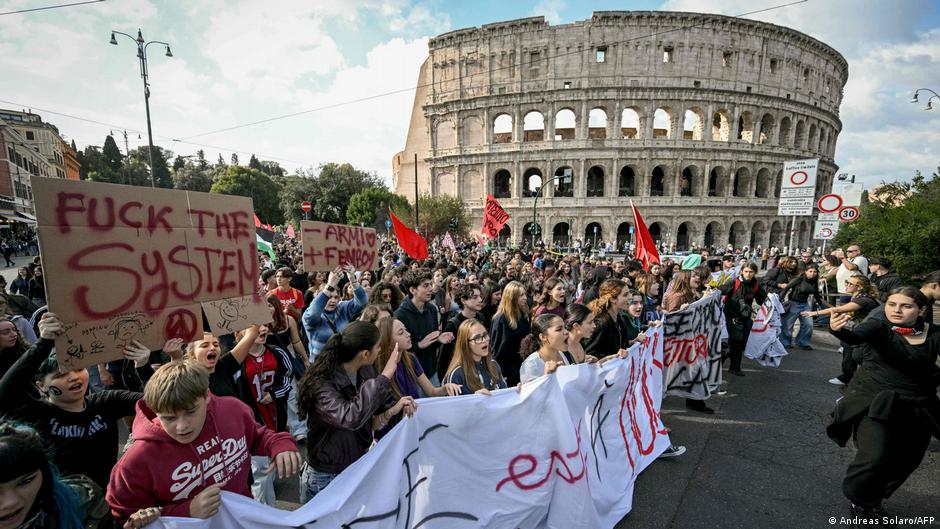
Mass protests over Italy’s rising cost of living and increased military spending have brought the country’s economic pressures into sharper focus, including the conditions facing technology startups, their employees and venture capital investors.
Hundreds of thousands of people took to the streets on Friday, October 30, as demonstrations were held in more than 60 Italian cities, according to national news agency ANSA. Unione Sindacale di Base, the USB trade union that organized the protests, estimated participation at between 1 million and 1.5 million people. Italy’s Interior Ministry put the number at 255,000.
The demonstrations coincided with a nationwide 24-hour general strike initiated by USB. Protesters objected in particular to more expensive apartment rents and rising fuel prices, two costs that can affect where workers live, how they commute and the salaries they require.
“We need more housing, not more bombs.”
The slogan captured the protesters’ demand that public resources be directed toward domestic needs rather than higher military expenditure. For Italy’s innovation economy, the debate places the allocation of capital at the center of a broader political dispute: whether spending priorities should emphasize defense or areas such as housing and education that influence the environment in which founders recruit and retain workers.
Operating pressures reach the innovation economy
The protests did not specifically target technology companies or venture capital firms. Nevertheless, the underlying grievances are relevant to both. Higher housing, transportation and energy costs can raise the financial burden on startup employees and founders, while a general strike can disrupt mobility and day-to-day commercial activity.
Young companies typically operate with limited resources and must compete for skilled workers. A sustained increase in living costs can therefore become an important consideration in compensation, hiring and location decisions. For investors assessing Italian startups, the demonstrations underline the importance of examining not only revenue growth and product innovation but also the economic conditions surrounding a company’s workforce.
The dispute over military spending may also matter to the direction of innovation, particularly as governments determine which sectors receive public attention and funding. The demonstrations do not establish any change in Italian technology policy, venture funding or merger-and-acquisition activity. They do, however, show that spending priorities are becoming a visible source of public tension.
Most of the protests were peaceful, ANSA reported, with disturbances occurring in Rome and Turin. By the evening, some participants in those cities had set fire to rubbish bins and thrown objects at police officers. Law enforcement responded with tear gas and water cannons.
Interior Minister Matteo Piantedosi defended the authorities’ response in a post on the social media platform X, saying the measures had been balanced and effective.
“This made it possible to protect one of citizens’ fundamental rights—the right to demonstrate peacefully—despite attempts by certain individuals to provoke disorder and violence.”
A wider European signal for founders and venture funds
Italy’s October 30 protests formed part of a broader wave of demonstrations across Europe in recent weeks. Similar actions have taken place in France, where protests in several cities escalated into rioting and clashes with police, and in Belgium.
The regional character of the unrest gives the issue significance beyond a single national market. Venture funds and technology companies that invest, hire or sell across Europe may need to account for cost-of-living concerns in several countries at once. The demonstrations also reveal political pressure around the balance between military expenditure and investment in social priorities.
Germany is expected to be the next focus. Comparable demonstrations are scheduled for October 31 in more than 30 German cities following a call from the Gen-Z regelt movement, whose name translates as “Generation Z Decides.” Tens of thousands of people, predominantly young, are expected to participate.
German demonstrators plan to voice dissatisfaction with the rising cost of living and the potential return of military conscription, while also calling for increased education spending. Experts expect the German protests to proceed largely without disorder.
For the European startup ecosystem, the emphasis on education is especially notable because the sector depends on a pipeline of skilled workers and future founders. The age profile expected at the German demonstrations also places younger people—an important constituency for emerging technology businesses—at the center of the debate over living costs and public investment.
The immediate story remains one of public protest rather than a recorded shift in venture capital flows or corporate transactions. Yet the scale of participation claimed by organizers, the nationwide strike and the spread of demonstrations across several European economies create a political and operating backdrop that founders and investors cannot easily disregard. Housing affordability, transport costs, education spending and competing government priorities all help shape where startups form, where talent chooses to work and how innovation ecosystems develop.



