Kamyshuvakha Strike Kills 72, Deepening Risk for Ukraine’s Tech Ecosystem
The attack on a humanitarian aid center highlights the security and operational pressures confronting Ukrainian startups, investors and innovators.
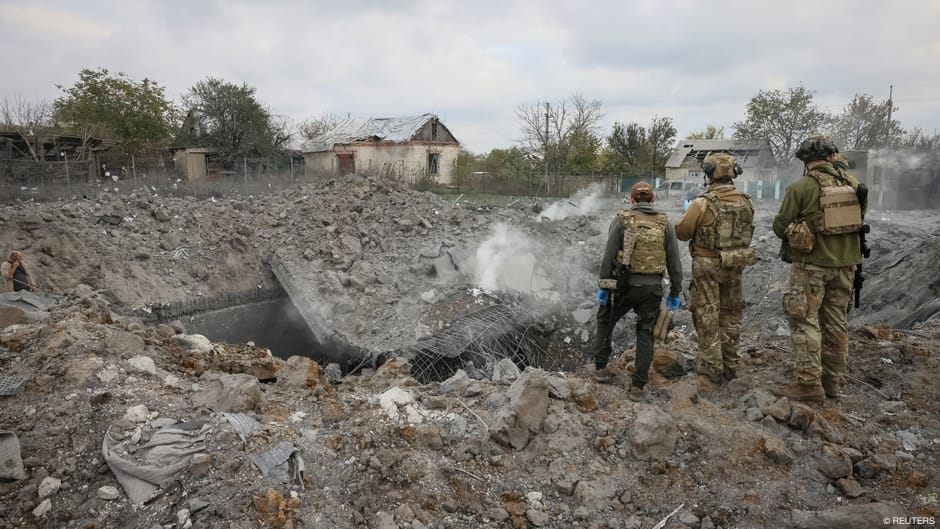
Rescue workers have completed a two-week search through the wreckage of a humanitarian aid center in Kamyshuvakha, in Ukraine’s Zaporizhzhia region, confirming that 72 people were killed in a Russian airstrike. Four others remained missing as of Monday, November 16, two weeks after the attack.
The scale of the loss underscores the human cost of the war while also highlighting the extreme operating conditions facing Ukraine’s broader innovation ecosystem. Startups, venture investors and technology providers working in logistics, communications, healthcare, civil protection and humanitarian relief must contend with repeated attacks on civilian infrastructure and the people responsible for maintaining essential services.
Rescuers recovered 58 bodies from the remains of the building hit by an aerial bomb. One person later died in hospital, while DNA testing established the deaths of another 13 people. The dead included two rescue workers and four police officers, according to Ukrainian Interior Minister Ivan Vyhovskyi. Four injured people remained in hospital. The Zaporizhzhia regional military administration said four people were still listed as missing.
Repeated strikes compound operational risks
Russian forces dropped aerial bombs on the morning of November 2 on a disused school building in Kamyshuvakha where humanitarian assistance was being distributed, Ukrainian Prime Minister Serhiy Koretskyi said. According to his account, people moved into a shelter before Russian forces also struck that location, using nine aerial bombs.
The attack occurred while aid was being distributed, contributing to the high number of casualties. The humanitarian event had been announced officially in advance.
Search-and-rescue operations continued for two weeks under persistent danger. Local authorities said Kamyshuvakha was subjected to 11 additional Russian attacks during that period, with nine strikes directly targeting the area where teams were clearing debris. Three police officers and four rescue workers were wounded in the subsequent attacks.
For technology companies and their backers, such repeated strikes illustrate a category of risk that conventional startup planning cannot easily absorb. Physical locations can become inaccessible, personnel may be displaced or injured, and emergency teams may be forced to operate while attacks continue. The consequences extend beyond individual enterprises to accelerators, technical universities, communications networks, logistics providers and public-sector partners that sustain regional innovation.
These conditions can influence venture funding and mergers and acquisitions by increasing the importance of business continuity, distributed teams, secure data infrastructure and geographic diversification. Investors assessing Ukrainian companies may place greater weight on whether founders can maintain operations during prolonged disruptions. At the same time, demand for locally developed defense, resilience, emergency-response and humanitarian technologies is likely to remain central to the country’s startup landscape.
One of the deadliest attacks on a single civilian site
Measured by the number of civilians killed at one location, the Kamyshuvakha strike became one of Russia’s deadliest attacks since the start of its full-scale war against Ukraine. Some media outlets have compared it with Russia’s bombing of the Mariupol Drama Theatre in March 2022, although no confirmed figure is available for the number of people killed in that attack.
Russia had not commented on the strike against the Kamyshuvakha humanitarian center. The United Nations condemned the actions of the Russian military and raised questions about compliance with international humanitarian law.
“Either the Russian armed forces were aware that humanitarian aid distribution was taking place there, or they failed to take the most basic steps to establish what was happening in the settlement they intended to attack. In either case, this strike appears to have violated the most fundamental principles of international humanitarian law,” said Danielle Bell, head of the UN Human Rights Monitoring Mission in Ukraine.
The destruction also demonstrates why investment in Ukrainian technology cannot be separated from the country’s security environment. Innovation may help improve warning systems, identify missing people, coordinate rescue resources, protect data and keep services functioning, but technology cannot eliminate the physical danger confronting civilians and responders.
For venture capital firms, strategic investors and potential acquirers, the conflict creates a difficult balance. Ukrainian startups continue to develop products under severe constraints, often demonstrating unusual operational resilience. Yet the attack in Kamyshuvakha shows that founders, employees, customers and public-sector partners remain exposed to risks far beyond ordinary market volatility. Any assessment of the ecosystem’s long-term potential must account for both its capacity to innovate and the continuing destruction of the communities in which that innovation takes place.



