Kyiv Missile Strikes Injure Four, Heightening Risks for Startup Operations
Attacks on commercial, industrial and logistics sites underscore the physical and operational risks facing Ukraine’s innovation economy.
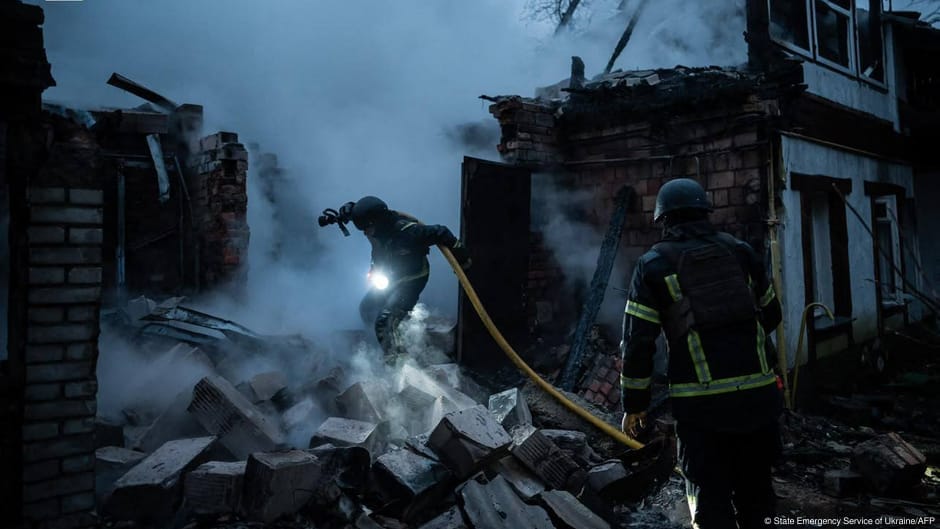
Ballistic missile strikes hit Kyiv late on Wednesday, November 25, injuring four people and damaging non-residential sites, including a shopping center and a building in an industrial zone, according to Kyiv Mayor Vitali Klitschko.
Two of the four injured people were hospitalized in serious condition, Klitschko said in a post on Telegram. The strikes affected the Desnianskyi district, located on the left bank of the Dnipro River, and also hit other non-residential premises.
The attack adds to the security and business-continuity pressures confronting companies operating in Ukraine. For technology startups, investors and potential acquirers, damage to commercial and industrial property can carry consequences beyond the sites directly struck, disrupting workplaces, suppliers, customer access and the infrastructure needed to maintain daily operations.
Four people were injured, and two were hospitalized in serious condition, according to Kyiv’s mayor.
Physical risk remains central to investment decisions
Ukraine’s startup and innovation ecosystem has continued to operate during the war, but the latest strikes illustrate why physical security remains a core consideration in financing, expansion and merger-and-acquisition assessments. Commercial buildings and industrial areas can house a broad mix of businesses and services, making attacks on such locations a potential operational risk across multiple sectors.
The source report did not identify any technology companies, venture-backed startups or investors among the people or properties affected in Kyiv. It also did not provide a financial estimate for the damage. Still, attacks on civilian commercial premises can influence how founders plan staffing and facilities, how investors evaluate continuity arrangements, and how prospective buyers assess exposure to infrastructure interruptions.
For businesses dependent on physical locations, logistics or industrial partners, repeated attacks may require contingency planning around offices, equipment and supply chains. Companies capable of distributing teams and systems across multiple locations may be better positioned to maintain operations, while firms tied to manufacturing facilities or local commercial traffic face a different set of vulnerabilities.
Kharkiv apartment building hit by drone
The violence extended beyond Kyiv. On the morning of November 26, Kharkiv came under attack by Russian drones, Mayor Ihor Terekhov said. One drone struck a multistory residential building in the city’s Novobavarskyi district in the southwest, causing a fire on the 15th floor.
At least three people were injured, according to Terekhov. He also reported another strike in the Kholodnohirskyi district but did not specify what type of site had been hit.
Kharkiv has an established base of technical talent and engineering activity, making security conditions there relevant to the wider Ukrainian innovation landscape. The reported strike was on a residential building, however, and the source provided no information connecting the attack to a startup, technology facility or investment transaction.
Commercial and logistics sites face continuing exposure
The Kyiv and Kharkiv attacks followed deadly strikes across several Ukrainian regions during the night of November 25. Three people were killed in those attacks.
In the Odesa region, local authorities said a 17-year-old boy and a 41-year-old man were killed. Three other residents, including a 12-year-old child, were injured.
One person was also killed on the morning of November 25 in Bila Tserkva, a city in the Kyiv region, according to authorities. Officials reported attacks on critical infrastructure, as well as an Epicentr shopping center and a Nova Poshta branch.
The reported damage to critical infrastructure, retail property and a postal branch highlights the range of assets exposed during the attacks. Logistics networks are particularly important to startups and smaller businesses that depend on reliable shipping rather than their own distribution infrastructure. The source did not detail the extent of disruption at Nova Poshta or state how long any affected services might take to resume.
For venture capital firms and strategic buyers considering Ukrainian companies, the attacks reinforce the need to distinguish between strong underlying technical capabilities and the external risks surrounding their operation. Due diligence may increasingly focus on whether companies have distributed teams, backup systems, alternative logistics routes and plans for maintaining services when buildings or infrastructure become unavailable.
No funding rounds, acquisitions or startup closures were reported in connection with the latest attacks. Their immediate impact was human: fatalities in the Odesa and Kyiv regions, serious injuries in Kyiv, and additional casualties in Kharkiv. The broader business significance lies in the continuing exposure of the commercial, industrial, residential and infrastructure networks on which Ukraine’s innovation economy depends.



