Kyiv Power Crisis Raises New Risks for Ukraine’s Startup Ecosystem
A dispute between Ukraine’s president and Kyiv’s mayor highlights infrastructure risks facing technology companies, founders and investors.
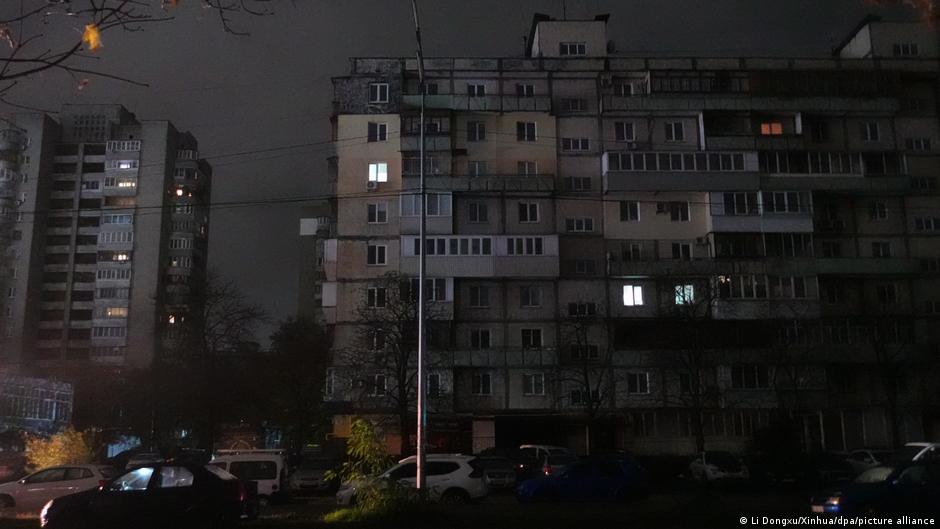
Ukraine’s deepening energy crisis is creating fresh operational risks for Kyiv’s technology startups and the investors backing them, as a public dispute between President Volodymyr Zelensky and Mayor Vitali Klitschko exposes disagreements over responsibility for prolonged electricity and water outages in the capital.
Zelensky on Friday, November 6, criticized Kyiv’s municipal authorities over extended disruptions caused by Russian attacks. He said preparations had failed at the city level and linked the current conditions both to decisions that were not implemented ahead of the heating season and to Russia’s operation against Ukraine’s energy system.
“At the city level, preparations failed,” Zelensky said in his evening address.
The president added that the government had discussed with energy company representatives the need to deploy additional repair crews and accelerate the restoration of damaged infrastructure.
For Kyiv’s startup community, the confrontation underscores a challenge extending beyond immediate service interruptions. Technology companies rely on stable electricity and connectivity to maintain cloud-based operations, support distributed teams and serve international customers. Repeated outages can increase operating costs and complicate planning, particularly for early-stage businesses with limited cash reserves. The uncertainty may also affect how venture capital firms assess operational resilience, although neither Zelensky nor Klitschko announced measures specifically aimed at startups or investors.
Political dispute adds to infrastructure uncertainty
Klitschko responded several hours after the president’s remarks, questioning how the capital could have prevented what Zelensky described as a Russian operation against Ukraine’s energy infrastructure. In a post on Telegram, the mayor also asked why Kyiv representatives had not been invited to meetings where the city’s preparations and response efforts were discussed.
Klitschko emphasized that Ukraine operates a single interconnected energy system. When infrastructure is being damaged across the country, he argued, one area cannot remain fully illuminated while responsibility for outages elsewhere is assigned to Kyiv’s mayor.
The mayor accused the central government of repeatedly portraying Kyiv as the country’s worst-performing city and using manipulation and falsehoods. He said the government, in attempting to remove him and failing to help the capital, was effectively destroying Kyiv.
The exchange introduces an additional layer of institutional uncertainty for businesses operating in Ukraine’s largest urban market. For founders and venture investors, the division between national and municipal authorities matters because recovery depends on coordination across government, energy companies and emergency services. A prolonged political dispute could make it harder for companies to determine which institutions are responsible for contingency planning and infrastructure support.
Repair capacity becomes an innovation-economy issue
In his November 6 evening address, Zelensky said Ukraine would respond to the intensified Russian attacks by bringing in more repair crews. He also said the country’s armed forces would assist in dealing with the consequences of the strikes.
Zelensky described Russia’s tactics as targeting electrical grids, transformers and distribution equipment. He said that even where some regions have sufficient generating capacity, shortages can persist because power cannot be reliably distributed. The problem, he added, must be addressed through repairs, making the speed of restoration critical.
That distinction is important for the innovation economy. Generating enough electricity does not ensure that startups, research teams and technology service providers can access it if transmission and distribution assets are damaged. Companies may therefore need to plan for recurring localized failures even when broader power-generation indicators appear adequate.
The disruption also has implications for venture funding and mergers and acquisitions. Investors evaluating Ukrainian technology companies may place greater weight on business-continuity systems, geographic diversification and the ability to keep serving customers during infrastructure failures. Potential acquirers may similarly scrutinize whether target companies can operate through extended interruptions. The source statements did not identify any funding rounds or transactions affected by the outages, but the operating environment adds a material diligence consideration.
Russian forces have intensified missile and drone strikes on Ukraine’s energy infrastructure in recent weeks. Millions of Ukrainians have been forced to endure autumn cold without heating while also facing interruptions to electricity and water supplies.
For Ukraine’s technology sector, the immediate priority remains continuity: maintaining teams, protecting service delivery and preserving confidence among customers and investors. The disagreement between Zelensky and Klitschko does not change the physical cause of the crisis, but it highlights how fragmented accountability can compound infrastructure damage. The pace of repairs—and the ability of national and city authorities to coordinate them—will shape the resilience of Kyiv’s broader business and innovation ecosystem.



