Lithuania Seeks EU Terror Listing for Russian Military Intelligence
The proposal follows an alleged sabotage attempt at an Estonian drone maker, raising security concerns for Europe’s defense-tech ecosystem.
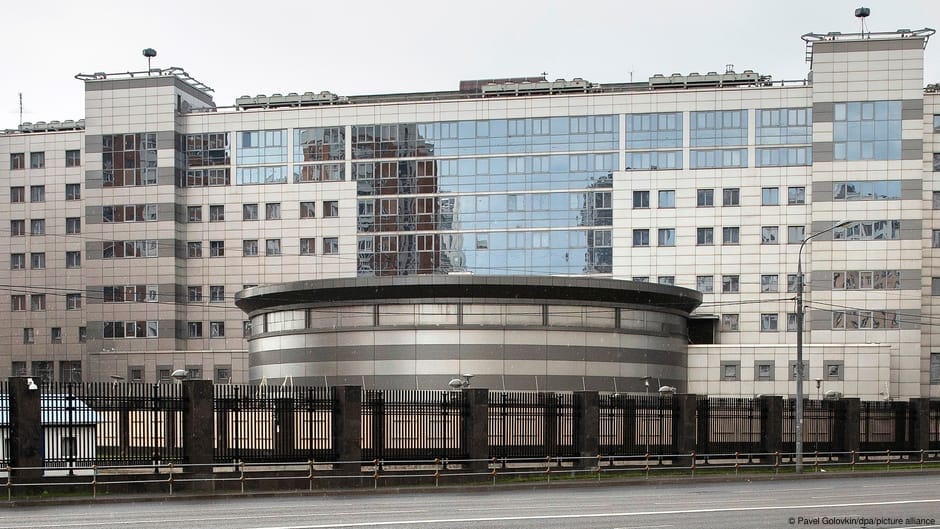
Lithuanian Foreign Minister Kęstutis Budrys has called on the European Union to designate the Main Directorate of the General Staff of the Russian Armed Forces as a terrorist organization, arguing that Russian military intelligence is conducting operations that threaten European societies, policymakers and private individuals.
Budrys made the proposal in an interview with the German newspaper Die Welt published on Wednesday, November 25. He said Lithuania’s push was not connected to the country’s forthcoming presidency of the Council of the European Union.
The initiative carries particular significance for Europe’s expanding defense-technology sector. Startups developing drones, electro-optical systems, surveillance platforms and other dual-use technologies increasingly operate at the intersection of venture capital, national security and geopolitical risk. The alleged targeting of an Estonian defense company underscores how physical security, supply-chain resilience and intelligence threats may influence investment decisions alongside conventional commercial metrics.
“We must make it clear to Russia that its actions against us are no longer merely ‘hybrid warfare,’ but rather ‘unconventional warfare.’”
Budrys said such conduct could potentially cross the threshold set by Article 5 of the North Atlantic Treaty, which provides for collective defense among NATO members. He described Russian military intelligence as “terrorizing” European societies, decision-makers and other private individuals.
Defense startups face a broader risk environment
The Lithuanian minister compared the Russian military intelligence service with Iran’s Islamic Revolutionary Guard Corps, an elite military-political formation that was designated a terrorist organization by the EU in early 2026.
His remarks followed allegations involving Threod Systems, an Estonian company that produces drones and electro-optical intelligence and surveillance systems. On November 15, Estonian authorities announced that all border crossings with Russia would close beginning the following month. They accused Russian intelligence services of attempting to cause an explosion and fire at the company’s premises.
The allegation highlights the exposure of European defense-tech businesses whose products have strategic relevance. For founders and investors, threats to facilities, employees and intellectual property can translate into higher security spending, more complex due diligence and greater scrutiny of suppliers and ownership structures. Those pressures may be especially consequential for early-stage companies with limited resources, even as heightened government demand can create new opportunities for growth.
A terrorist designation, if pursued and adopted, could also affect the compliance environment surrounding technology investment and corporate transactions. Venture funds, banks and prospective acquirers already assess sanctions, export controls and national-security risks when financing dual-use companies. A wider EU classification of Russian intelligence and security bodies could add another consideration to fundraising, cross-border partnerships and mergers and acquisitions involving sensitive technologies.
The source article does not specify whether a formal EU designation process has begun or what legal measures would accompany it. Budrys’s proposal nevertheless signals that Baltic governments want Europe to treat alleged sabotage operations as more than a peripheral security issue.
Pressure for a tougher European response
Budrys supported Estonia’s decision on November 15 and accused Russia of “state terrorism.” Writing on the social media platform X, he said Europe should stop relying on euphemisms and seriously consider designating the GRU and other Russian intelligence and security structures involved in sabotage operations as terrorist organizations.
He also called for stronger support for Ukraine, greater pressure on Moscow and “real consequences” for those who order and carry out such attacks.
For Europe’s innovation ecosystem, the debate comes as defense and security technologies attract increasing strategic attention. Companies producing autonomous systems, sensors and intelligence tools may benefit from stronger policy support and procurement demand, but they also face risks that differ sharply from those confronting conventional software startups.
Any tougher EU posture could encourage closer coordination among governments, investors and technology companies on security standards. It could also shape consolidation in the sector if larger defense groups seek businesses with protected production capacity, established government relationships and resilient supply chains. At the same time, additional compliance obligations could lengthen deal processes and increase costs for venture-backed companies seeking international capital or acquisition partners.
Budrys’s intervention therefore extends beyond diplomatic terminology. The alleged attempt against Threod Systems places a technology manufacturer at the center of the dispute and illustrates how geopolitical confrontation can reach private companies developing strategically important products. The EU’s response, including whether it considers the requested designation, could influence the operating conditions for defense startups and their investors across the region.



