Lula Wins Brazil Runoff as Bolsonaro Seeks Election Annulment
The disputed result adds political uncertainty for Brazil’s startups, venture investors and wider innovation ecosystem.
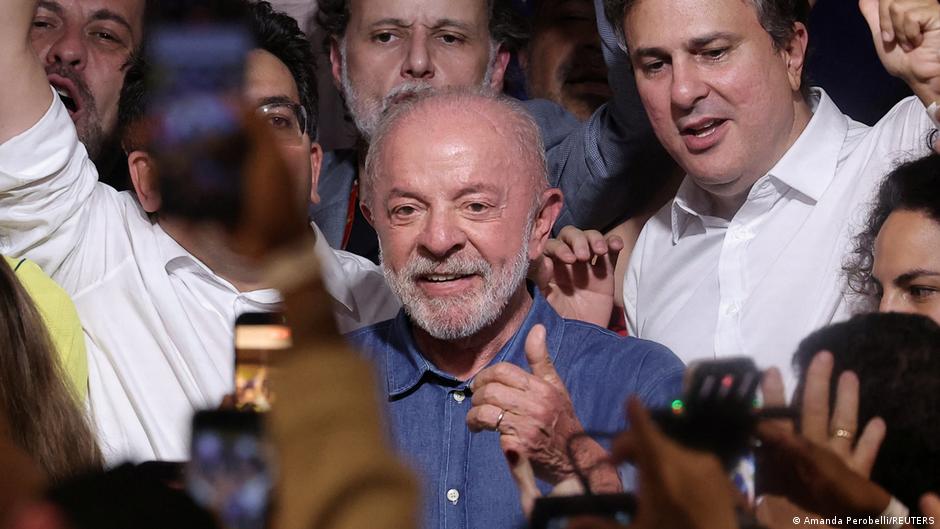
Brazilian President Luiz Inácio Lula da Silva has won a second-round presidential election, while his rival, Senator Flávio Bolsonaro, has refused to concede and called for the result to be annulled.
Official results showed the 80-year-old center-left incumbent receiving 51.8% of the vote in the runoff held on Sunday, Oct. 25. Bolsonaro, a right-wing populist and the son of former far-right President Jair Bolsonaro, secured 48.2%.
The outcome marks the first time in Brazil’s history that a candidate who finished second in the opening round has gone on to win the presidency. Lula is now set to assume the country’s highest office for a fourth, nonconsecutive term.
For Brazil’s technology and venture capital sectors, the narrow margin and immediate challenge to the vote create a period of political uncertainty. Startups, investors and prospective acquirers typically rely on visibility around economic policy, regulation and institutional stability when deciding whether to deploy capital, enter a market or complete a transaction. The source account does not identify any specific policy changes affecting technology companies, but the contested result places the broader business environment under renewed scrutiny.
Result challenged after late voting extension
Flávio Bolsonaro cited an extension of voting hours in demanding that the election be annulled. Earlier, both Lula and Bolsonaro had requested that polling stations remain open longer because of public transport problems and adverse weather conditions in some parts of Brazil.
Supreme Court Justice Cristiano Zanin ultimately ordered voting to be extended by two hours. The decision came only three minutes before polling stations had been scheduled to close.
Official results gave Lula 51.8% of the vote, compared with 48.2% for Flávio Bolsonaro.
The competing positions turn the voting extension into the central point of the post-election dispute: both candidates had previously sought additional voting time, but Bolsonaro subsequently invoked the extension as grounds for invalidating the outcome.
The challenge may matter to founders and venture investors even in the absence of immediate changes to startup policy. Political disputes can complicate expectations about the timing and direction of government decisions, while uncertainty over the transfer of power may encourage investors or corporate buyers to take a more cautious approach to financing and M&A. Any direct effect on fundraising, valuations or dealmaking, however, will depend on how the dispute develops and whether it affects Brazil’s institutions or economic outlook.
Economic pressures frame Lula’s fourth-term victory
Lula’s campaign for reelection unfolded amid voter concern over the cost of living and rising crime. The wider campaign was also shaped by corruption scandals, economic instability and allegations of interference by the United States.
Those pressures form the backdrop for the next administration and are relevant to Brazil’s innovation economy. Cost-of-living strains can influence consumer demand and operating costs, while broader economic instability can affect access to capital and the willingness of investors to support higher-risk businesses. Crime concerns may also feature in decisions about operations, hiring and expansion, although the election account provides no startup-specific data.
Celebrations began after the results were announced. Fireworks and the sound of vuvuzelas filled Rio de Janeiro, while thousands of people dressed in red—the color associated with Lula’s Workers’ Party—took to the streets of São Paulo to celebrate the victory.
The public celebrations contrasted with Bolsonaro’s rejection of the result, underscoring the political division reflected in the close vote. For the venture market, the immediate question is less about the election-night reaction than about whether the dispute is resolved through established legal and institutional channels.
Brazil’s startup and venture ecosystem now faces two parallel signals. Lula’s victory establishes a formal electoral outcome and points toward continuity under the incumbent president. Bolsonaro’s demand for annulment, however, introduces uncertainty over how quickly the result will be accepted and whether the political contest will continue.
Until that challenge is resolved, founders, venture funds and companies considering acquisitions are likely to assess the same underlying factors confronting the broader economy: institutional stability, policy predictability and the government’s response to living-cost pressures, crime and economic volatility. The election result alone does not determine the direction of technology investment, but the political environment surrounding it will shape the level of confidence on which future funding and expansion decisions depend.



