Meloni Demands Clear EU Mandate for Ukraine Peace Negotiations
Italy’s prime minister warns that fragmented diplomacy could weaken Europe’s influence and prolong uncertainty across its investment markets.
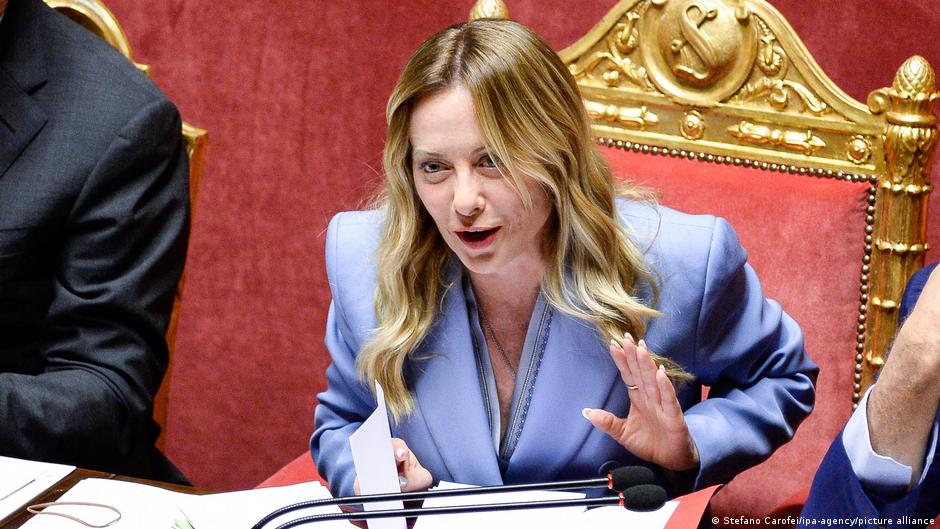
Italian Prime Minister Giorgia Meloni has called on the European Union to determine who will represent the bloc in negotiations aimed at ending the war in Ukraine, criticizing what she described as uncoordinated conduct by EU national leaders.
The demand raises a broader question about Europe’s ability to act with a unified mandate during a conflict that continues to shape the region’s economic outlook. For technology startups, venture capital firms and prospective acquirers, the effectiveness of EU diplomacy is relevant to confidence, cross-border investment and the stability of the wider innovation ecosystem.
In a letter to European Council President António Costa, quoted by the dpa news agency on Thursday, November 5, Meloni said the bloc must settle both the identity and authority of its representative.
“I continue to insist that it be decided once and for all who exactly will sit at the negotiating table on behalf of the European Union and with what mandate,” Meloni wrote.
Meloni argued that the EU’s “uncoordinated behavior” would help neither its relations with allies nor its efforts to persuade those who must be convinced to stop what she called a “senseless aggression.” AFP also quoted her as warning that the appearance of a Europe acting in a disorderly fashion served only the interests of those seeking to continue the war.
Diplomatic fragmentation adds to investment uncertainty
Meloni’s intervention is primarily political, but its implications extend into the markets in which European founders and investors operate. A fragmented approach to negotiations can make it more difficult for businesses to assess the likely direction of sanctions, security policy, reconstruction priorities and commercial relations across the continent.
That uncertainty matters particularly for startups with exposure to defense technology, cybersecurity, energy resilience, logistics and humanitarian services. It can also affect venture funds deciding when and where to deploy capital, as well as larger technology groups considering acquisitions in markets influenced by the war. Meloni did not announce any economic, startup or investment measures, and her letter did not specify how a unified negotiating position would change EU commercial policy. Her central argument was that Europe needs a clearly designated voice and an agreed mandate.
The Italian prime minister proposed discussing the issue at an informal European Council meeting in Dublin on November 13. According to her letter, that discussion could allow the European Council to adopt a formal decision on who represents the EU in Ukraine peace negotiations at its Brussels summit on December 17-18.
A formal decision would not itself resolve the conflict or eliminate geopolitical risk. It could, however, clarify how the bloc intends to participate in negotiations and reduce questions about competing initiatives by individual European leaders. For investors, such institutional clarity can be important even when the outcome of diplomacy remains uncertain, because policy coordination influences expectations around regulation, public spending and the movement of capital and talent.
Rome challenges separate diplomatic initiatives
Meloni has previously criticized initiatives by individual EU leaders that, in her view, dilute the bloc’s common position on Russia’s war in Ukraine. Rome specifically criticized a telephone conversation involving Finnish President Alexander Stubb, Norwegian Prime Minister Jonas Gahr Støre and Russian President Vladimir Putin.
Her criticism reflects a tension between national diplomatic efforts and the EU’s attempt to present a collective position. That divide is also relevant to Europe’s innovation economy, where national funding programs and industrial strategies coexist with EU-wide initiatives. If member states communicate different political signals, startups and investors may face a more complicated environment for long-term planning, fundraising and cross-border expansion.
The immediate diplomatic calendar includes a new round of talks between Russia and Ukraine, mediated by the United States, scheduled for November 10-11 in Abu Dhabi. US presidential special envoy Steve Witkoff said the meeting would focus on “postwar security, de-escalation, humanitarian initiatives and next steps toward peace.”
Those subjects carry potential consequences for the European technology sector. Postwar security could shape demand for defense and cyber capabilities, while humanitarian initiatives may influence digital infrastructure and logistics needs. Any eventual move toward reconstruction could also affect innovation-focused companies across energy, communications, financial technology and public services. The source announcement, however, provided no funding commitments, procurement plans or timetable for such opportunities.
For Europe’s venture and startup community, Meloni’s demand highlights how political coordination can become part of the investment landscape. A single EU representative with a defined mandate could make Europe’s negotiating posture easier to interpret. Until a decision is taken and negotiations produce concrete results, geopolitical uncertainty will remain a central consideration for founders, venture investors and technology companies evaluating funding, expansion and M&A across the region.



