Merz Links Ukraine Funding Gap to Wider EU Financial Decisions
Germany’s chancellor is pressing all EU members to share a €45 billion burden, raising the stakes for budgets, investment and startup finance.
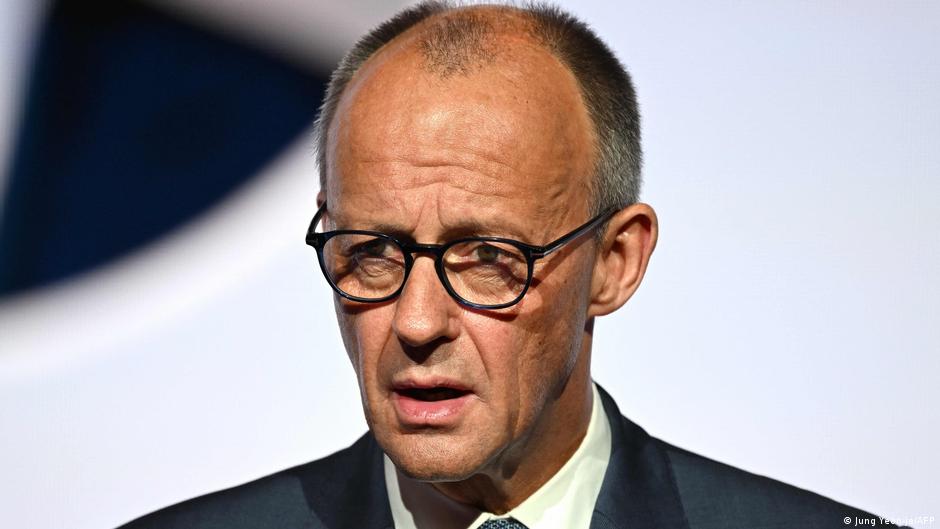
German Chancellor Friedrich Merz has called on every European Union member state to make a “fair contribution” toward closing a multibillion-euro gap in financing for Ukraine, while signaling that disagreement could affect decisions on other EU financial matters.
In a letter to European Council President António Costa, Merz argued that a collective commitment to supporting Ukraine was a prerequisite both for resolving the funding shortfall and for addressing other issues with financial consequences. The letter was reported on Monday, November 9, by dpa, which said Ukraine faces a €45 billion gap for the coming year that the EU is expected to cover.
“Support for Ukraine is a question of our indivisible European security, and this principle must also apply to the distribution of the burden of this support,” Merz wrote.
The intervention turns Ukraine financing into a wider test of the EU’s ability to coordinate fiscal policy. For technology startups, venture capital firms and corporate buyers, the dispute matters because prolonged negotiations over major spending commitments can influence national budgets, public investment programs and the availability of capital across Europe’s innovation economy.
Long-term funding enters the EU budget debate
Merz is also demanding a sustainable, multiyear solution for Ukraine during negotiations over the EU budget for 2028 to 2034. Ukraine is now in the fifth year of resisting Russian aggression, and the German chancellor wants its financing incorporated into Europe’s longer-term fiscal planning rather than handled only through recurring emergency agreements.
He urged Costa to make the issue a priority at an informal EU summit scheduled for November 13 in Dublin. By connecting agreement on Ukraine with discussions of other financially consequential decisions, Merz has increased the pressure on governments that are reluctant to participate in a new package.
The European Commission previously estimated that the financing deficit for assistance to Ukraine next year would reach €70 billion, with €45 billion to be covered by the EU. Last year, the bloc agreed to provide Kyiv with a €90 billion loan for 2026 and 2027. That decision was blocked for an extended period by Hungary’s previous government, but the country’s new prime minister, Péter Magyar, removed the blockade. Kyiv received the first tranche under the loan on June 25.
Those funds are now considered insufficient. In October, Ukrainian President Volodymyr Zelensky asked partners for an additional €70 billion so that Ukraine could continue defending itself against Russian aggression. EU heads of state and government subsequently instructed the European Commission to prepare a proposal for meeting the financial requirement.
Fiscal uncertainty reaches investors and founders
For venture investors, the immediate issue is not that Ukraine assistance directly replaces startup funding. Rather, the negotiations will help determine how governments distribute large financial commitments across defense, security, industrial policy, infrastructure and innovation. The outcome could affect the predictability of public co-investment, research support and procurement opportunities that many European technology companies use to scale.
A durable multiyear framework could provide greater visibility for startups operating in defense technology, cybersecurity, energy resilience, logistics and reconstruction-related services. Conversely, repeated political standoffs could complicate planning for founders and investors assessing cross-border expansion, government contracts or acquisitions tied to Europe’s security priorities.
The dispute also highlights fragmentation risk within the single market. Bulgarian President Rumen Radev and Slovak Prime Minister Robert Fico have already said they do not intend to participate in new EU financial assistance for Ukraine. The contributions of Hungary and the Czech Republic also remain uncertain.
Merz is due to meet Magyar in Berlin on November 10, with assistance for Kyiv expected to be among the central topics. Hungary’s earlier decision to lift its blockade of the €90 billion loan demonstrated how a change in national political leadership can unlock an EU-level financial package, but the new funding request will again require governments to reconcile different fiscal and political positions.
Germany seeks broader burden sharing
Germany is Ukraine’s largest donor among EU countries by a wide margin. The German government estimated its support as of June 30, 2026, at €100 billion. The Kiel Institute for the World Economy, however, calculated that €36 billion of that total had been spent inside Germany, while another €22 billion represented future commitments.
Merz’s demand for broader burden sharing therefore has both fiscal and political significance. If the EU reaches a stable agreement, it could strengthen confidence that Europe can finance long-term security priorities without relying on a small number of member states. That capacity is increasingly relevant to venture capital and mergers and acquisitions, particularly in sectors where public policy, strategic procurement and private investment are becoming more closely connected.
If negotiations remain deadlocked, the consequences could extend beyond the Ukraine package. Merz’s warning places other EU financial decisions within the same political bargaining process, creating another source of uncertainty for funds, startups and corporate investors already navigating divergent national policies and a more security-focused European economy.



