Moscow and Kyiv Back European Role in Talks, Easing Startup Uncertainty
The broadened peace process could help clarify the security outlook shaping venture funding, M&A and technology investment across Europe.
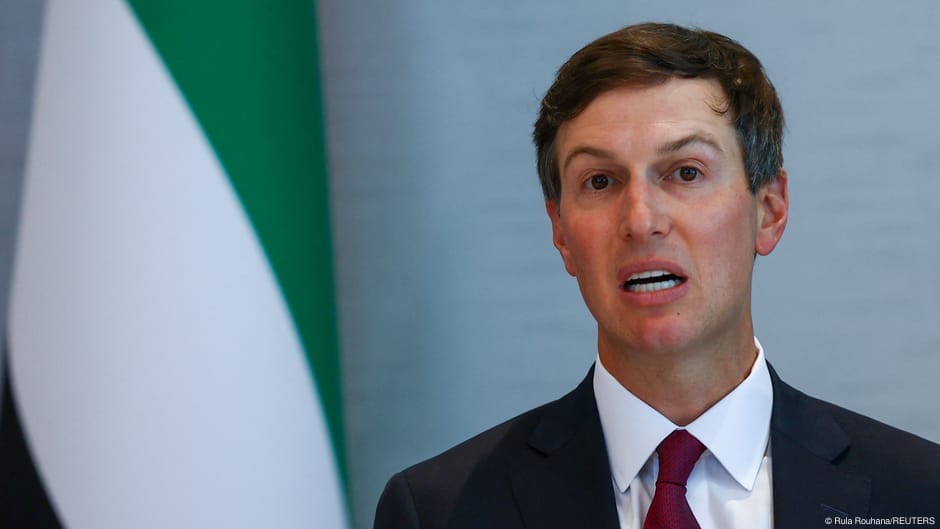
Moscow and Kyiv have agreed to involve European countries in the next round of talks on ending Russia’s war against Ukraine, US presidential envoy Jared Kushner said after three days of negotiations in several formats.
The diplomatic development does not itself resolve the conflict or remove the risks confronting technology companies and investors. However, the inclusion of European partners could give the continent’s startup and venture capital ecosystem a clearer view of the security framework that may eventually shape cross-border investment, acquisitions, talent mobility and innovation policy.
Kushner, the son-in-law of US President Donald Trump, announced the agreement on X during the night of Friday, November 13. His statement followed negotiations held from November 10 through November 12, during which American representatives met Russian and Ukrainian officials and consulted European national security advisers.
European security enters the negotiating framework
Russian and Ukrainian delegations discussed possible terms for ending the war in Abu Dhabi on November 10 and 11, with the United States acting as mediator. Kushner and Steve Witkoff, another special envoy for the US president, then traveled to Moscow for talks with Russian President Vladimir Putin.
On November 12, the American negotiators flew to Dublin, where they met Ukrainian President Volodymyr Zelensky. They later held consultations with national security advisers from Ukraine, Germany, Italy, France, Ireland and Poland, as well as representatives of the European Union.
Kushner said the intensive diplomatic effort had produced significant progress in understanding the concerns of Russia and Ukraine. He added that the discussions had helped identify possible solutions and establish a path forward.
“Both sides have now agreed to expand the next round of talks to include European partners,” Kushner said.
According to the envoy, the expanded format will allow negotiators to address the broader structure of postwar European security alongside the territorial issues between Ukraine and Russia. The American representatives also agreed with Zelensky that no wider European security arrangements would be concluded without taking Ukraine’s security concerns into account.
For venture investors, the significance lies in the scope of the talks. A process that addresses both territorial questions and Europe’s future security structure could eventually affect the risk assumptions used when financing companies exposed to Ukraine, Russia or neighboring European markets. Until any agreement is reached, however, those implications remain prospective rather than immediate.
Potential consequences for funding and M&A
Security uncertainty can influence how venture funds assess investment horizons, how startups plan international expansion and how potential acquirers evaluate geopolitical exposure. The addition of European governments and EU representatives means that the next phase may cover issues relevant to the wider operating environment for technology businesses, even though Kushner’s statement did not announce measures specifically concerning startups, investment or trade.
A clearer postwar framework could, in principle, improve visibility for founders and investors making long-term decisions. It could also influence the conditions surrounding future M&A, reconstruction-related innovation and the movement of technical workers. The current negotiations offer no guarantees on those outcomes, and no timetable for a settlement was disclosed.
For Ukrainian startups, the commitment to consider the country’s security concerns is particularly relevant to confidence in the durability of any eventual arrangement. Venture financing depends heavily on expectations about future operating conditions, while strategic acquisitions require buyers to assess whether assets, employees and customers can remain accessible over time.
European participation may also broaden the range of policy questions under discussion. Because the consultations included several major EU economies, Poland, Ireland and the European Union itself, the process now connects the bilateral territorial dispute with a larger debate about the continent’s security architecture. That connection is likely to matter to investors whose portfolios span multiple European jurisdictions.
Large prisoner exchange under preparation
Kushner also announced preparations for what he described as the largest exchange of prisoners of war since the conflict began. He said the exchange could allow thousands of people to return home.
The proposed exchange is a humanitarian measure rather than an economic agreement, but its scale may serve as an indicator of whether the parties can translate negotiations into concrete action. For technology founders, venture funds and corporate buyers monitoring the region, evidence of implementation would be more consequential than diplomatic language alone.
The next round will therefore be watched not only for progress on territorial and security questions, but also for signs that the expanded negotiating format can produce durable arrangements. Until then, the talks represent an opening for greater European involvement and a possible reduction in long-term uncertainty, rather than a definitive change in the investment environment.



