Nvidia Board Probes CEO’s Reported Relationship Amid China Security Concerns
The independent review raises governance and geopolitical risks for the chipmaker at the center of the global AI startup economy.
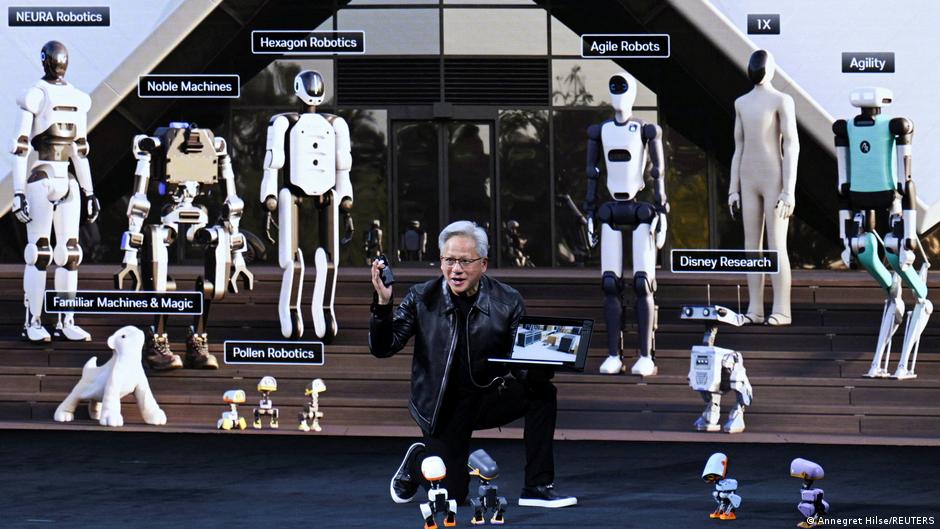
Nvidia’s board has launched an independent investigation into reports that chief executive Jensen Huang had a romantic relationship with a woman suspected by US intelligence agencies of working for Chinese intelligence, introducing a fresh governance risk for the company that supplies much of the computing infrastructure behind the artificial intelligence startup boom.
The US chipmaker announced the review on Sunday, November 8. Nvidia said its board currently has insufficient grounds to suspect that confidential information was leaked or that US national security was endangered. Huang intends to remain in charge of the company while the investigation proceeds.
The board has nevertheless commissioned an independent examination of all available information. The decision places scrutiny on both the conduct of Nvidia’s chief executive and the safeguards surrounding a company whose processors are central to AI model development, cloud computing, supercomputers and large-scale data processing.
“I intend to protect Nvidia and support the national security of the United States,” Huang told employees.
In an internal memorandum, Huang acknowledged the affair and said he “deeply regrets” being unfaithful to his wife. He wrote that his actions had hurt her and their children, adding that there was no justification for what he had done. Huang said he hoped his family would recover and that he could eventually regain their trust.
Governance risk reaches the AI funding market
For venture investors and technology founders, the investigation matters well beyond Nvidia’s boardroom. The company occupies a pivotal position in the innovation ecosystem: AI startups rely on its chips to train and operate modern models, while cloud providers and data-center businesses purchase its hardware to expand computing capacity. Any disruption to leadership, strategic decision-making or access to sensitive technology could therefore affect companies throughout the AI value chain.
The inquiry does not establish that information was transferred, and Nvidia has not identified evidence of a national security breach. Even so, the allegations may intensify due-diligence questions for investors backing startups whose business models depend heavily on Nvidia hardware. Such companies already face constraints involving chip availability, infrastructure costs and US export controls. A new layer of uncertainty around Nvidia’s governance could influence how venture capital firms assess supply-chain concentration and geopolitical exposure.
The reported relationship was first disclosed by The New York Times. According to the newspaper, Huang became romantically involved with Alice Huang, who shares his surname and leads Megaspeed, a Singapore-based company that operates data centers and buys Nvidia chips.
Sources cited by the newspaper said US intelligence agencies had monitored Alice Huang because they believed she had been recruited by China’s Ministry of State Security. President Donald Trump was reportedly informed about that surveillance approximately a year ago.
The journalists were unable to determine what information Alice Huang might have provided to Beijing or how valuable any such material may have been. China previously rejected the espionage allegations involving Nvidia’s chief executive, describing them as “groundless speculation.”
Strategic chip controls shape startup competition
Nvidia’s importance to the United States stems from its position as one of the world’s leading AI technology companies. Its processors support the training and operation of advanced AI models, the construction of supercomputers, the growth of cloud services and the processing of large datasets. That reach makes the company an essential supplier not only to major technology groups but also to startups competing to commercialize generative AI and other compute-intensive products.
The company also plays a central role in the contest between Washington and Beijing for leadership in artificial intelligence. The White House regards China’s access to US-made advanced chips as a national security issue and has subjected those products to export restrictions. Against that backdrop, allegations involving the CEO of the leading American AI chipmaker and a data-center executive suspected of Chinese intelligence ties are likely to draw attention from policymakers as well as shareholders.
For the venture market, tighter scrutiny could have consequences across funding, partnerships and acquisitions. Investors may place greater emphasis on whether portfolio companies can diversify their computing suppliers, comply with export rules and document relationships with overseas data-center operators. Potential acquirers may likewise deepen reviews of startups that handle restricted chips or serve customers in jurisdictions exposed to US-China technology controls.
The investigation also highlights the unusual concentration of the AI economy around a small number of infrastructure providers. Nvidia’s technology underpins many startups’ product road maps and capital requirements, linking the company’s operational stability to venture financing conditions across the sector. While the board has said it currently lacks sufficient evidence of a leak or national security threat, the independent review will test whether Nvidia’s controls are adequate for the geopolitical significance it now carries.
Huang’s plan to remain CEO limits immediate leadership uncertainty. The ultimate effect on Nvidia and the broader startup ecosystem, however, will depend on what the independent investigation finds and whether it prompts changes to corporate oversight, security procedures or the company’s commercial relationships.



