Oleshky Ceasefire Opens Humanitarian Corridor in Ukraine’s Kherson Region
The temporary truce highlights how drones, logistics and demining capabilities are shaping humanitarian operations in contested territory.
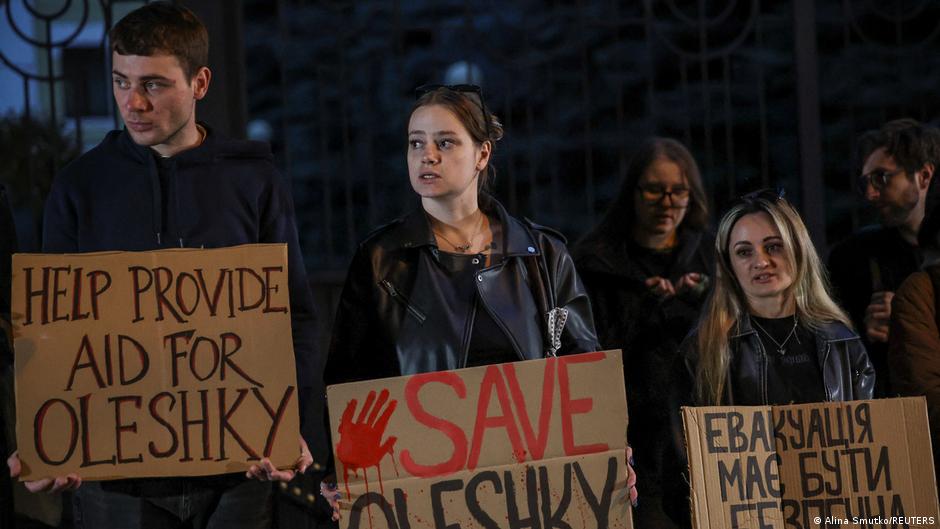
A bilateral ceasefire has taken effect around the Russian-occupied city of Oleshky in Ukraine’s Kherson region, creating a temporary window for humanitarian assistance and preparations to evacuate civilians from an area surrounded by mines and damaged infrastructure.
Ukraine’s General Staff and Russia’s Defense Ministry confirmed that their forces had stopped firing in the designated area from 3 a.m. Kyiv time on October 27. Moscow described the arrangement as a “regime of silence” beginning at 4 a.m. Moscow time and said Russian forces had ceased fire on the Kherson front in preparation for the humanitarian operation.
Ukraine said the pause was established exclusively to deliver aid to people still inside Oleshky and prepare for the free movement of civilians out of the city. The Ukrainian military said it would do everything possible to assist residents and implement the decisions needed to protect and rescue Ukrainian citizens.
“Ukraine’s priority is to save the trapped residents and help them reach territory under its control,” President Volodymyr Zelensky said.
Logistics, drones and demining take center stage
The operation underscores the growing importance of logistics technology, unmanned systems and demining capacity in humanitarian work near active front lines. These are fields in which defense technology startups, drone developers and specialized infrastructure companies increasingly operate, although neither government disclosed any commercial contracts or private-sector participants connected to the Oleshky mission.
The ceasefire began on October 27, while the humanitarian mission is scheduled to start on October 29, Zelensky said in an interview with TSN.Tyzhden presenter Alla Mazur. Under the agreement, Russia is expected to clear mines from roads, while Ukraine prepares to evacuate residents who have been unable to leave.
The terrain makes those preparations particularly difficult. Oleshky lies on the Russian-occupied eastern bank of the Dnipro River, only nine kilometers from the Ukrainian-controlled regional capital of Kherson. Mines are scattered throughout the surrounding area, making attempts to leave in any direction potentially fatal.
Ukrainian forces previously reported delivering food and medicine to the city using heavy drones, demonstrating how dual-use technologies can maintain supply links when conventional transport routes are blocked. Moscow has also said it conducted its own deliveries. The competing claims illustrate the operational and information risks facing companies whose technology is deployed in war zones, where equipment, imagery and delivery records can become part of broader political narratives.
For investors and founders working in defense technology, emergency logistics, satellite mapping or autonomous systems, the operation offers a stark example of demand driven by damaged infrastructure and inaccessible terrain. It also highlights the limitations of technology without a negotiated security framework: drones can deliver limited supplies, but moving large numbers of civilians still requires cleared roads, transport and coordination between opposing forces.
US mediation and independent documentation
Zelensky said mediation by US first lady Melania Trump helped secure the temporary truce announced by Washington on October 23. The White House said Moscow and Kyiv would halt fire to allow humanitarian aid deliveries and prepare the evacuation of civilians through a specially organized safe corridor. According to the US administration’s release, the first lady’s team played a key role in reaching the arrangement.
Melania Trump said civilian representatives from Russia and Ukraine would jointly visit Oleshky residents in their homes to determine what assistance they require. People choosing to evacuate would receive support and transportation to their preferred destination, she said, adding that some might travel to Russia and others to Ukraine.
Representatives of an independent American media organization will accompany the teams and document the visits, according to the first lady. That monitoring component may be significant because Zelensky warned of a high risk that Russian forces could seek to discredit the process. He said Moscow might try to persuade residents to move to its side and use the evacuation to produce propaganda material.
The operation therefore combines physical logistics with verification, documentation and information security. Those requirements are relevant to emerging technology businesses developing secure communications, geospatial tools, evidence-management platforms and systems for tracking humanitarian assistance. However, the parties have not identified any startups, venture-backed suppliers, financing rounds or mergers and acquisitions related to the mission.
A city isolated by war and flooding
Oleshky had about 24,000 residents before Russia’s full-scale war against Ukraine. Current estimates indicate that between 1,700 and 2,000 people remain, including at least several dozen children.
The city was almost entirely flooded after the destruction of the Kakhovka hydroelectric power plant in June 2023. The flood compounded existing problems with infrastructure and access to drinking water. Oleshky has also been under blockade for the past several months, leaving residents dependent on limited and contested supply channels.
The temporary ceasefire follows international appeals for a halt to fighting in the city, including a request addressed to the Russian president by Pope Leo XIV. Its effectiveness will depend on whether both sides maintain the pause, roads are safely cleared and civilians can choose their destination without coercion.
For the wider innovation ecosystem, Oleshky is less an immediate investment event than a case study in the technologies and coordination mechanisms required for humanitarian access in modern conflicts. It shows where unmanned delivery systems can help, where demining and mobility remain indispensable, and why independent verification can be as important as the vehicles and software supporting an evacuation.



