Oryol Missile Attack Highlights Risk to Russia’s Dual-Use Tech Sector
A reported fire at the Proton optoelectronics plant underscores the operational and investment risks facing Russia’s dual-use innovation ecosystem.
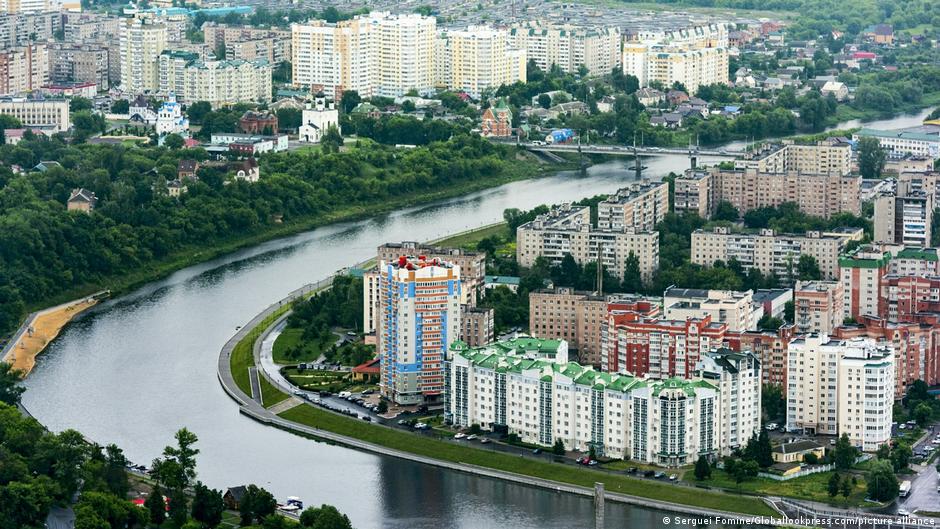
The Russian city of Oryol came under what regional authorities described as a massive missile attack overnight into Saturday, January 7, with production facilities in the city’s Sovetsky district sustaining partial damage.
Andrei Klychkov, governor of the Oryol region, confirmed the attack and said emergency services were working at the site. He did not identify the affected company, provide details about the extent of the damage or report whether there were casualties.
“The production premises of an enterprise in the Sovetsky district were partially damaged,” Klychkov said.
An open-source intelligence analysis by the news outlet ASTRA indicated that the strike caused a large fire at the Proton plant, one of Russia’s most important producers of optoelectronics. Proton is located in Oryol’s Sovetsky district, matching the area identified by the governor, although the regional authorities did not publicly name the facility.
Dual-use supply chains face renewed pressure
The reported damage places renewed attention on Russia’s optoelectronics supply chain, a technologically demanding segment that can serve both civilian and military markets. For startups, investors and strategic buyers operating around photonics, sensors, imaging systems and advanced components, disruption at a major manufacturer can create risks that extend beyond a single production site.
Ukrainian OSINT channels Exile+ and Supernova+ have reported that Proton products are used in several Russian weapons systems. These include the S-71 Kover air-launched cruise missile, the 9M723 Iskander-M ballistic missile and the Pantsir-S1 surface-to-air missile and gun system. The plant has previously been targeted in Ukrainian attacks on multiple occasions.
The military applications attributed to Proton make the company part of a sensitive dual-use technology environment. Businesses connected to such supply chains may face heightened operational uncertainty when production is concentrated at facilities vulnerable to repeated attacks. Any assessment of the wider commercial impact, however, will depend on the severity of the damage, the plant’s ability to resume operations and the availability of substitute suppliers—details that were not provided by officials.
Implications for startup funding and M&A
For venture capital firms evaluating Russian hardware and deep-tech companies, the incident illustrates how physical infrastructure risk can affect investment decisions alongside conventional measures such as market size, intellectual property and product development. Startups that depend on specialized domestic components may need to demonstrate greater supply-chain resilience, including alternative sourcing and geographically distributed production.
The same considerations can shape mergers and acquisitions. Strategic buyers examining optoelectronics or defense-adjacent technology assets are likely to scrutinize supplier concentration, production continuity and exposure to facilities with military links. A company’s technology may remain attractive, but repeated disruption can complicate valuation, due diligence and plans to integrate manufacturing capacity.
At the ecosystem level, pressure on established producers can create competing effects. Supply constraints may open space for smaller companies capable of replacing components or redesigning systems around available hardware. At the same time, startups frequently rely on larger industrial enterprises for manufacturing, testing and customer access. Damage to a major plant can therefore remove capacity that emerging companies would otherwise use to scale.
Optoelectronics is particularly relevant to innovation because it sits at the intersection of advanced manufacturing, sensing, communications and imaging. Building viable products in the sector generally requires specialized equipment and close coordination between research, engineering and production. That dependence on physical assets makes the field less flexible than software when facilities are damaged or supply routes are interrupted.
The immediate facts remain limited. Regional authorities have confirmed partial damage to an unnamed enterprise in the Sovetsky district and the deployment of rescue services. ASTRA’s OSINT analysis identified Proton as the site of a major fire, while Ukrainian OSINT channels have linked its products to Russian missile and air-defense systems. Until more information emerges about the condition of the plant, the scale of any effect on production, suppliers, startups or potential transactions cannot be established.



