Pentagon Strategist’s NATO Exit Clouds Ukraine’s Innovation Outlook
Elbridge Colby’s criticism of Ukrainian strikes raises fresh uncertainty for defense startups, investors and postwar reconstruction planning.
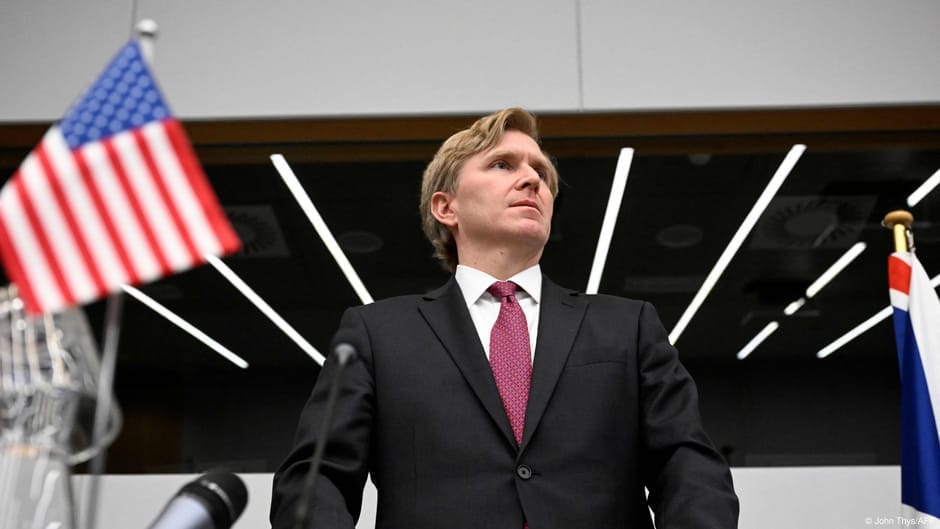
A senior Pentagon strategist’s early departure from NATO talks on Ukraine has added a new layer of political uncertainty for technology companies, venture investors and industrial groups exposed to the country’s defense and reconstruction economy.
Elbridge Colby, the US deputy defense secretary for policy, left the 37th meeting of the Ukraine Defense Contact Group at NATO headquarters in Brussels on November 17 after criticizing Kyiv for strikes deep inside Russian territory, The Telegraph reported on November 18. According to the report, Colby told participants that the attacks did not have significant military value.
Colby departed before a classified briefing by Ukrainian Defense Minister Yevhen Khmara. Washington remained represented through the end of the meeting by Matthew Whitaker, the US permanent representative to NATO.
The episode matters beyond diplomatic protocol. Government policy, military procurement and allied coordination are crucial sources of demand and financing for startups working in drones, cybersecurity, communications, battlefield software and other dual-use technologies. A visible disagreement between Washington and European capitals can complicate expectations about which capabilities will continue to receive political and financial support.
Policy divergence raises funding questions
German sources cited by the newspaper expressed concern that the administration of US President Donald Trump had effectively aligned itself with Russia against Ukraine and Kyiv’s European supporters. German, British and other European officials present at the meeting were reportedly puzzled by Colby’s position because they consider the strikes militarily effective and capable of destabilizing the government of Russian President Vladimir Putin.
For founders and investors, the immediate issue is not a single official’s departure but the policy uncertainty revealed by disagreement among Ukraine’s principal backers.
That uncertainty can affect the innovation ecosystem even without an immediate change in formal policy. Defense technology companies often depend on long procurement cycles, field testing and access to government buyers. Venture capital firms assessing such businesses must weigh technical performance against export controls, shifting operational priorities and the durability of public-sector demand.
The disagreement may also influence merger and acquisition calculations. Established defense contractors and technology groups considering acquisitions or partnerships in the region need confidence that products developed for Ukraine will remain compatible with the priorities of NATO governments. If US and European assessments diverge, buyers may apply greater scrutiny to revenue forecasts, regulatory exposure and dependence on any single government customer.
At the same time, stronger European commitment could create opportunities for startups able to serve national defense ministries and multinational procurement programs. The meeting did not establish any new financing mechanism, procurement plan or investment commitment, however, and the report provided no figures for the potential economic impact.
Departure attributed to travel schedule
It was claimed that Colby had to leave early to catch a flight from a nearby airport. After departing the meeting, he held a press conference in the atrium of NATO headquarters at about 5 p.m. local time, or 7 p.m. Moscow time, before heading to the airport.
The timing drew attention because he missed Khmara’s classified presentation, which could have provided further context on Ukraine’s military requirements and operational priorities. Such information can ultimately shape demand signals across the defense supply chain, although the contents of the briefing remain secret and no details were disclosed.
For Ukraine’s startup sector, the larger question is whether political friction will alter access to allied procurement channels or slow decisions affecting technologies already being developed and deployed. The source report did not indicate that any contracts, investments or acquisitions had been canceled as a result of the meeting.
Reconstruction agenda broadens investor focus
The diplomatic discussion is set to continue in Berlin on November 19, when British Prime Minister Andy Burnham is due to co-chair a meeting of the “coalition of the willing” with the French president and the German chancellor. Around 20 heads of state and government, primarily from European countries, are expected to discuss further support for Kyiv.
The meeting is also intended to address plans for Ukraine’s postwar reconstruction. That agenda is directly relevant to venture capital and strategic investment because rebuilding the country would require innovation across energy, infrastructure, logistics, financial technology, telecommunications and cybersecurity, alongside continued development of defense capabilities.
For investors, the Brussels dispute highlights the close connection between geopolitical alignment and the commercial outlook for Ukrainian technology. Reconstruction planning may expand the addressable market for startups, but financing conditions will depend heavily on the consistency of allied policy, the structure of public procurement and the willingness of governments and private capital to share risk.
The Berlin talks could therefore offer a clearer indication of Europe’s capacity to sustain support and coordinate recovery plans. Until concrete programs emerge, startups and investors must navigate a landscape in which technological demand remains substantial but political signals from major allies are increasingly difficult to interpret.



