Poland’s Planned Border No-Fly Zone Could Reshape Drone Investment
The proposed restrictions may create new compliance hurdles and procurement opportunities for drone, sensor and defense technology startups.
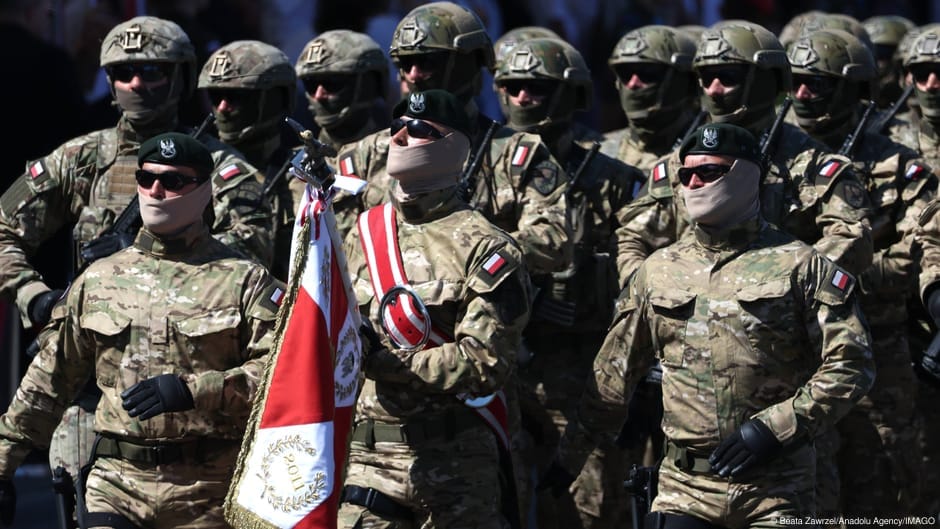
Poland plans to establish a no-fly zone along its eastern border, adding another layer of military control that could affect drone operators, aviation technology startups and investors tracking Europe’s expanding defense innovation market.
Deputy Defense Minister Cezary Tomczyk said on Wednesday, November 25, that the restricted area would provide “additional support for the military.” The government is already preparing the relevant decision, with Tomczyk expressing hope that the new measures could be introduced toward the end of December or in early January, putting implementation on course by 2027.
“It would be a restricted zone located some distance — from about 12 kilometers to several dozen kilometers — from the border,” Tomczyk said.
The measure would enable Poland’s armed forces to identify Russian aircraft entering the country’s airspace more quickly and, when necessary, shoot them down. Tomczyk also said Warsaw would encourage NATO allies to adopt similar measures along their own eastern borders.
New constraints for commercial drone companies
For startups operating unmanned aircraft, mapping systems, agricultural drones or inspection platforms, a geographically broader no-fly regime would raise the importance of geofencing, real-time airspace data and regulatory compliance. The immediate effect would be most visible for companies conducting flights near Poland’s eastern frontier, where restrictions are already in force.
Flights in the Polish border region are currently almost entirely prohibited after dark. During daylight hours, aircraft may operate only at altitudes of at least 3 kilometers, according to Reuters. A new limited zone extending from roughly 12 kilometers to several dozen kilometers from the border could further narrow the operating environment for civilian aviation and drone services.
The proposal also illustrates a growing challenge for dual-use startups: technologies developed for logistics, surveying or infrastructure monitoring may operate in airspace that military authorities increasingly treat as a security domain. Companies serving customers in affected regions may need to adapt flight-planning software, strengthen identification capabilities or reconsider where they test and deploy aircraft.
For venture capital investors, that creates a divided outlook. Restrictions may weigh on startups whose business models depend on routine civilian flights near sensitive borders. At the same time, tighter airspace controls could increase demand for systems that detect, classify and track aircraft, as well as software that helps authorized operators comply with changing restrictions. The Polish government has not disclosed procurement plans, budgets or startup programs connected to the proposed zone, however.
Defense technology enters NATO policy debate
Poland’s planned restrictions come as Warsaw urges allies to consider a more active approach to Russian missiles near NATO territory. Earlier on November 25, Bloomberg reported, citing sources, that Polish officials had proposed that NATO allies shoot down over Ukraine Russian missiles heading toward alliance territory.
The proposal was presented at a November 23 meeting of NATO member-state ambassadors in Brussels. Tomczyk said it did not receive unequivocal support and warned that such a decision would create “many complications.” Polish Defense Minister Władysław Kosiniak-Kamysz told radio station RMF24 that discussions were continuing, although he did not yet see sufficient “readiness and determination” among allies to take that step.
The unresolved debate matters to Europe’s defense technology ecosystem because policy determines where surveillance, interception and command systems can be deployed. A coordinated approach across NATO’s eastern flank could potentially produce a larger, more standardized market for defense suppliers. Divergent national rules, by contrast, would leave startups navigating multiple procurement systems and operational requirements.
Cross-border consolidation could also become more relevant if governments seek integrated detection and air-defense capabilities. Larger defense companies may look to acquire specialized developers, while venture-backed firms could pursue partnerships to meet military certification and deployment requirements. Such investment or M&A outcomes remain potential market implications rather than measures announced by Poland.
Missile incident adds urgency
Poland advanced its proposal to intercept certain Russian missiles over Ukraine after three Russian Kh-101 missiles fell in the country’s southeast on November 20. Polish Prime Minister Donald Tusk said that day that the incident appeared to be “a deliberate provocation.”
Tusk said the airspace violations clearly demonstrated why Poland should participate in negotiations concerning peace in Ukraine, which has been resisting Russia’s military invasion for nearly five years.
For founders and investors, the policy signal is clear even before the final boundaries and rules are published: airspace security is becoming a more prominent element of Europe’s innovation landscape. Startups positioned at the intersection of drones, sensors, communications and defense compliance may find new demand, but they will also face stricter operational limits and heightened scrutiny as Poland and its allies determine how to protect NATO’s eastern frontier.



