Polish Court Crisis Raises New Risks for Startups and Venture Capital
A struggle over Poland’s Constitutional Tribunal has escalated into protests and competing claims of authority, clouding the investment outlook.
Poland’s prolonged constitutional conflict escalated sharply on Friday, adding a new layer of political and legal uncertainty for the country’s technology startups, venture investors and prospective acquirers.
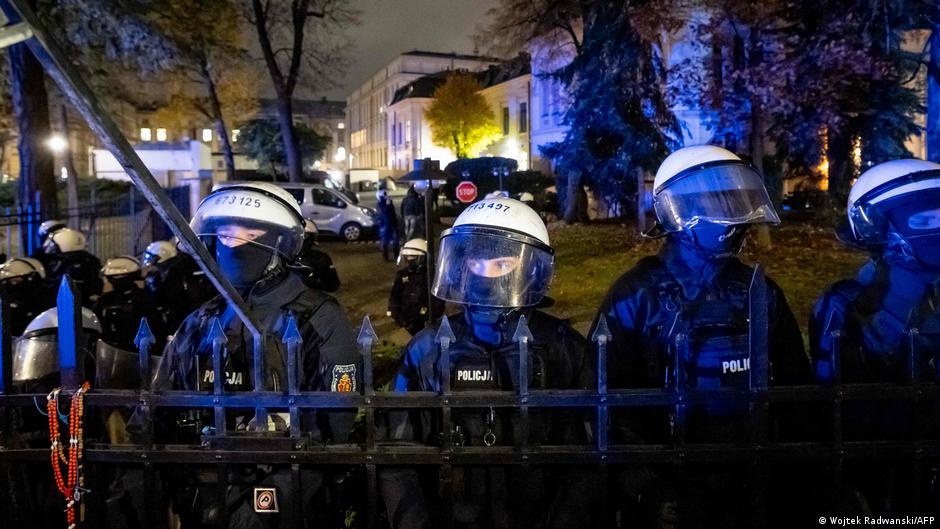
Police cordoned off the Constitutional Tribunal building in Warsaw as demonstrators gathered outside following a decision by Anna Korwin-Piotrowska, one of the tribunal’s 15 judges, to suspend its president, Bogdan Święczkowski, and vice-president, Bartłomiej Sochański, for one month. The decision was published on the tribunal’s website on the evening of October 30.
The document said the two officials had, among other actions, prevented judges appointed by the Sejm in 2026 and already sworn in from participating in cases. Korwin-Piotrowska based her authority on a 2016 law governing the tribunal’s organization and procedures, which she said empowers its longest-serving judge to act. She also called a general assembly of tribunal judges for November 3.
Competing messages immediately deepened the dispute. A post on an X account presented as belonging to the tribunal alleged an “illegal takeover” of its website and said Święczkowski and Sochański remained in office. It also claimed Korwin-Piotrowska was not a Constitutional Tribunal judge and described the actions as a criminal coup. The tribunal’s website, however, said the X account was not affiliated with the institution.
“I have no idea what this is about. Ms. Anna Korwin-Piotrowska called me and said that she now runs the tribunal. I know nothing more,” Sochański told Rzeczpospolita.
Sochański called the episode unprecedented, said he had heard no complaints against him and argued that no legal provision allowed such interference with the independence of the tribunal or an individual judge. He also characterized the events as a coup.
Institutional uncertainty reaches the investment climate
For Poland’s innovation economy, the immediate issue is not a direct change to startup or investment law but the growing uncertainty surrounding the institution responsible for resolving constitutional disputes. Venture funding, cross-border acquisitions and corporate expansion depend on predictable courts, enforceable rights and confidence that public institutions can operate without rival claims to authority.
The crisis therefore introduces another risk factor for founders raising capital and investors conducting legal due diligence. Any prolonged institutional paralysis could complicate assessments of regulation, shareholder protections and the durability of government policy. The confrontation may also influence how international funds and strategic buyers price political and legal risk when evaluating Polish companies, although no specific financing or acquisition has been reported as affected.
Prime Minister Donald Tusk, whose government and parliamentary majority are opposed to President Karol Nawrocki, supported the temporary removal of the tribunal’s leadership. Tusk said restoring the rule of law was a duty after years of lawlessness under the Law and Justice party, known as PiS, and described the process as difficult, sometimes painful and requiring decisive action.
Nawrocki, who was traveling to Senegal on the evening of October 30, said he turned his aircraft around because of the developments. After returning to Poland, he met Święczkowski and Supreme Court First President Zbigniew Kapiński, then entered the tribunal building with Kapiński, according to presidential chief of staff Paweł Szefernaker.
Korwin-Piotrowska had offered to meet the president only at the Presidential Palace. Maciej Berek, a tribunal judge elected by the Sejm but not permitted by Nawrocki to take the oath, said the president had chosen a path of physical confrontation by seeking to enter the building. Berek also alleged that people identifying themselves as presidential staff attempted to obtain keys to rooms inside the tribunal.
Police cordon underscores escalation
Warsaw police said Prosecutor General and Justice Minister Waldemar Żurek asked officers to pay particular attention to security at the tribunal during the protests. Police also received a letter from one tribunal judge warning of a potential threat to life and health.
Officers consequently cordoned off the building but said they were not stationed inside. Police reported that demonstrators threw dangerous objects at them. Three protesters were detained after climbing over a barrier and entering the tribunal grounds.
The confrontation has developed over several months from a broader struggle between Tusk’s government and Nawrocki’s PiS camp. It began when the president refused to accept the oaths of new judges elected by the current parliament. Święczkowski likewise declined to recognize their authority or allow them to hear cases.
The government considers the tribunal illegitimate because judges selected under the previous authorities remain among its members. The governing coalition and judges aligned with its position say Nawrocki’s conduct unlawfully obstructs the institution’s work.
Pressure on the tribunal’s leadership increased further on October 30, when Żurek said he had filed five motions with the Constitutional Tribunal seeking the removal of immunity. He said the requests included cases involving Święczkowski and Sochański.
For Poland’s startup ecosystem, the central question is how quickly the competing sides can establish a functioning and broadly recognized constitutional process. Until then, the dispute risks weakening the institutional predictability that venture firms and technology companies rely on when committing capital, planning exits and making long-term investments.



