Russia Expands Kamenskaya Base, Raising Nordic Tech Risk
Military construction near Finland adds a new layer of geopolitical risk for Nordic startups, investors and cross-border technology markets.
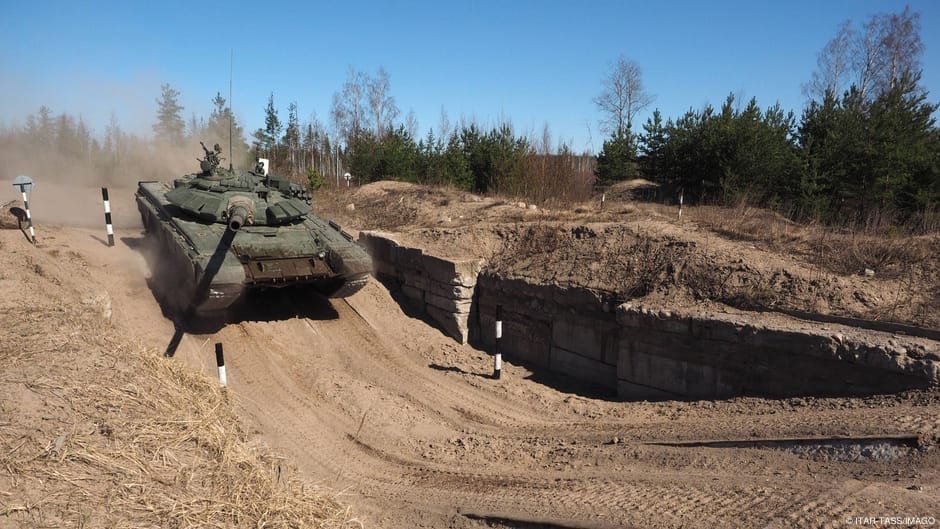
Russia is rapidly rebuilding the Kamenskaya military settlement in Karelia, about 60 kilometers from the Finnish border, according to Finnish public broadcaster Yle, a development that could sharpen geopolitical risk calculations across the Nordic technology and venture capital ecosystem.
The expansion is expected to increase the number of military personnel stationed at the site to 11,000. Yle reported on Monday, November 23, that numerous buildings were demolished during the current year and that new construction had begun, based on the outlet’s analysis of satellite imagery.
In the southern part of the settlement, several aging vehicle hangars, maintenance facilities and other structures were removed. Two canteens and two barracks were also demolished. Another area west of Kamenskaya reportedly saw the removal of large vehicle hangars.
The military construction has no stated direct connection to private technology companies. Its significance for startups and venture investors is instead tied to the wider security environment around Finland, a major European center for software, telecommunications, gaming and dual-use innovation. Infrastructure investment near the border may influence how founders, funds and corporate buyers assess operational resilience, data security and exposure to geopolitical disruption.
A larger permanent military footprint
Residential buildings used by military families are also being modernized. Interfax reported that Gazprom connected 22 apartment buildings in the settlement to the natural gas network during the autumn.
In May, Finnish newspaper Iltalehti reported that infrastructure at Kamenskaya was being expanded, including the construction of new firing ranges. Yle described the formation stationed there as Russia’s most powerful ground-force unit in the direction of Finland.
“The large military settlement and adjacent training areas are used by the 69th Motor Rifle Division,” the journalists wrote.
Since the late 1990s, Kamenskaya had hosted a brigade of approximately 4,400 personnel, according to Yle. It now accommodates a division that is still being formed and is expected to reach 11,000 service members. The report said personnel from the division are fighting in Ukraine, including in the Kharkiv area.
Yle’s authors estimated that approximately 8,000 people currently live in the military settlement and the neighboring residential district. The planned growth therefore points to a substantially larger permanent presence once the division’s formation is completed.
Construction is also underway at the nearby Kirillovskoye military settlement, known in Finnish as Perkjärvi, around eight kilometers east of Kamenskaya. Yle said that one large complex of buildings and two smaller hangars were constructed there last year. The journalists were unable to determine the complex’s exact purpose.
Implications for capital and innovation
For venture capital firms, the immediate issue is not a specific disruption but an expansion of the regional risk map. Investors conducting due diligence on companies operating in Finland and the broader Baltic area may place greater weight on business continuity, cybersecurity, supply-chain redundancy and the physical location of critical infrastructure.
The same considerations can affect mergers and acquisitions. Technology buyers assessing Nordic targets may examine customer concentration, government contracts, hosting arrangements and dependence on cross-border logistics more closely. Startups selling security, satellite analytics, resilient communications, infrastructure monitoring or other dual-use technologies may meanwhile face increased strategic attention as governments and established defense companies respond to a changing security environment.
Yle’s own use of satellite imagery to identify demolition and construction illustrates the growing role of commercially available geospatial data in monitoring military and infrastructure activity. That field has become increasingly relevant to technology companies building tools for image analysis, risk intelligence and automated detection. The report, however, did not identify any startup, venture financing round, acquisition or commercial contractor connected to the work at Kamenskaya.
The reconstruction was not described as unexpected. Russia had previously said it would strengthen its forces in response to Finland and Sweden joining NATO. For the Nordic innovation economy, the practical consequence is a more persistent geopolitical backdrop rather than an immediate change in startup activity: companies and investors must price security, resilience and regulatory exposure into decisions that previously may have been driven primarily by growth prospects and access to technical talent.
As the division continues to take shape and construction proceeds at both Kamenskaya and Kirillovskoye, the scale and function of the new facilities will remain relevant to regional security assessments. The available reporting establishes a significant military buildout near Finland, while leaving unanswered which organizations are carrying out the construction and how quickly the planned force level will be reached.



