Russian Diesel Diversions Raise New Risks for US Tech and Venture Markets
The threatened collapse of a Trump-Putin fuel deal could intensify cost and policy pressures across the US startup and investment ecosystem.
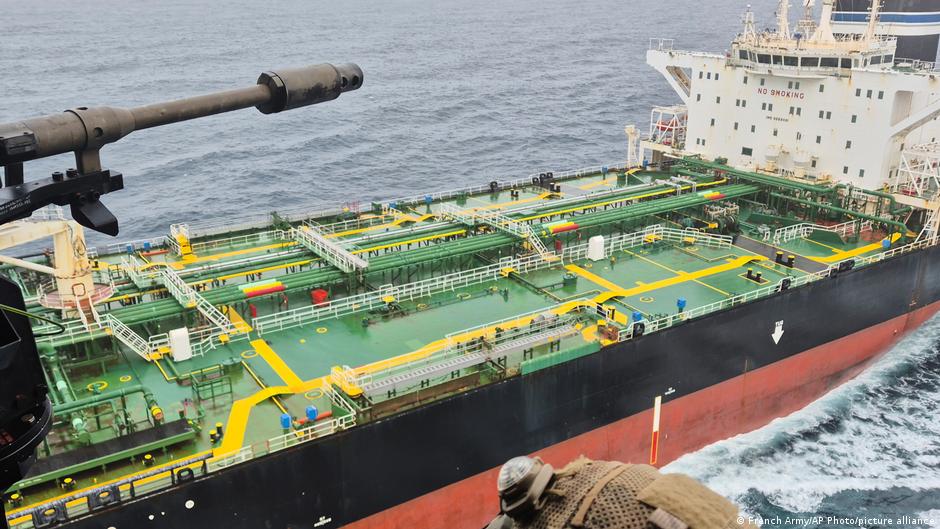
Two of three oil tankers carrying Russian fuel toward the United States have changed course, threatening an agreement between US President Donald Trump and Russian President Vladimir Putin to purchase and import Russian diesel, the Financial Times reported on Wednesday, November 4.
The development adds another layer of uncertainty for US technology startups and venture capital investors already navigating volatile energy costs, sanctions exposure and shifting trade policy. Although the dispute centers on fuel shipments rather than technology, diesel prices affect logistics, construction, manufacturing and data infrastructure—sectors that include many capital-intensive startups and venture-backed operators.
The Russian tanker Talisman and the Leruo, a Sierra Leone-flagged vessel owned by a Hong Kong company, no longer list the US Atlantic coast as their destination. Since November 2, the Leruo has redirected toward Brazil, while the Talisman entered the Mediterranean and is now near Algeria.
The Talisman is transmitting a “for orders” signal, indicating that its cargo does not yet have a confirmed buyer or destination port. Both vessels are under European Union sanctions.
Sanctions complicate an attempted fuel-price intervention
A third vessel, the Agioi Fanendes, continues to sail toward the United States but is also transmitting “for orders.” The tanker is owned by Greek shipping company Eastern Mediterranean Maritime and is scheduled to arrive in New York this weekend.
“However, given the apparent caution among US buyers over regulatory, legislative and sanctions risks, it would not be surprising if this tanker also changed course and abandoned its US call,” Kpler analyst Matt Smith said.
Meanwhile, the sanctioned tanker Beast, owned by companies based in the Seychelles, loaded cargo at the Russian port of Primorsk on October 27 and remains on course for the US Atlantic coast.
The vessels’ uncertain destinations illustrate the gap that can emerge between a high-level political agreement and its commercial execution. For founders and investors, that gap matters because sanctions compliance, shipping availability and buyer caution can determine whether an announced policy intervention produces a measurable change in operating costs.
Diesel futures have risen by more than 60% since the beginning of the war in Iran. At the start of November 2026, average diesel prices at US filling stations stood at about $6.30 per gallon, equivalent to $1.66 per liter.
Those prices can feed directly into the economics of startups that depend on physical distribution, vehicle fleets or industrial supply chains. Venture-backed businesses in delivery, mobility, robotics, agricultural technology and climate technology may face higher transportation and deployment expenses. Hardware companies can also encounter pressure through freight and component logistics, while software businesses serving those industries may see customers delay purchases or demand faster cost savings.
Implications for venture funding and startup consolidation
Persistently expensive fuel may reinforce investor scrutiny of startups with high cash burn and limited control over logistics costs. It can also strengthen the commercial case for technologies designed to reduce fuel consumption, optimize routes, electrify fleets or improve supply-chain visibility. The same shock can therefore create both financing constraints and demand for innovation, depending on a company’s business model and exposure.
Mergers and acquisitions could become a more important route for companies unable to absorb prolonged increases in operating expenses. Better-capitalized technology groups may find opportunities to acquire logistics software, fleet-management systems or industrial automation assets. At the same time, uncertainty surrounding sanctions and energy policy can complicate due diligence, particularly where customers, suppliers, vessels or payment channels have links to restricted entities.
Trump reached the diesel agreement with Putin several weeks before the US congressional midterm elections, seeking to reduce prices and strengthen political support. The initiative did not help the Republican Party at the ballot box. In the November 3 elections, Democrats secured majorities in both the Senate and the House of Representatives.
That political shift could introduce further uncertainty over the agreement’s future and the regulatory treatment of Russian fuel imports. Startups and venture firms planning around energy-sensitive sectors will have to assess not only commodity prices but also the durability of executive agreements under a Congress controlled by the opposing party.
For the innovation ecosystem, the tanker diversions are a reminder that energy security, sanctions policy and startup finance are increasingly connected. If the Russian cargoes fail to reach US buyers, the attempted diesel-price intervention may have limited near-term effect, leaving founders and investors to manage elevated costs while watching for new regulatory and political responses.



