Russian Drone Briefly Enters Poland, Testing Europe’s Defense Tech Market
Poland’s decision not to engage the drone highlights the operational challenges facing Europe’s expanding air-defense sector.
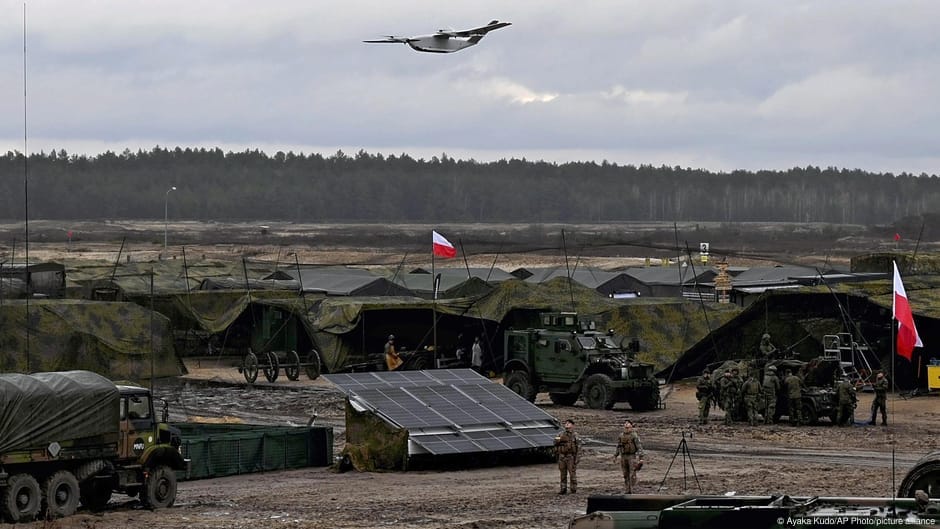
A Russian unmanned aerial vehicle briefly entered Polish airspace during an attack on targets in western Ukraine, Poland’s armed forces said, in an incident that underscores the growing demand for detection, tracking and interception technologies across Europe.
The drone crossed into Poland for a short period during the night leading into Tuesday, November 24, according to a statement published by the Polish military on the social media platform X. It subsequently changed course and flew east.
Poland’s Operational Command continuously tracked the aircraft by radar, the armed forces said. Authorization was granted to destroy the object, but commanders ultimately decided against using weapons after the drone turned eastward. The military said an attempted interception could have endangered civilians if the unmanned aircraft had been destroyed over a populated area.
The decision not to fire reflected the risk to civilians from the possible destruction of the drone, according to the Polish military’s account.
The episode illustrates a central technical and commercial challenge for the defense innovation ecosystem: detecting an airborne threat is only one part of the response. Military operators must also identify it, assess its trajectory and select an interception method that does not create disproportionate risks on the ground.
Counter-drone investment faces an operational test
For startups and venture investors active in defense technology, the incident offers another example of the operational constraints shaping demand for counter-unmanned aircraft systems. Radar networks may provide continuous tracking, but commanders still require tools that combine sensor data, classify potential threats and support rapid decisions under uncertain conditions.
The choice not to engage also draws attention to technologies designed to reduce the hazards associated with conventional interception. These can include systems focused on precise detection, command-and-control software and methods intended to limit collateral risk. The Polish military did not disclose the type of drone involved, the systems used to monitor it or what weapon had been authorized, so the incident does not establish the effectiveness of any particular technology.
Even so, the event is relevant to companies developing integrated air-defense products because it demonstrates that technical performance must be evaluated alongside deployment conditions. A system capable of striking a target may still be unsuitable when debris, an errant interceptor or an uncertain impact point could threaten civilians.
That creates an innovation opportunity, but also a difficult procurement environment. Defense startups typically need to demonstrate that their products can operate within existing military command structures and deliver dependable information quickly. Governments, meanwhile, must balance speed of acquisition with testing, certification and interoperability requirements. The Polish incident shows why buyers may prioritize systems that help operators manage the full chain from detection to a proportionate response.
Regional alerts increase pressure for integrated defenses
Authorities declared an air alert in Poland’s Lublin province on the evening of November 23, according to the German news agency dpa. Residents of border districts in the country’s southeast were asked to move to shelters.
The alert placed the airspace incursion within a broader civil-protection context. For technology providers, that context extends the market beyond standalone sensors or interceptors. Secure communications, automated warning systems and software connecting military tracking with civilian emergency procedures can become important components of a national response, particularly in border regions exposed to spillover from nearby attacks.
The episode may also strengthen interest in partnerships between established defense contractors and younger companies with specialized capabilities. Large suppliers generally control access to major procurement programs and integration platforms, while startups can contribute software, analytics, sensors or other focused technologies. That dynamic can encourage strategic investment and acquisitions when governments seek to upgrade defenses rapidly, although no funding deal or transaction was announced in connection with this incident.
NATO surveillance adds another layer of demand
NATO had previously announced that it would send an Airborne Warning and Control System, or AWACS, reconnaissance aircraft to Poland to improve protection of the country’s airspace. The alliance decided to redeploy the aircraft after debris from three Russian Kh-101 missiles fell in Poland on November 20.
The planned AWACS deployment highlights the importance of combining airborne surveillance with national radar coverage and operational command systems. For the defense technology market, that requirement favors products capable of sharing information across different platforms and allied forces rather than operating as isolated tools.
Such interoperability can shape both venture funding and potential M&A. Investors assessing defense startups increasingly have to consider not only whether a technology performs well, but whether it can be integrated into the layered systems used by NATO members. Established contractors may view compatible software and sensor technologies as acquisition targets when those products can accelerate upgrades to existing networks.
The Polish military’s response ultimately avoided an engagement after the drone headed east, but the incident still exposed the decisions required when an unmanned aircraft crosses a NATO border. For Europe’s defense innovation sector, it reinforces a practical market signal: governments need systems that can detect and track threats while giving commanders safer, faster and more precise response options.



