Russian Drone Strike Hits Kharkiv Homes and Production Site, Injuring Four
The overnight attack damaged residential and industrial buildings, underscoring persistent operational risks in one of Ukraine’s major technology hubs.
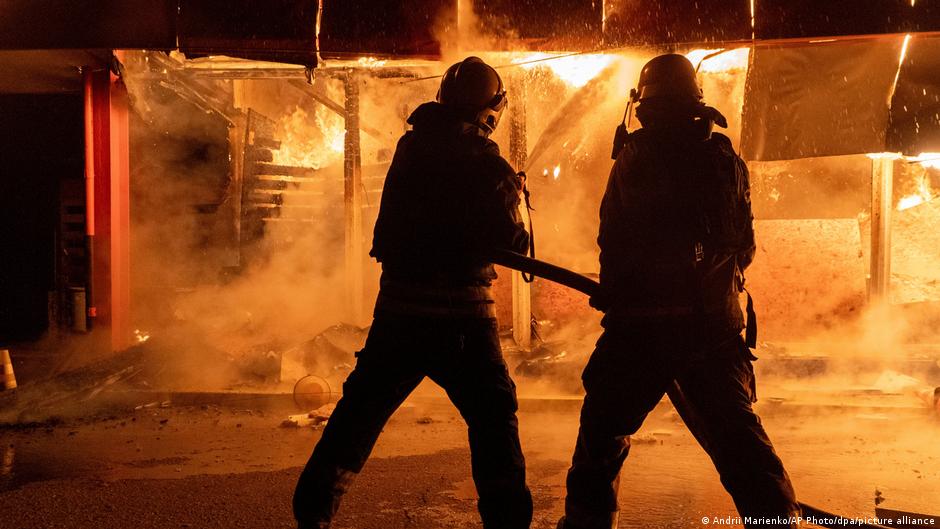
A Russian drone struck a residential building in Kharkiv overnight, injuring four people, including a four-year-old boy, as attacks continued toward several Ukrainian regions and the capital.
The strike hit the Osnovianskyi district during the night of Wednesday, October 28. According to Oleh Syniehubov, head of the Kharkiv Regional Military Administration, fires broke out in a two-story production building, a two-story apartment building and a one-story residential property.
Syniehubov later said the wounded included two women, aged 32 and 65, a 56-year-old man and the four-year-old child. Three of the four required hospitalization.
“A hit on an apartment building. According to available information, people are trapped inside,” Kharkiv Mayor Ihor Terekhov wrote.
The reported impact on both homes and a production facility illustrates the broad exposure of urban economic infrastructure during continuing aerial attacks. The authorities did not identify the business operating from the production building, disclose the extent of the damage or say whether commercial activity at the site had been interrupted.
Operational risk for Kharkiv’s innovation economy
For technology startups, investors and potential acquirers assessing Ukrainian companies, the Kharkiv attack is another reminder that wartime risk extends beyond offices and data systems. Employees, homes, workshops, laboratories and small production sites can all be affected by the same strike, while emergency responses and alerts can disrupt ordinary operations even when a company is not directly hit.
Kharkiv is a major Ukrainian city with an established technology and engineering workforce. An attack involving a production building is therefore relevant to the wider innovation ecosystem, particularly to startups whose work depends on physical equipment, prototyping or manufacturing rather than fully remote software development. The available official accounts, however, did not link the damaged facility to a startup, technology company or venture-backed business.
The immediate consequences described by officials were humanitarian and physical: four people were wounded, three were hospitalized, people were reportedly trapped in the apartment building, and fires affected multiple structures. No financial loss estimate was provided, and officials did not report any transaction, funding round or acquisition being affected.
Even without a disclosed corporate casualty, repeated attacks can influence how founders and investors approach business continuity. Distributed teams, backup communications, alternative work locations and redundancy for critical equipment become central operating considerations when residential and commercial properties face simultaneous danger. Such measures can raise costs and complicate due diligence, especially for companies requiring local facilities.
The strike also underscores the distinction between digital resilience and physical resilience. A startup may keep its software, records and customer services online while still facing disruption if employees are injured, displaced or unable to reach workplaces. Hardware-oriented ventures and other companies dependent on production space face an additional layer of exposure when equipment or premises are damaged.
Broader aerial threats remained active
At the same time, the Ukrainian Air Force warned of a possible ballistic-weapon launch from Russia’s Bryansk region toward Kyiv. That warning was subsequently lifted.
Messages published through the Air Force’s Telegram channel indicated that attacks involving jet-powered unmanned aerial vehicles and guided aerial bombs continued toward the Kharkiv and Dnipropetrovsk regions, as well as Kyiv and the surrounding region.
The overlapping warnings show the geographic breadth and variety of the threats confronting Ukrainian cities. For the country’s startup and venture capital market, the episode reinforces a risk environment in which founders must plan for multiple types of aerial attack across several regions rather than treating disruption as confined to a single location.
Investors considering Ukrainian companies may consequently examine where teams, assets and production capacity are located, along with whether businesses can continue operating if one site becomes inaccessible. Prospective merger and acquisition buyers may similarly scrutinize physical dependencies alongside intellectual property, revenue and customer contracts.
Those considerations remain secondary to the human toll reported in Kharkiv. The official statements centered on the four injured residents and emergency conditions at the affected buildings. Further details about the people reportedly trapped, the condition of those hospitalized and the scale of damage to the production facility were not included in the available reports.



