Russian Missile Strikes Hit Kyiv, Raising Risks for Ukraine’s Tech Hub
The attacks killed at least one person in Kyiv and damaged civilian infrastructure as Ukraine’s innovation ecosystem faces continued disruption.
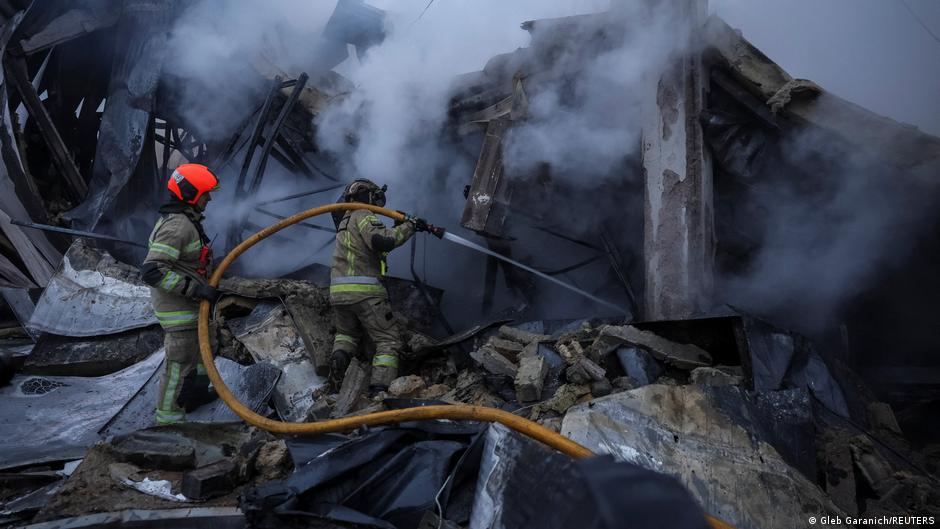
Russian forces launched a series of ballistic missile strikes on Kyiv on the evening of Monday, October 26, killing at least one person and injuring no fewer than 10 others, according to Ukrainian authorities. Nine of the wounded were hospitalized, and three remained in serious condition, Kyiv Mayor Vitali Klitschko said in a Telegram update at around 11 p.m. local time.
The assault struck multiple parts of the Ukrainian capital, a city that serves as the country’s largest center for technology startups, venture-backed companies and innovation. While officials did not report damage to specific technology businesses or investment organizations, the attacks underscored the continuing security and operational risks facing companies, employees and investors based in Kyiv.
Ukraine’s Air Force said the ballistic missiles were launched from Bryansk. The strikes were still continuing at the time of publication, according to the Kyiv City Military Administration, with jet-powered drones also being used in the attack.
Civilian infrastructure damaged across two Kyiv districts
Klitschko reported attacks in Kyiv’s Desnianskyi and Dniprovskyi districts. In the Desnianskyi district, a projectile struck near a metro station and close to a university dormitory. The Kyiv City Military Administration separately said that a residential building had been damaged in the district.
Preliminary information indicated that people could be trapped inside the damaged residential building. Authorities were continuing to establish the full consequences of the strikes as the attack remained underway.
In the Dniprovskyi district, a strike hit a building within a nonresidential development. The blast also broke windows in two departments of a medical facility in the area. Klitschko said neither patients nor medical personnel at the facility were injured.
Nine injured people were hospitalized, and three of them were in serious condition, according to the Kyiv mayor.
The locations affected by the strikes—including housing, public transportation infrastructure, university accommodation and a medical facility—highlight the broad exposure of the urban systems on which Kyiv’s workforce depends. For startups and venture-backed businesses, the immediate concern extends beyond offices to employee safety, mobility, access to healthcare and the reliability of essential city services.
Persistent security pressure on the innovation ecosystem
Kyiv remains central to Ukraine’s startup and technology sector, bringing together founders, engineers, universities, investors and corporate partners. The latest attack adds to the environment of uncertainty in which those organizations operate, even though authorities had not identified any direct impact on startup offices, technology infrastructure, venture capital firms or pending transactions.
For the investment community, renewed attacks on the capital reinforce the importance of security planning and business continuity when assessing Ukrainian companies. They may also affect how founders organize teams, protect critical operations and communicate risk to prospective backers or acquisition partners. However, the information released by municipal and military authorities did not provide evidence of any immediate change to venture funding, mergers and acquisitions, or startup valuations.
The strike near a university dormitory is also significant for the wider innovation environment because universities form part of the talent pipeline supporting technology companies. Officials did not say whether students were among the casualties or whether the university sustained additional damage.
Kharkiv attack leaves two dead
Several hours before the Kyiv strikes, Russian forces also attacked Kharkiv, another major Ukrainian city with a substantial academic and technology presence. Kharkiv Mayor Ihor Terekhov said two people had been killed and four injured in shelling of the city’s Novobavarskyi district.
“As a result of the shelling of the Novobavarskyi district, two people have already been killed and four wounded,” Terekhov wrote on Telegram.
Apartment buildings, private homes and vehicles were damaged in Kharkiv, according to the mayor. No specific damage to technology companies, universities or startup facilities was reported in the available official accounts.
Taken together, the attacks on Kyiv and Kharkiv show the continuing human and infrastructure costs confronting two cities that are important to Ukraine’s technology sector. At least three people were reported killed across the two cities, with at least 14 others injured. In Kyiv, officials were still assessing damage and determining whether people remained trapped as the attacks continued.



