Russian Strikes Hit Ukrainian Businesses, Deepening Startup Risks
Attacks in the Kyiv and Odesa regions killed three people, damaged commercial assets and prompted extensive power restrictions nationwide.
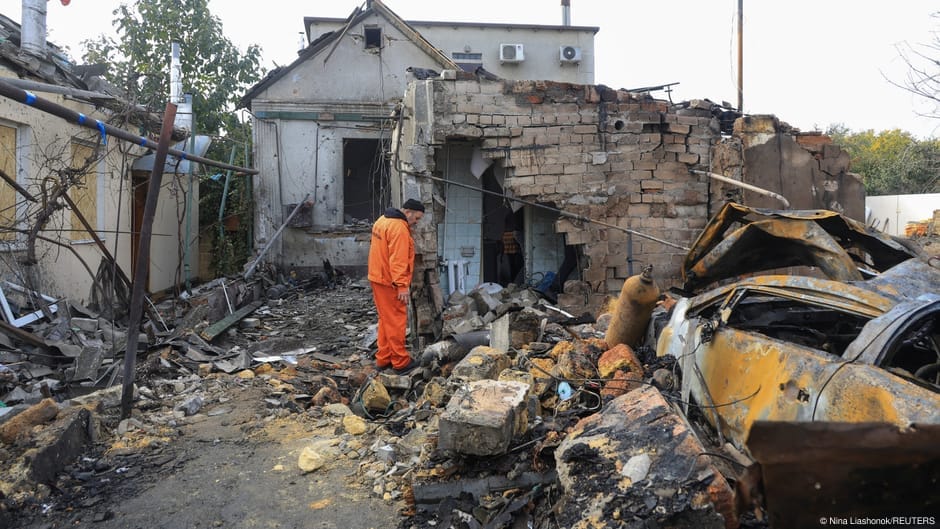
Russian attacks on Ukraine’s Kyiv and Odesa regions killed three people, injured three others and damaged civilian and commercial infrastructure, adding to the operational risks facing the country’s startups, investors and technology ecosystem.
One person was killed in Bila Tserkva, a city in the Kyiv region, during a Russian attack overnight into Wednesday, November 25, according to the city council. Authorities said critical infrastructure and civilian businesses were hit. An Epicentr shopping center and a Nova Poshta branch were among the damaged properties.
The impact on Nova Poshta is particularly relevant to Ukraine’s digital economy. Postal and logistics networks provide essential infrastructure for e-commerce companies and other businesses that rely on domestic deliveries. Damage to physical distribution points can disrupt order fulfillment and complicate business continuity even when digital platforms remain operational.
Casualties and industrial damage in Odesa region
Two people were killed in Russian shelling of the Odesa region on the evening of November 24, regional military administration head Oleh Kiper said on Telegram. The victims were a 41-year-old man and a 17-year-old youth.
Three other people were injured, including a 12-year-old child. Kiper said civilian infrastructure, a private home, a production building and passenger vehicles were damaged.
“Civilian infrastructure facilities, a private house, a production building and passenger cars were damaged,” Kiper said.
Damage to a production facility adds to the pressure on companies operating physical assets in Ukraine. For startups in manufacturing, hardware, agricultural technology and logistics, repeated attacks can raise the cost of insurance, backup power, inventory protection and employee safety. Those expenses can shorten financial runways and influence how venture investors assess capital requirements.
The Russian Defense Ministry said on Telegram on the morning of November 24 that overnight drone strikes had targeted energy and fuel infrastructure, as well as vessels it said were being used in the interests of Ukraine’s armed forces. According to the ministry, one target was a dry cargo ship sailing southwest of Odesa that it said was carrying military-purpose cargo.
The attacks around Odesa also underscore the exposure of businesses dependent on Black Sea shipping and regional supply chains. Disruption to maritime routes, fuel assets or production sites can affect import costs, export schedules and access to equipment. Early-stage companies are often less able than large corporations to absorb such volatility or maintain redundant logistics arrangements.
Power restrictions increase operating costs
Ukraine’s electricity transmission operator Ukrenergo said planned power outages would remain in force around the clock in parts of the country on November 25 because of Russian attacks on the energy system.
Power-capacity restrictions were scheduled for industry, while all consumer categories were subject to hourly outage schedules ranging from 0.5 to three groups. Ukrainian online publication Ekonomichna Pravda explained that one group corresponds to approximately four hours without electricity per day. If maintained throughout the day, a three-group restriction could mean about 12 hours without power.
Emergency outages ordered by Ukrenergo were introduced on the evening of November 24 in Dnipro and the Dniprovskyi, Pavlohradskyi, Synelnykivskyi and Samarivskyi districts of the Dnipropetrovsk region, according to journalists cited in the source report.
For Ukraine’s startup sector, prolonged outages can interrupt software development, cloud access, customer support and payment processing. Companies can mitigate some disruption through generators, batteries, distributed teams and overseas infrastructure, but those measures require capital that might otherwise fund hiring, research or market expansion.
The continuing threat to energy and logistics infrastructure may also shape venture funding and merger-and-acquisition decisions. Investors evaluating Ukrainian companies must account for operational resilience, workforce distribution and contingency planning alongside conventional metrics such as revenue growth and product-market fit. Potential acquirers may similarly scrutinize dependence on individual facilities, local power supply and vulnerable transport corridors.
At the same time, the conditions reinforce demand for innovation in energy resilience, cybersecurity, logistics, communications and distributed work. Ukrainian founders have continued building companies under wartime constraints, but the latest attacks show that the ecosystem’s capacity to innovate remains closely tied to the protection and reliability of the country’s civilian infrastructure.



