Russian Strikes Hit Ukrainian Cities, Deepening Risks for Tech Ecosystem
Deadly attacks across Ukraine damaged transport, commercial and industrial sites, adding pressure on startups, investors and critical infrastructure.
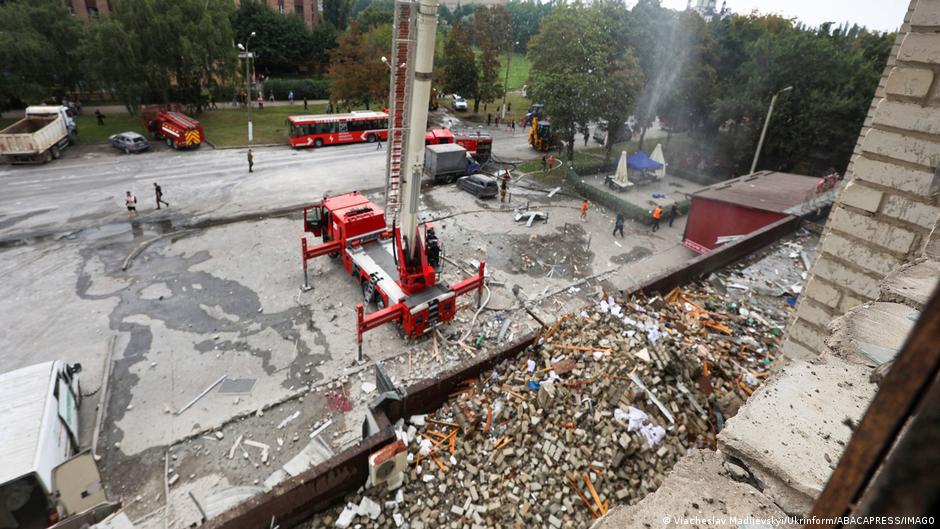
Russian strikes across several Ukrainian cities on October 29 killed civilians, injured dozens of people and damaged transport, commercial and industrial infrastructure, underscoring the persistent security risks facing the country’s technology startups, investors and broader innovation ecosystem.
In central Chernihiv, two 15-year-old girls were killed by a Russian strike involving a Banderol, or S8000, munition, described as a small hybrid of a cruise missile and a jet-powered attack drone. At least 25 people were injured, including four children: a 10-month-old girl, a 10-year-old girl and boys aged 16 and 17, according to regional military administration head Viacheslav Chaus.
“Two children — a brother and sister — are in serious condition. A total of eight people are currently in hospitals. The others received medical assistance at the scene or are being treated as outpatients,” Chaus wrote on Telegram.
Ukraine’s State Emergency Service said the strike hit an ordinary street and damaged homes, shops and vehicles, adding that there was “no military purpose.” Chernihiv declared October 30 a day of mourning.
The human toll extended well beyond Chernihiv. A drone strike on the railway station in Dnipro killed at least 14 people and injured another 14 on October 29. In Kremenchuk, three residents were killed and 25 people were injured, according to the Ukrainian rescue service.
Infrastructure damage compounds investment uncertainty
For Ukraine’s venture and startup community, the attacks highlight risks that extend from employee safety to logistics, business continuity and the availability of physical workspaces. Railway facilities, warehouses, production buildings, shops and vehicles are essential to companies operating in sectors including hardware, logistics technology, advanced manufacturing and e-commerce. Damage to such assets can disrupt operations even when a startup’s digital infrastructure remains intact.
In Zaporizhzhia, two men aged 41 and 66 were injured and received medical assistance. The emergency service said four passenger cars and an open area caught fire. A warehouse building, four cars and four buses were also damaged.
Later on October 29, a Russian missile struck Kharkiv’s Slobidskyi district, the emergency service reported. Fires broke out in a production building and the surrounding area, covering a total of 400 square metres. At another location, remnants of various materials burned across 80 square metres, while two trucks were damaged. Officials did not specify why the explosion caused the fire or what had been stored inside the production building.
Kharkiv Mayor Ihor Terekhov said the Slobidskyi district was struck with a Banderol munition. Kharkiv has been one of Ukraine’s major centres for engineering, software development and technical education, making repeated attacks on the city a continuing concern for founders and venture investors assessing staffing, facilities and long-term operating exposure.
The latest damage does not establish that any specific startup or venture-backed company was directly affected. It does, however, illustrate the conditions under which Ukrainian technology businesses continue to operate: distributed teams, vulnerable power and transport networks, and the possibility that offices, production sites or suppliers may be disrupted with little warning.
Kyiv warehouses and commercial property struck
Kyiv was also targeted on the evening of October 29 in an attack involving a ballistic missile, according to Mayor Vitali Klitschko. Warehouse buildings in the Darnytskyi district were hit and a fire broke out.
In the Dniprovskyi district, missile debris burned in the courtyard of a residential complex. Klitschko said a blast wave shattered windows in one residential building, while windows and vehicles were damaged at another address. A shop building near the residential complex was partially destroyed. The Kyiv City Military Administration said one person was killed in the Russian attack.
Warehouse and commercial-property damage is particularly relevant to startups that depend on inventory, imported components, delivery fleets or local fulfilment. Continued attacks can raise operating costs, complicate due diligence and influence how venture investors structure financing, insurance and contingency requirements. They may also affect merger and acquisition assessments by increasing the importance of geographic diversification, resilient supply chains and the portability of teams and intellectual property.
Earlier on October 29, Ukrainian President Volodymyr Zelensky said in his daily address that intelligence indicated Russia was preparing to attack Ukraine again with ballistic missiles.
Russia’s Defence Ministry said on Telegram that its forces had carried out drone strikes that day against Ukrainian port infrastructure and vessels allegedly used in the interests of Ukraine’s armed forces. It also reported a strike on a temporary Ukrainian troop deployment point in the Kharkiv direction and said Russian forces had identified and destroyed enemy FPV-drone control points in the Dnipropetrovsk direction.
The attacks add another layer of uncertainty for Ukraine’s innovation economy, where companies have continued developing software, defence technology and other products despite wartime disruption. For venture capital firms and prospective acquirers, the immediate priority remains the safety of employees and communities, while investment decisions must account for repeated damage to the infrastructure that supports company formation, scaling and cross-border commerce.



