Sanctioned Tanker Distress Signal Highlights Maritime Tech Risks
The MYRA incident off Ireland underscores demand for sanctions compliance, vessel monitoring and risk analytics across maritime markets.
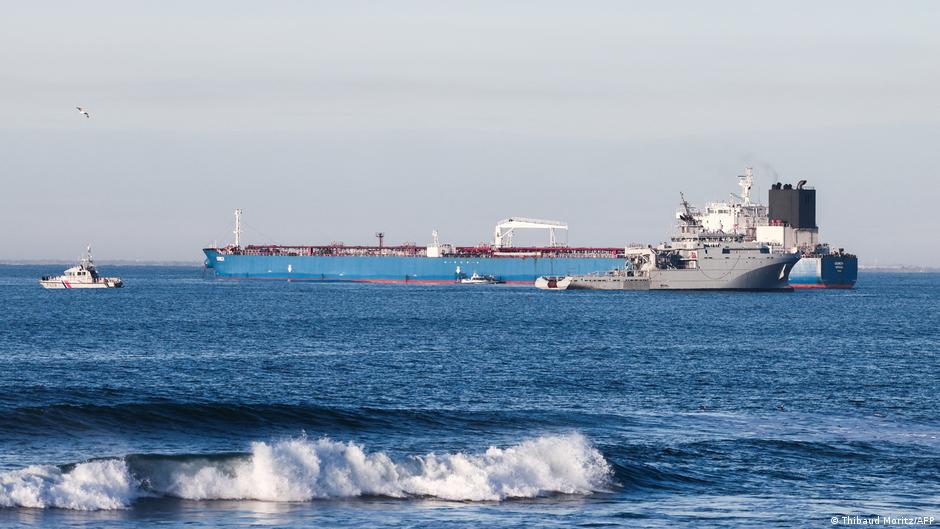
A sanctioned oil tanker linked by Ukrainian intelligence to Russia’s so-called shadow fleet has issued a distress signal in the North Atlantic, drawing attention to the operational and compliance risks surrounding opaque maritime networks.
The MYRA sent the alert while sailing off Ireland’s northwestern coast, according to maritime monitoring project SeaNews, which reported the incident on Saturday, October 24. The signal was transmitted through the Inmarsat-C satellite system, while the UK Coastguard is coordinating the response.
The episode has implications beyond shipping and energy. For technology startups, venture investors and potential acquirers, the tanker’s movements illustrate the growing need for tools that combine satellite communications, vessel tracking, weather intelligence, ownership data and sanctions screening. Companies operating in maritime analytics, compliance software, insurance technology and supply-chain monitoring are increasingly positioned around precisely these categories of risk.
Extreme weather meets sanctions exposure
SeaNews said the 75,000-ton vessel was traveling from the Russian port of Ust-Luga and continued moving at roughly 9 knots, or about 17 kilometers per hour, despite extreme weather. Waves near the tanker reportedly reached 8.8 meters when the distress signal was issued, with wind gusts of around 130 kilometers per hour. Its distance from the coast was estimated at approximately 348 kilometers.
The combination of severe weather, a remotely located vessel and a complex sanctions profile demonstrates why maritime risk assessment increasingly depends on multiple layers of real-time and historical data.
For startup founders, this type of event highlights a market where technical products must do more than display vessel locations. Customers may need systems capable of connecting ship identities with port histories, corporate registries, sanctions lists and changing weather conditions. Investors evaluating the sector must also consider whether a platform can convert scattered data into defensible compliance decisions for shipping companies, banks, insurers and commodity traders.
Ownership networks create a data challenge
According to War & Sanctions, a database maintained by the Main Intelligence Directorate of Ukraine’s Defense Ministry, MYRA was used to export Russian oil and petroleum products to third countries in circumvention of sanctions. Ukrainian intelligence links the vessel to Fractal Marine DMCC, a company registered in the United Arab Emirates that it describes as one of the leading operators of Russia’s shadow fleet.
The intelligence agency says MYRA repeatedly called at the Russian ports of Ust-Luga and Primorsk and also visited ports in Senegal, Turkey, Brazil, Estonia and Denmark. These reported routes underline the geographic scale that compliance platforms must cover and the difficulty of assessing exposure across multiple jurisdictions.
War & Sanctions states that the United States added the vessel to its sanctions list on July 30, 2025. The European Union followed on October 24, 2025; Switzerland and Ukraine imposed sanctions on December 13, 2025; the United Kingdom listed it on February 24, 2026; and Canada did so on March 25, 2026.
That staggered timeline is relevant to the innovation ecosystem because sanctions technology must track rules that differ by country and change at different times. Startups serving global customers face a demanding product challenge: keeping screening data current while resolving vessel names, corporate relationships and historical movements. Such complexity can also encourage partnerships or acquisitions by larger providers seeking specialist datasets, satellite capabilities or entity-resolution technology.
Iran connection adds further scrutiny
Ukrainian intelligence alleges that MYRA belongs to a shipping network controlled by Mohammad Hossein Shamkhani. He is the son of Ali Shamkhani, the former secretary of Iran’s Supreme National Security Council and an adviser to the country’s supreme leader, who was killed in a joint US-Israeli operation in February 2026.
According to the Ukrainian agency’s account, the younger Shamkhani controls a network of tankers, operators and shell companies used for money laundering and the transportation of Russian and Iranian oil, including shipments to China. These are allegations attributed to Ukrainian intelligence, and they add another layer of geopolitical and counterparty risk around the vessel.
For venture capital, the immediate significance is not the fate of one tanker but the broader demand signal. Maritime commerce is exposed simultaneously to physical hazards, fragmented ownership structures and fast-changing legal restrictions. Technology businesses that can verify assets, map relationships and deliver timely warnings may find customers across logistics, finance, insurance and government. At the same time, founders and investors entering this field face high requirements for data quality, regulatory expertise and credibility, because errors can carry financial and legal consequences.



