Serbia Election Turmoil Raises Political Risk for Startups and Investors
A 150,000-strong opposition rally in Belgrade signals a closely contested election with implications for investment and innovation.
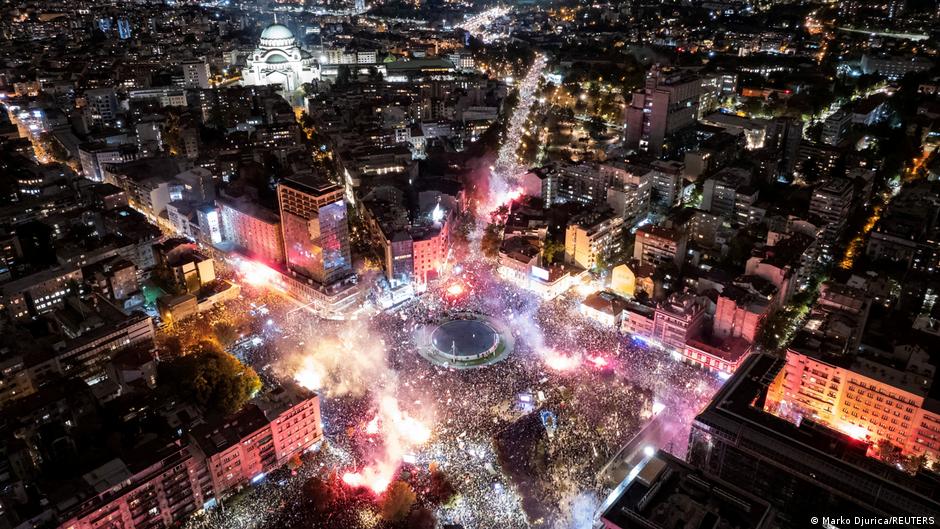
Serbia’s political uncertainty intensified ahead of snap parliamentary elections as supporters of the opposition staged a major demonstration in Belgrade, creating a potentially consequential moment for technology startups, venture capital firms and prospective corporate buyers assessing the country.
Organizers said approximately 150,000 people attended the rally in the Serbian capital on Thursday, October 22, according to AFP. Demonstrators called for an end to the rule of Aleksandar Vučić, who has served as head of state since 2014 and intends to remain in power despite announcing that he would resign.
The protesters also urged voters to support the “Student List,” a movement that emerged during a wave of student demonstrations and has developed into a significant political force. The snap parliamentary election is scheduled for October 25.
A close contest adds to investor uncertainty
Polling indicates that the Student List could finish ahead of Vučić’s Serbian Progressive Party, or SNS. A survey by the New Serbian Political Thought project, published on October 20, put support for the Student List at 44.5%, compared with 42.7% for the SNS.
An earlier survey at the beginning of October showed a similarly narrow contest. The Student List received 44.4% support, while the governing party stood at 41.7%. Most Serbian opposition parties have withdrawn from the race and called on voters to back the student movement.
For founders and investors, the central issue is not simply which side wins but whether the vote produces a clear and durable governing arrangement. Closely fought elections can delay policy decisions and make the timing of investment, hiring and acquisitions harder to assess. A change in political leadership could also alter expectations around public administration and institutional oversight, while an SNS victory would preserve greater continuity at the top of government.
The source of the political movement is particularly relevant to the investment climate. Protests have continued for almost two years following a tragedy at the Novi Sad railway station in November 2024. A canopy collapsed at the station, which had been renovated only shortly beforehand, killing 16 people. Serbian independent media and opposition groups identified corruption as one of the principal causes of the disaster.
The election has therefore become a test not only of political leadership, but also of public confidence in governance, accountability and institutional competence.
Those questions matter to venture capital and M&A markets because investors depend on predictable rules, reliable public institutions and transparent procurement and approval processes. The election does not provide an immediate answer on those conditions, but the scale of the protests and the narrow polling margin indicate that political risk will remain prominent in investment assessments.
A political movement without conventional candidates
Students have been the principal driving force behind the nationwide protests, and the Student List grew directly out of that mobilization. The movement has no clear leader and will not field professional politicians as its candidates. Instead, students want scientists, activists and public figures to serve as their representatives.
This unconventional model could prove electorally effective, according to the published polling. It also introduces a degree of uncertainty for companies and investors seeking to understand how a Student List-led administration might approach economic policy, startup regulation, innovation programs or foreign investment. The source material does not set out the movement’s positions on those issues, leaving market participants to focus initially on its governance credentials and ability to form an effective administration.
At the same time, the prominence of scientists and civic figures may attract attention from Serbia’s innovation community. Their participation signals a possible opening for people outside traditional party structures, although it remains unclear whether that approach would translate into specific measures affecting technology businesses, venture funding or corporate transactions.
Vučić seeks a return to the premiership
One of the students’ principal demands since protests began in 2024 has been Vučić’s resignation. He has repeatedly said he would take that step, but in practice plans to seek another office rather than leave power. On October 25, he will stand for the position of prime minister. Victory for the Serbian Progressive Party would therefore allow him to remain in control.
Under Serbia’s Constitution, the prime minister has broader powers than the president. During his presidency, however, Vučić became the most recognizable figure within the governing political forces. He previously served as prime minister from 2014 to 2017, leaving the office after winning the presidential election. Since then, the premiership has continuously been held by representatives of his party.
For Serbia’s startup and venture ecosystem, the immediate outlook hinges on whether the election delivers continuity, a transfer of power or an extended period of political contestation. Investors evaluating new financing rounds or acquisitions are likely to watch the clarity of the result, the composition of the next government and its approach to institutional accountability. The October 25 vote could consequently shape not just Serbia’s political leadership, but perceptions of the operating environment in which founders raise capital, expand companies and negotiate exits.



