Spain Transport Chief Resigns as Rail Safety Crisis Tests Innovation
The deadly Toledo crash puts pressure on Spain’s rail technology, infrastructure investment and transport innovation ecosystem.
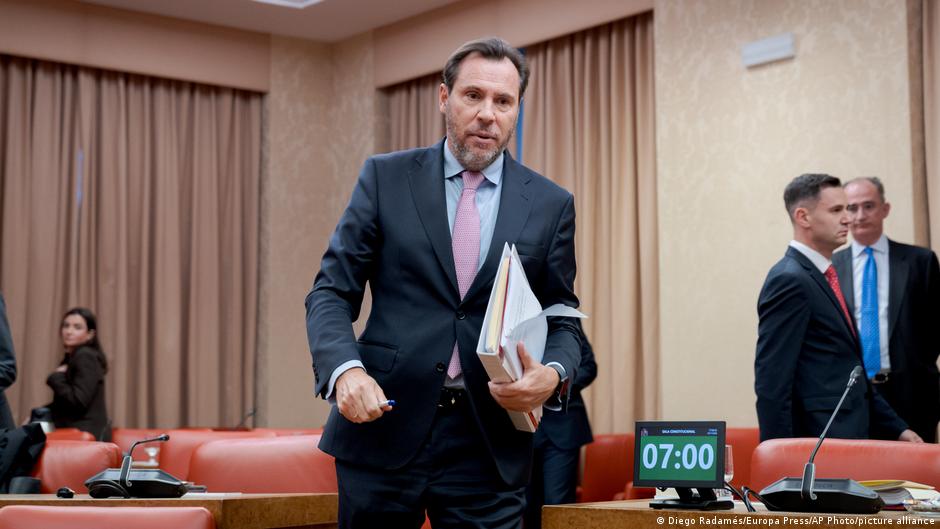
Spain’s transport minister, Óscar Puente, has announced his resignation and withdrawn from the country’s early parliamentary elections following a railway disaster near Toledo that killed 69 people, a decision that intensifies scrutiny of the technologies and investment underpinning one of Europe’s major high-speed rail networks.
Puente announced his departure on the evening of Tuesday, November 3, while appearing before a parliamentary commission in Madrid, almost a week after the crash. More than 50 people were also injured in the collision near the town of Urda.
“A minister cannot remain in office after two disasters of this magnitude in less than one year. It is a question of political dignity, responsibility and political sensitivity,” Puente said.
The resignation was unexpected because Puente and Spanish Prime Minister Pedro Sánchez had repeatedly ruled out such a step. All opposition parties had demanded that the transport minister leave office, according to the dpa news agency.
For investors and technology companies operating around mobility, infrastructure and industrial automation, the political fallout raises the stakes for Spain’s rail innovation ecosystem. The investigation’s focus on an automatic train protection system and possible errors in instructions issued by the dispatch center places safety-critical software, control systems and operational processes at the center of the response.
Automatic protection system faces scrutiny
The October 28 disaster occurred at 8:53 a.m. on the Madrid-Seville high-speed line near Urda in Toledo province. An AVE 2080 passenger train struck the final carriage of an Iryo 6076 train that was standing on the tracks. The collision killed 69 people and injured more than 50.
Investigators examining the Urda crash are concentrating on the failure of the automatic train protection system and on potential mistakes in orders from the dispatch center. Those lines of inquiry could have consequences for suppliers of signaling equipment, railway software, communications technology and monitoring tools, although the investigation has not yet established responsibility.
The distinction matters for the startup and venture capital community. Rail technology is a demanding market in which procurement cycles are long, certification requirements are stringent and failures can have catastrophic consequences. Companies developing artificial intelligence for predictive maintenance, sensor networks, digital twins, cybersecurity systems or automated traffic management must demonstrate not only innovation but also reliability, auditability and compatibility with existing infrastructure.
The tragedy could create pressure for faster modernization and more rigorous oversight. It may also raise barriers for young companies seeking contracts, as transport authorities and established operators reassess validation, testing and accountability across safety-critical systems. Partnerships with larger industrial groups could become more important, potentially influencing strategic investment and acquisition activity in the sector.
Seven passenger rail disasters in 2026
Spain has recorded seven railway disasters involving injured passengers since the beginning of 2026. Another major collision occurred on January 18 near the town of Adamuz on the Madrid-Málaga high-speed line and involved two trains. That accident killed 46 people and left another 150 with injuries of varying severity.
Possible damage to the railway tracks is being considered as one cause of the Adamuz disaster. By contrast, the Urda investigation is focused on the automatic protection system and possible dispatching errors. The differing investigative priorities illustrate the range of risks confronting rail operators and technology suppliers, from physical infrastructure to software, automation and human decision-making.
Just hours before Puente announced his resignation, Spain’s government approved measures intended to improve railway safety. At its weekly cabinet meeting, it also authorized a €30 million assistance package for people injured in the Toledo disaster and for the families of those killed, dpa reported.
The government’s safety measures could eventually affect public procurement and private investment across Spain’s transport sector. Any resulting programs may increase demand for inspection systems, operational analytics and infrastructure monitoring. However, companies seeking to benefit from new spending will face heightened political and public scrutiny, particularly when their products influence real-time train movements or passenger safety.
Investment outlook shaped by accountability
Puente’s resignation turns the railway crisis into a broader test of political accountability and institutional confidence. For venture-backed mobility companies, confidence in public agencies and transport operators can influence pilot programs, procurement decisions and the willingness of strategic investors to fund deployment.
The crisis also underscores a central challenge for deep-tech investment: commercial growth cannot be separated from safety governance. Railway startups often depend on access to infrastructure, operating data and partnerships with incumbent companies. A major accident can slow trials while systems are reviewed, but it can also expose gaps that new technologies are designed to address.
Any effect on venture funding or mergers and acquisitions will depend on the findings of the investigations and on the details of the government’s safety response. No specific technology contracts, financing plans or corporate transactions have been announced in connection with the measures. For now, the immediate focus remains on the victims, the causes of the Urda collision and the reliability of the systems governing Spain’s rail network.



