Trump Backs Kyiv’s Role in Talks as Geopolitical Risk Shadows Tech
The US president said no decisions on the war should be made without Ukraine, as Washington, Beijing and Moscow pursued wider diplomacy.
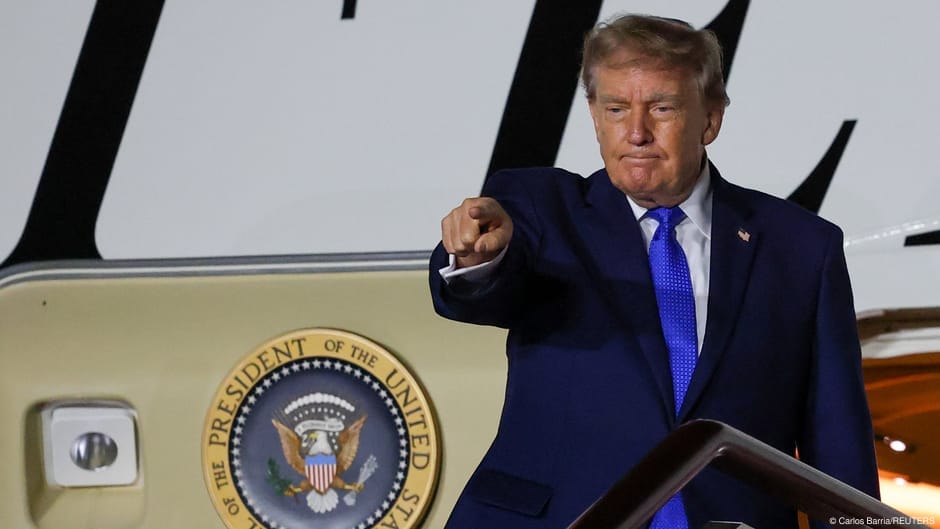
US President Donald Trump said he agreed with Ukrainian President Volodymyr Zelensky that Washington should not make decisions concerning Russia’s war against Ukraine without Kyiv’s direct participation, a position with implications for the geopolitical uncertainty confronting technology investors and founders across the region.
In an interview with NBC on Thursday evening, November 19, Trump said he would not take action without Zelensky because he leads the country. NBC journalist Gabe Gutierrez quoted the president on X as saying: “I agree with him. I wouldn’t do anything without him — he is the head of that country, so I wouldn’t do that.”
The statement provides a measure of diplomatic clarity, but it does not resolve the broader risks facing startups, venture funds and potential acquirers exposed to Ukraine and neighboring markets. For investors, the structure of any future negotiations could influence perceptions of political stability, cross-border operations and the long-term conditions for rebuilding Ukraine’s innovation economy.
Three-way diplomacy leaves key questions open
Gutierrez said he also discussed Trump’s recent meeting in China with Chinese President Xi Jinping and Russian President Vladimir Putin. Asked about the talks, Trump gave the meeting what he described as a score of 12 on a scale of zero to 10, saying it had gone extremely well and that the participants had built strong relations.
“I think it was a 12. On a scale of 0 to 10. Everything went great. We managed to build an amazing relationship.”
Trump said Ukraine was the central focus of the three-way meeting in Shenzhen, while the leaders also discussed what he called the conflict surrounding Iran. According to the NBC journalist’s account, Trump said the leaders wanted the situation involving Iran to be resolved and were communicating that position to Tehran in the strongest terms.
The gathering, held earlier that day on the sidelines of the Asia-Pacific Economic Cooperation summit, was the first three-way meeting of US, Chinese and Russian leaders. Before it began, Trump said the event would “go down in history.” Xi described it as being of “historic significance,” while Putin said the three countries had many overlapping interests in resolving regional conflicts, including the conflict in Ukraine.
The meeting lasted about 90 minutes. The participants departed without issuing a joint statement to the press. Xi characterized the negotiations as positive and constructive, while Russian presidential aide Yuri Ushakov described the atmosphere as good.
Signals for venture capital and M&A
For the technology sector, the immediate significance lies less in a specific policy commitment than in the diplomatic signals surrounding Ukraine’s participation. Venture capital decisions in conflict-affected markets depend heavily on visibility: founders need to plan hiring and infrastructure, funds must assess political and operational exposure, and prospective buyers need confidence that assets and teams can continue working across borders.
Trump’s support for Kyiv’s direct role may therefore be relevant to how investors evaluate the legitimacy and durability of any eventual negotiating framework. It does not constitute a settlement, funding commitment or change in sanctions policy. The absence of a press conference after the Shenzhen talks, and the omission of Ukraine from the leaders’ final declaration, also leave major questions unanswered for companies and capital providers.
In the NBC interview, Trump additionally said Putin had been upset by Ukrainian strikes on the Crimean Bridge, which caused parts of its structure to collapse. Trump called that reaction understandable. The comment adds another element of uncertainty to the political messaging emerging from the summit.
Following the meeting, the leaders of the United States, Russia and China published a joint “Declaration on Peace.” Its central points included support for reforming the United Nations, agreement that the International Criminal Court had not abused its authority, and continued dialogue on reducing nuclear risks and preventing nuclear proliferation. The declaration did not mention the war in Ukraine.
That gap matters to the innovation ecosystem because high-level diplomatic engagement has not yet produced a stated roadmap for the conflict. Ukrainian technology companies and internationally distributed teams remain exposed to the consequences of war, while investors considering new rounds, acquisitions or strategic partnerships must distinguish political rhetoric from concrete agreements.
The Shenzhen talks demonstrated that Washington, Beijing and Moscow are willing to discuss Ukraine alongside other global security issues. Trump’s public insistence that Kyiv must be involved sets a boundary around the US approach, but the short meeting, limited public disclosure and Ukraine’s absence from the declaration mean the outlook for venture funding, technology M&A and long-term ecosystem recovery remains tied to future negotiations.



