Trump Orders Democratic Party Probe, Raising Policy Risk for US Startups
The investigation order and prospect of divided government add regulatory uncertainty for venture-backed companies, investors and technology dealmakers.
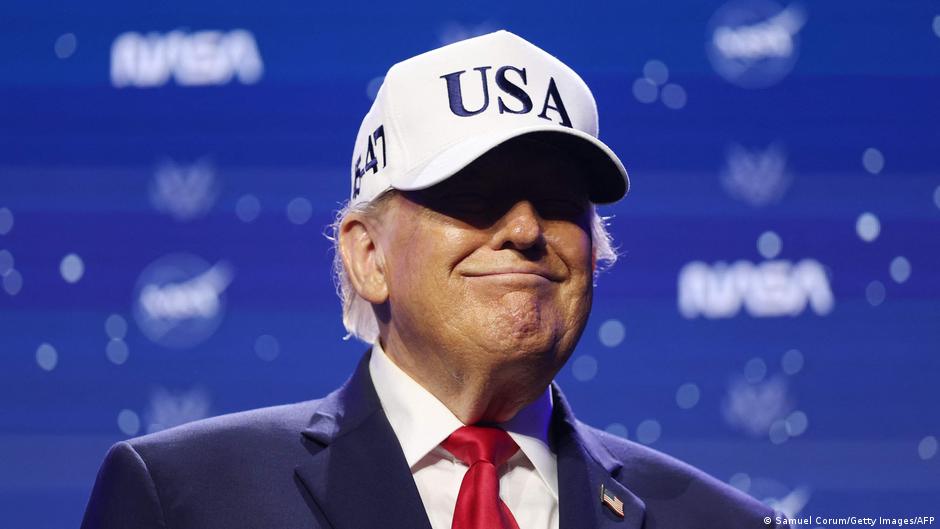
US President Donald Trump has ordered the Justice Department to investigate members of the Democratic Party, accusing them of using threats of impeachment and other penalties to pressure the attorney general and other officials after winning the congressional midterm elections.
Trump announced the directive on Saturday, November 7, through his Truth Social platform. He claimed Democrats lacked grounds for the measures they were reportedly considering and described their conduct as political coercion.
“This is blackmail at the highest level, and they must be punished,” Trump said.
The confrontation adds another layer of political uncertainty for US technology startups, venture capital firms and corporate buyers already required to navigate policy shifts across competition enforcement, artificial intelligence, digital assets, immigration and federal procurement. The source article reported no immediate changes to those policies, but widening conflict between the White House and a Democratic-controlled Congress could make the direction and timing of future legislation more difficult to predict.
Divided government complicates the investment outlook
Democrats secured majorities in both the House of Representatives and the Senate in the midterm vote. Trump publicly acknowledged the election results and said he was prepared to cooperate with them, easing concerns among some Democrats that he might challenge or attempt to overturn the outcome, as he did after losing the 2020 presidential election, according to Reuters.
That stated willingness to cooperate now sits alongside an order to investigate members of the opposition. For founders and investors, the emerging balance of power may produce competing signals: bipartisan legislation could remain possible, while investigations, confirmation disputes and impeachment initiatives could consume political attention and slow decision-making.
The resulting uncertainty matters most to startups whose business models depend on government rules or spending. Companies selling into federal agencies, operating in tightly regulated markets or planning around immigration policy may face longer planning horizons. Venture funds and strategic acquirers could respond by assigning greater weight to regulatory exposure during due diligence, particularly when evaluating businesses whose growth assumptions depend on policies that Congress or the administration can change.
Political volatility can also affect mergers and acquisitions without producing an immediate legal change. Buyers assessing technology deals typically consider the likelihood of prolonged reviews, shifts in enforcement priorities and the durability of sector-specific regulation. A sustained confrontation between Congress and the executive branch could therefore influence deal timing and valuation, even though Trump’s announcement itself did not establish new antitrust or transaction-review rules.
Investigations could widen beyond the White House
Some Democrats have said they intend to begin congressional investigations into alleged abuses of power by Trump-appointed officials, including members of the president’s family. Meanwhile, tensions have intensified within the White House following the Republican election defeat, Reuters reported.
The divisions are not limited to Democrats. Thomas Massie, a Republican congressman from Kentucky who has been critical of Trump, said he wanted to bring an impeachment measure against Defense Secretary Pete Hegseth to a vote.
Trump also alleged that Democrats were threatening Republican donors with prison because of their political views. He separately accused Michigan Senator Elissa Slotkin of planning to pursue young Americans for supporting the Republican Party. The source article did not provide independent substantiation for those assertions.
For the venture ecosystem, claims involving political donors may attract particular attention because founders, executives and investors frequently participate in campaign financing and policy advocacy. No action against technology investors or startup financiers was identified in the report, however, and Trump’s allegations concerned Republican donors broadly.
Personnel choice signals a harder policy line
Trump appointed Stephen Miller as White House chief of staff on the eve of his investigation announcement. Miller is an advocate of restrictive immigration policies and a hard-line national-conservative agenda. Reuters described the appointment as a move perceived as a challenge to Democrats.
Immigration policy is a material issue for the innovation economy because many startups compete for internationally mobile technical talent. The report did not identify any new visa measures connected to Miller’s appointment, but his elevation may sharpen investor scrutiny of workforce planning at companies reliant on foreign-born engineers, researchers and founders.
The immediate business impact will depend on whether Trump and the new congressional majorities pursue cooperation or allow investigations and impeachment disputes to dominate the agenda. For venture-backed companies, the central risk is less the announcement of a single Justice Department inquiry than a broader period of institutional conflict that could complicate fundraising assumptions, acquisition planning and long-term investment in regulated innovation.



