Trump’s Ukraine Deadline Raises New Risks for Europe’s Startup Economy
A White House push for a peace agreement by early 2027 could reshape investor confidence, defense technology funding and cross-border deals.
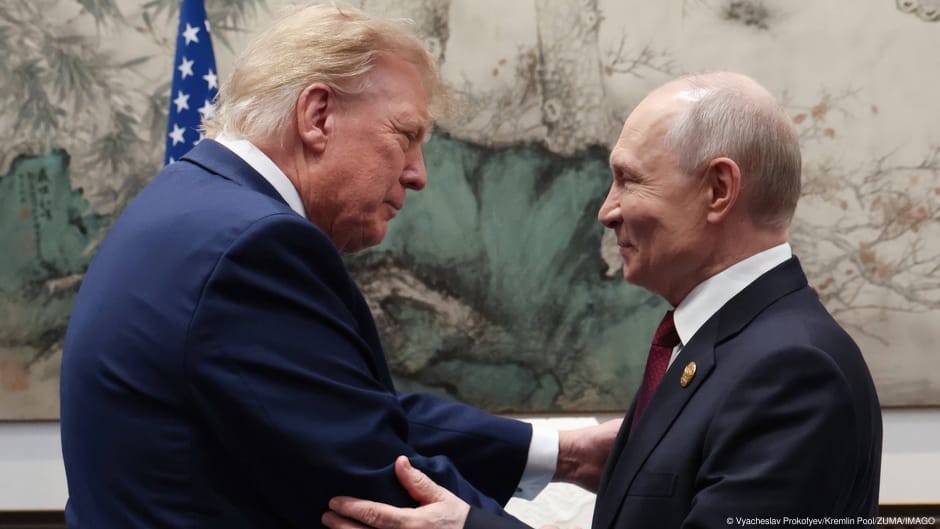
The White House is seeking a peace agreement between Ukraine and Russia before Democrats take control of both chambers of the US Congress in January 2027, according to four informed sources cited by the Financial Times. The accelerated timetable adds another layer of political risk for technology startups, venture capital firms and strategic buyers operating across Ukraine and Europe.
President Donald Trump’s administration has reportedly told European and Ukrainian officials that it wants Kyiv and Moscow to reach an agreement by the end of 2026. The urgency reflects the outcome of the US midterm elections, which will give the Democratic Party control of the House and Senate and significantly reduce the influence of Trump’s Republicans.
One European official said the Americans were applying intense pressure, amid concerns that Ukraine could be required to make major concessions. Another source described a mismatch in incentives: the United States is rushing, while Russian President Vladimir Putin is not.
Defense Technology Faces a Political Stress Test
For venture investors, the negotiations carry particular significance for Europe’s expanding defense technology sector. The war has driven demand for drones, satellite communications, cybersecurity, battlefield software and other dual-use technologies. A settlement—or a prolonged and politically contentious effort to secure one—could alter procurement priorities, affect access to government capital and influence valuations across the sector.
Ukrainian officials interpreted another round of speed restrictions affecting Starshield, the military version of SpaceX’s Starlink satellite communications system, together with conspicuous delays in deliveries of missiles for Patriot air-defense systems, as part of a Washington effort to weaken Kyiv’s negotiating position and pressure it into territorial concessions to Russia.
A senior Ukrainian official called the administration’s actions a clear choice intended to help Russia obtain favorable terms in the peace negotiations. Another source said Trump likes Putin and wants the process concluded before January.
These allegations underscore the platform risk confronting startups whose products depend on satellite infrastructure, military procurement or politically controlled supply chains. They also raise due-diligence questions for investors assessing revenue durability, export restrictions and exposure to a sudden shift in US policy. Larger defense groups considering acquisitions of Ukrainian or European startups may likewise need to price in uncertainty over contracts and battlefield demand.
For technology investors, the central uncertainty is not only whether an agreement is reached, but how changes in US support could affect procurement, infrastructure access and the pace of European defense innovation.
Washington’s Deadline Meets Moscow’s Resistance
Trump said after bilateral talks with Putin on the sidelines of the Asia-Pacific Economic Cooperation summit in Shenzhen, China, that the Russian leader had expressed a desire to end the war through diplomacy. At a November 20 press conference, Trump said Putin had clearly communicated his wish to conclude the conflict between Russia and Ukraine by diplomatic means.
The US president again argued that the principal obstacle to an agreement was the enormous hatred between Putin and Ukrainian President Volodymyr Zelenskyy. Trump described his own relationship with the Kremlin leader as fantastic, said Putin wanted to end the war and acknowledged that achieving that outcome was very difficult. During their meeting in China, Trump called Putin his friend.
After the summit, Trump reportedly called European leaders from Air Force One while they were gathered in Berlin with Zelenskyy for a meeting of the coalition of the willing. He told them that Putin wanted to end the war.
Recent statements from Moscow, however, indicate that Putin’s government remains unwilling to make fundamental concessions. Russian Deputy Foreign Minister Sergei Ryabkov said proposals involving Ukrainian membership in NATO or security guarantees modeled on the North Atlantic Treaty were unacceptable to Russia, even if Kyiv fully relinquished Donbas.
Putin also said during a press conference in China that he had considered a partial ceasefire but abandoned the idea following successful Ukrainian attacks on the Crimean Bridge. He said there would be no negotiations after the strikes.
Funding and M&A Outlook Hinges on the Next Political Cycle
Trump’s negotiators, Steven Witkoff and Jared Kushner, reportedly told Russian and Ukrainian officials during a recent Berlin meeting that the current round might represent the last realistic opportunity for a peace agreement before the political situation in Washington changes. Democrats are said to be preparing to increase military assistance to Kyiv substantially from January.
That prospect creates two competing scenarios for the innovation ecosystem. A settlement could encourage broader reconstruction investment and improve conditions for Ukrainian software, energy, logistics and infrastructure startups. It could also revive cross-border acquisitions that have been delayed by security risks. Conversely, terms seen as unfavorable to Kyiv could prolong geopolitical instability, complicate fundraising and deepen questions over access to critical Western technologies.
If negotiations fail and US military support rises under a Democratic-controlled Congress, defense technology companies may continue to benefit from stronger procurement demand. Yet the sector would remain exposed to shifting political priorities and dependence on a limited number of government customers. For venture funds and corporate buyers, the approaching January deadline therefore represents more than a diplomatic milestone: it is a potential reset for capital allocation across European defense, resilience and reconstruction technology.



